Search Results for: menstrual cycle

PCOS Symptoms Chart_274562791
GYN Problems, PCOS Education

PCOS Explained (Polycystic Ovary Syndrome)

– by James P. Haley, MD, FACOG, FPMRS Polycystic ovary syndrome is a hormonal endocrine disorder that disrupts the menstrual cycle often resulting in anovulation (not ovulating) during a women’s childbearing years. Women suffering from PCOS will have disruption of normal female hormones and produce higher than normal levels of the male hormone, testosterone, (hyperandrogenism). This imbalance can cause a growth of numerous small cysts filled inside the ovaries, (hence the name “polycystic.”) The ovaries are often enlarged. These cysts are follicles that house eggs that have never matured due to the glut of male hormones inhibiting ovulation. Most PCOS sufferers (possibly all) are also more resistant to insulin. This leads to further problems, including weight gain and susceptibility to developing diabetes. PCOS Symptoms Polycystic ovary syndrome can begin in utero, but symptoms only usually begin to occur when a female begins puberty. These include: What Causes PCOS? There are varying theories as to what causes PCOS. Poor nutrition and diet at a young age can be a contributing factor. Insulin is produced by the pancreas to extract food sugars for energy. PCOS causes women to produce too much insulin. As a result of insulin resistance which, in turn, stimulates more over-production of androgens. These male hormones interfere with ovulation, impacting fertility. Male hormones then dominate female ones, resulting in some of the masculine characteristics mentioned earlier. Since other factors can also contribute to surplus androgen development, medical science is still trying to pinpoint the exact cause of PCOS. How is PCOS Diagnosed? There is no actual test to diagnose PCOS. It is a matter of eliminating other disorder possibilities until the diagnosis of PCOS is reached. Two primary contributing factors of PCOS 1) A history of skipping periods 2) Elevated androgen hormone levels (hyperandrogenic effect) alert physicians to suspect that a woman may have PCOS. Being overweight or obese strengthens the possibility, especially in females with more upper body fat. Weight gain in this area is more male-related, thus indicating the existence of higher testosterone levels. This diagnosis is derived through What are the Risks of PCOS? Overweight and obesity alone can cause severe health problems. Compounded with PCOS, the following risks are elevated: Can Being Overweight Lead to PCOS? Polycystic ovary syndrome, or PCOS, has recently received a great deal of exposure in the media. 5 to 10% of women in the United States suffer from this condition. It is one of the leading causes of infertility, yet fewer than 50% of those women are diagnosed correctly. That amounts to a staggering 5 million women! Not every woman diagnosed with polycystic ovary syndrome is overweight, but approximately 80% are. Other female family members tend to be overweight or obese as well. Realize, however, that PCOS causes weight gain for most patients, but being overweight or obese does not “cause” PCOS. Can PCOS be Controlled? Though it is a lifelong condition and a leading cause of infertility in women, PCOS can be controlled, especially if treated early. What are the Treatments? Once it is established that you have PCOS, your physician may recommend some or all of the following: PCOS-prescribed medications may have strong side effects, or become more potent with steady, consistent weight loss. You will have to be monitored and tested regularly to insure proper dosage for your continuing good health. If You Have PCOS, We Can Help Our broad-based establishment has specialists at your disposal to deal with all PCOS irregularities. Doubly accredited, board-certified urogynecologists holding enviable degrees in OB/GYN and Female Pelvic Medicine and Reconstructive Surgery (FPMRS), nutritionists, and more professionals are available. We are trained to diagnose, treat, and encourage you throughout your struggles with polycystic ovary syndrome until and after a healthy and manageable level is reached. You are the best judge of any bodily changes that might be of concern. By seeing a physician immediately when you suspect something is wrong, you stand an excellent chance of correcting troublesome symptoms of PCOS before they become detrimental to your reproductive health. To schedule an appointment at either our Woodstock or Canton location, call us today at 770.720.7733 or simply Schedule an appointment online.

ovarian-cysts-diagram_169410300
Ablation Education, GYN Problems

Is It an Ovarian Cyst or a Fibroid?

You think you may have an ovarian cyst. Or, could it be a uterine fibroid? Ovarian cysts and fibroids have many of the same symptoms and can be difficult to self-diagnose. You may experience pelvic pain during certain activities, dull or sharp pain in your abdomen, or no symptoms at all. Unless you’re a trained professional, you probably don’t know the differences between the two. In fact, many women often don’t know they’ve got either until their OB-GYN does a routine pelvic exam. Ovarian cysts are very common and typically go away on their own. While uterine fibroids are not an issue for some women, others experience problems such as changes in their menstrual cycle and even infertility. In this article, we’ll discuss the most obvious ways to tell which of the two you have. We’ll also cover several treatment options to consider for both. Overview: Ovarian Cysts An ovarian cyst is a sac or pouch filled with fluid or other tissue and is caused by your menstrual cycle. As you’ve probably guessed it forms directly on your ovary. Each month your body grow normal follicles (a cyst-like structure). These follicles produce hormones such as estrogen and regulate the timing of releasing an egg during ovulation. Cysts occur when a normal follicle continues to grow. Because of this, ovarian cysts are most common for women who are at the childbearing age or going through menopause. You are also at a higher risk of getting ovarian cysts if: Most ovarian cysts go away on their own within 1-2 menstrual cycles. You may experience little to no symptoms when you have an ovarian cyst. However, they can also cause dull or sharp pain in your abdomen during certain activities. Treating an Ovarian Cyst When your doctor diagnoses you with an ovarian cyst they will typically suggest treatment if your cyst becomes large, is causing problems such as pain, or if cancer is suspected. There are two types of treatments for ovarian cysts. Overview: Uterine Fibroids A uterine fibroid is a growth from muscle tissue. Fibroids can appear as single growths or clusters. They vary in size, shape, and location. Some grow rapidly, while others take years to form. Unlike ovarian cysts, fibroids can form anywhere throughout the uterus. Fibroids can be found within the uterine walls, on the outer surface, or even attached to the stem-like structure. Doctors still aren’t exactly sure what the cause of uterine fibroids is. However, research has led to several factors being involved such as genetic changes and hormonal changes. Women of childbearing age are most affected by uterine fibroids. Often, fibroids will decrease in size after menopause due to reduced hormone production. Although most women have had at least one uterine fibroid throughout their life, many aren’t aware because often symptoms don’t occur. Other women aren’t as lucky. Fibroids can have numerous adverse health effects including: You may experience one, all, or none of the above symptoms if you have a uterine fibroid. It’s important to have regular visits to your doctor including routine pelvic exams. Treatment for Uterine Fibroids Your healthcare provider will suggest seeking treatment for your fibroid if you’re noticing symptoms. Rarely are uterine fibroids found to be cancerous. There are a few treatment options available to you. Talk to your doctor about which of the following is the best approach. More abrasive approaches include: Final Thoughts Women experiencing pain or other symptoms from either ovarian cysts or uterine fibroids should seek medical advice. Once you get an official diagnosis, your healthcare provider can help you decide on a plan for treatment. Still have questions? Don’t hesitate to contact us with questions regarding your symptoms or to schedule an appointment. A member of our trained staff will be happy to help you in any way possible.

teen-talking-to-GYN
Well Woman

First Gynecology Appointment for Teens

Visiting the gynecologist is an important part of the aging process for young women. Your doctor will give you vital information on how to stay as healthy as possible as well as giving you an overall checkup. There are three main reasons that parents should take their young girls to a gynecologist. A gynecology appointment can be nerve-racking for young girls who don’t know exactly what to expect. Being nervous is completely normal. However, once your visit is over, you’ll likely be wondering what all the fuss was about. When Should You Schedule Your First Appointment? Typically, a first appointment is recommended by OB/GYNs for girls between the ages of 13 and 15. This gives the doctor plenty of time to answer questions regarding sexual health, menstruation, and other concerns confidentially. What to Expect At the beginning of your first gynecology exam, your doctor will sit down with you and just talk. It’s important to be open and honest when speaking to your gynecologist so that they can give you the best medical care possible. Unless your OB/GYN feels it is vital, a pelvic exam will not be part of your first gynecology exam. Generally, pelvic exams are recommended starting at the age of 21. They will ask you questions regarding your health. Among others, some items you can expect to be brought up include: If you’re concerned about confidentiality, ask your doctor beforehand. In most cases, everything you disclose can be kept between you and your doctor. Remember, if you feel uncomfortable during any portion of your gynecological visit, you can ask for a nurse or family member to be present as well. What to Talk About During Your Appointment Remember that your appointment gives you a  safe place to talk about anything and everything regarding both your physical and emotional state. Use this opportunity to speak confidentially to your GYN for accurate answers. Before going to your appointment, think of a list of questions you’d like to ask. Your GYN has heard it all, so if something is concerning you, don’t let your embarrassment or nervousness get in the way of your wellbeing. Book a GYN Appointment Today Parents and young women should go into appointments with as much knowledge as possible. Your first gynecology appointment doesn’t have to be scary if you know what to expect. Call to schedule an appointment with one of our OB/GYNs today by calling 770.720.7733 or simply schedule an appointment online. Feel free to ask any questions regarding your first visitation beforehand so you can be as prepared as possible.

healthy woman with food exercise
OB, Preconception Counseling Education

What to Do Before Getting Pregnant

You’re considering getting pregnant! Mentally, you’re beginning to commit to the idea, so one of the first few questions you might ask yourself is, “What can I do before getting pregnant? How can I be sure my baby will be healthy? Is there anything I can do ahead of time to make sure everything goes right?” While the physical part of creating new life is pretty simple to comprehend, but many women don’t actually consider that there are ways to prepare their bodies for reproduction well ahead of time. Even if you’re not ready to conceive right away, there’s lots you can do before getting pregnant, and most of it is pretty basic. When you leased your very first apartment, you wanted everything to be just right. Before you even moved in, you eagerly imagined how you would decorate it. You carefully selected the best furniture and matching accessories you could afford. You thought of where you would put your bed and bought food for the refrigerator and pantry. Everything was positioned just right for the new home you were to live in. When you get pregnant, your body is going to be your baby’s ’apartment’ for approximately the next 280 days. Your womb (uterus) will be its bedroom, the amniotic sac will be its bed and the umbilical cord will be its fridge and pantry. Why not prepare your body to give your child the best possible home until its first ‘lease’ is up? There are steps you can take to make that happen. Long before the actual union of sperm with egg, there are numerous measures you can take to optimally prepare your body. You can make gradual, positive lifestyle changes in the months preceding pregnancy. 6 Things to Prepare Your Body for Pregnancy: At Cherokee Women’s Health Specialists, we are committed to giving you the best possible preconception care available to women today in order to ensure the optimum health of both you and the baby you are planning to have. These are only several of the many things you can do before you decide to get pregnant. Our comprehensive staff includes Female Pelvic Medicine and Reconstructive Surgeons (FPMRS), urologists, nutritionists, OB/GYNs, physical therapists and midwives. Their combined decades of experience and expertise can guide you through the preconception process, pinpointing any problems that may inhibit or be detrimental to your pregnancy. Our team of specialists can correct any physical abnormalities that may be hindering the process as well. Your reproductive health and the wellness of your future baby is our primary concern. No question is too trivial or embarrassing and you will be treated with the utmost respect and confidentiality. To book an appointment, please call us at 770.720.7733 or schedule an appointment online.

Menopause and Hormone Therapy

4 Things to Know if You Are Entering Menopause

Menopause is a turning point in a woman’s life that can have a significant impact on her health and overall well-being. Natural menopause is a gradual process that can bring about physical upheaval from hot flashes, night sweats, sleep issues and other symptoms. Let’s take a look at the different phases of menopause and the signs and symptoms to help determine if you are entering menopause. It will be much less stressful if you are informed and know what to expect. Perimenopause: An Overview The transition to menopause is known as perimenopause. It can range 4-7 years prior to actual menopause. The average woman experiences perimenopause at approximately 46 years of age. During this phase, a woman’s ovaries are beginning to produce less estrogen. Estrogen is the hormone that helps control the menstrual cycle. You will notice a difference in your periods which will vary from woman to woman. Although periods may become unpredictable, ovulation can still occur, so it is still possible to get pregnant. In fact, many of the signs and symptoms of perimenopause are similar to pregnancy or PMS including the following. Perimenopausal women will notice these symptoms appear at any time throughout their cycle instead of only 1-2 weeks before menstruation. Determining whether you’re experiencing perimenopause or may be pregnant can be confusing so consult with your OB-GYN right away if you think you might be pregnant. Menopause: An Overview Menopause is the permanent end of menstruation. It is the natural end of a woman’s potential childbearing years. At this point, the ovaries no longer function, menstrual periods have stopped, and it is not possible to become pregnant. According to the National Institute on Aging, on average, women are 51 years of age at natural menopause. However, a woman is considered to have reached menopause after she has missed her menstrual cycle for 12 consecutive months. There is no reliable way to predict menopause age. Women have been known to start menopause as young as 40 and as late as 60 years old. Women who smoke tend to begin menopause a few years sooner than non-smokers. Menopause can be induced, at any age, by certain surgeries and medical treatments. Chemotherapy, pelvic radiation therapy and surgical removal of the ovaries can lead to the sudden onset of menopause. What To Expect As Your Body Changes Beginning in your 30s and 40s, the amount of estrogen produced by the ovaries starts to fluctuate. It’s likely you will notice a change in your menstrual cycles. You may begin to skip periods. Flow may be heavier or lighter. Cycles may be shorter or longer in duration. You may have periods less often or more frequently. Menopause affects each woman differently. Some women reach natural menopause with little or no trouble. Others have severe symptoms that drastically affect their health and lifestyle. The length of time from perimenopause until menopause will also vary from woman to woman. When menopause begins suddenly as a result of radiation, chemotherapy or surgical removal of the ovaries, the symptoms and adjustments can be more extreme than with naturally occurring menopause. Signs and Symptoms of Menopause Numerous signs and symptoms will help you, and your doctor determine if you are entering menopause. Remember, every woman is different. You may experience none, some, or all of these symptoms during perimenopause and menopause. Hot Flashes and Night Sweats A hot flash is a sudden feeling of heat that rushes to the face and upper body. Some women have hot flashes several times a day while others only several times a week. A hot flash can last a few seconds or several minutes or longer. Hot flashes occurring at night are known as night sweats. They may wake you up or make sleep difficult causing you to feel tired and ill-rested the next day. A hot flash can cause temporary red blotches on the chest, back and arms. Both sweating and chills are possible. Sleep Issues Menopause can affect your body’s chemistry in other ways as well. Besides having problems associated with night sweats your normal sleep patterns may be disrupted. Because of the many changes your body is experiencing, you may have trouble falling asleep and staying asleep. You may wake up long before your usual time. Vaginal and Urinary Tract Changes The lining of the vagina may become thinner, dry, and less elastic as estrogen levels decrease. Vaginal dryness can make intercourse uncomfortable or painful. Vaginal infections may occur more frequently. The urethra can become dry, inflamed, or irritated causing more frequent urination and an increased risk of urinary tract infections. Changes In Libido Function During perimenopause and menopause, the libido may also change, for better or worse. But remember that many factors besides menopause can affect sex drive. Stress, medications, depression, poor sleep, and relationship problems can all have an immediate impact on your libido. Menopause Health Risks Along with menopause comes a greater chance of heart disease (the No. 1 cause of death for U.S. women) and osteoporosis (thinning of the bones). These are areas to be aware of even after other symptoms of menopause have subsided. Heart health and strong bones are important throughout life, but menopause is the time to get serious about it. Consult your doctor about any lifestyle changes that should be made during menopausal years to maintain a healthy heart. How Your Doctor Can Help Your doctor will help you monitor your transition through perimenopause into menopause and beyond. Some women experience only minor changes or discomfort. Others find the menopause years to be quite challenging both physically and mentally. It is possible that your symptoms will require appropriate treatment to help you navigate your way through menopause more comfortably. Your doctor will work closely with you to find a treatment that will see you through this normal phase of life. What To Tell Your Doctor About You know your body better than anyone. If you are experiencing any of the following symptoms or have any concerns about your

gonnorhea diagram_101739090
GYN Problems, STD/STI Screening

Gonorrhea: Know the Warning Signs

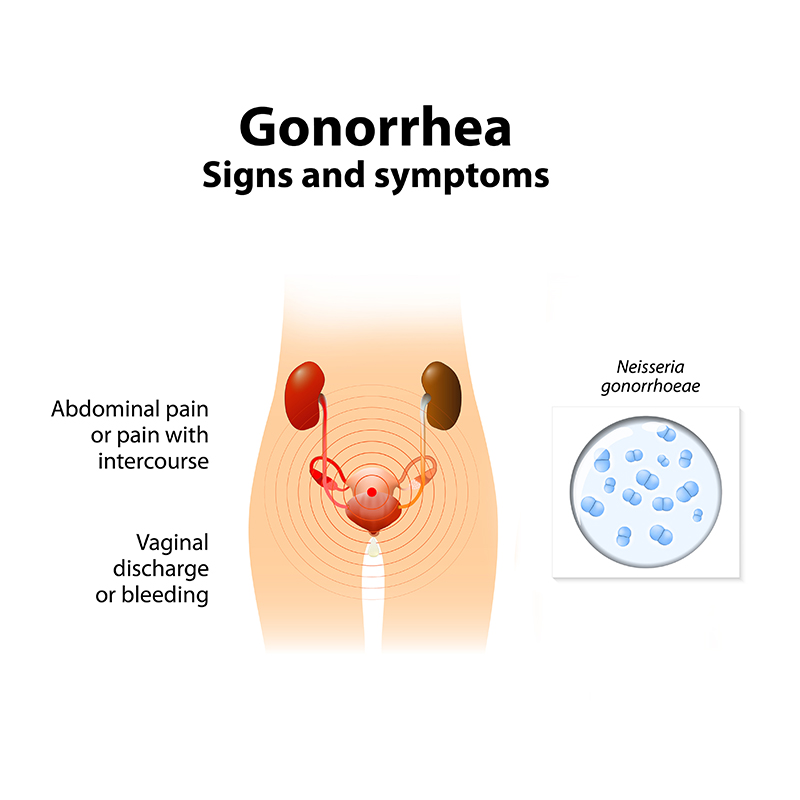
Being sexually active is a decision that comes with responsibility. As a woman who is sexually active, it is important to be informed about the risks involved as well as how to protect yourself from sexually transmitted infections (STIs) such as gonorrhea. Since these infections can be treated effectively, it is also important to be able to recognize the signs and symptoms in order to get treated as early as possible for the best outcome. What Is Gonorrhea? Gonorrhea is a type of STI that is caused by a specific type of bacteria, Neisseria gonorrhoeae, which can infect the mucous membranes of the reproductive tract. In women this includes: Gonorrhea is transmitted through direct sexual contact with the penis, vagina, mouth, or anus of a person who is infected.  It can also be transmitted from a mother to baby during childbirth. In infants, gonorrhea most commonly affects the eyes. You can be re-infected after treatment if you later come into contact with someone who is carrying the bacteria. If you’ve had gonorrhea in the past and suspect you have it again, you should schedule an appointment with your OB/GYN as soon as possible. Who is at Risk for Gonorrhea? Statistics show that approximately 820,000 new cases of gonococcal infections occur each year in the United States, well over half of these cases being in young people ages 15-24. Populations most at risk for contracting gonorrhea are sexually active teenagers, young adults, and African Americans. Signs and Symptoms of Gonorrhea While men may or may not experience symptoms such as urethral discharge, women are almost always asymptomatic. Initial symptoms for women can be mild but may include one or more of the following: Long-Term Problems Often these symptoms can be mistaken for other ailments such as bladder and vaginal infections. Many women are unaware they have gonorrhea until they visit their doctor for other reasons. If left untreated, gonorrhea can put you at a high-risk for developing permanent health complications such as pelvic inflammatory disease (PID), and disseminated gonococcal infection (DGI). These are of particular concerns that require immediate treatment in women as they can lead to infertility, pregnancy complications, and scarring of the fallopian tubes. Gonorrhea can also increase your risk of acquiring or transmitting the HIV virus. If you are experiencing any symptoms, it is important to have them examined by your doctor or another health care provider. Should You be Tested? If you experience any of the above symptoms, or if you are having sexual contact with anyone who has been recently diagnosed with an STI you should discuss testing with your health care provider. The CDC recommends that all sexually active women under the age of 25 and women with risk factors (a new sexual partner, multiple sexual partners or a partner who has an STI) be tested on a yearly basis. How is Gonorrhea Tested? Your health care provider will collect and analyze a sample of cells. Samples are typically collected in one of two ways: What is the Treatment for Gonorrhea? The good news is that gonorrhea can be cured with the right treatment. Treatment frequently involves dual therapy or the use of two antibiotic medications. The CDC recommends that one be taken orally, and one may be administered as a one-time intramuscular injection. It is important to complete the full course of the medication to ensure the bacteria is eradicated adequately. These medications can kill the infection. However, they cannot repair any permanent damage done by the disease. It is important to identify and treat symptoms as early as possible. Remember, your partner should also be treated for gonorrhea if you have been diagnosed to prevent re-infection. How Can You Prevent Gonorrhea? If you are sexually active, the first line of defense against gonorrhea is practicing safe sex. Whether having oral, vaginal, or anal sex, the proper use of condoms can reduce the risk of transmission. The only way to be sure there is no transmission risk of gonorrhea is to temporarily abstain from any type of sexual activity or be in a long-term monogamous relationship with a partner who has been tested and is not infected. Seek Help From Your OB/GYN If you are a woman who is currently sexually active with one or more partners, it is important to be aware of the signs and symptoms of gonorrhea infection and be examined by your OB/GYN if you have any concerns. Gonorrhea is a sexually transmitted infection that can have serious consequences if left untreated. However, when identified early and treated effectively with proper medication, it can be completely cured. Don’t hesitate to call confidentially at 770.720.7733 with any questions or concerns you may have regarding gonorrhea or other STIs. Or, you may schedule an appointment online.

birth control photo
Contraception Education

Birth Control No-Nos

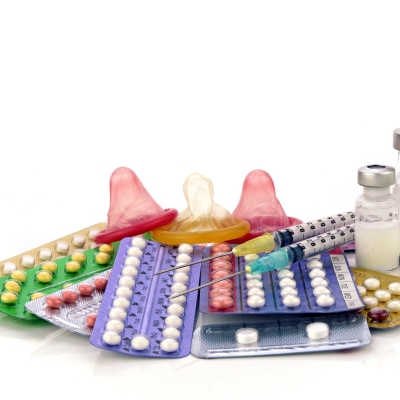
Birth control is offered in many varieties with different instructions, so it can be confusing for women to know that what they are doing is correct. By using birth control correctly, you can increase its effectiveness. Here are the different methods of birth control and the common errors or actions you should avoid to keep yourself protected. Hormonal Contraception Hormonal methods of birth control have a low chance of error if used correctly. The pill is a common choice, but the first mistake is selecting the wrong pill for your body and lifestyle. Call your doctor for an appointment today to explore options and make the right decision. Birth Control Pills Missing a pill or forgetting to take the pill for a couple of days can negatively affect the way it works. This common error can be helped with certain steps. If you forget your pill, take one as soon as you remember, even if that means you take 2 in one day. If you forget 2 days of pills, take 2 the day you remember and 2 the following day to get back on track. Use a backup method until your next period. A big “no, no” when using the pill is to avoid taking rifampin, a drug used to treat tuberculosis, as it interferes with the effectiveness of the pill. General antibiotics are fine; however, be sure to use another form of birth control if you need to take anti-seizure drugs, anti-HIV drugs, and some anti-fungal medications. The Patch The patch is less effective when you apply it at the wrong time of your cycle. To have high effectiveness, you must implement it on the first day of your menstrual cycle or the first Sunday following your period. Also, be cautious of the day you change your patch, and do not apply it to skin that is moisturized, has make-up, or is ultra dry. Vaginal Rings The vaginal ring releases hormones into the body the same way the pill does. A typical mistake is not inserting it within 5 days of the beginning of your period. You will also be at risk of getting pregnant while using the ring if you forget to remove it after 3 weeks and don’t replace it within 7 days. Condoms and Barrier Methods When using a female condom, common mistakes include not applying enough lubrication and not entering the penis directly into the condom. Make sure to remove the female condom carefully after sex to avoid leakage. With male condoms, effectiveness is decreased if you do not leave enough space at the tip or do not remove the air before intercourse. Never reuse condoms, and make sure to hold the base when withdrawing. Be sure to check the expiration date before use along with the size and fit. If a diaphragm is not the right size for you, then it will not be as effective. Be sure to consult your doctor with questions at any point when using contraception. A common mistake to avoid is leaving your diaphragm in for more than 30 hours. Plan to remove the diaphragm or sponge 6 hours after sex and no sooner. Intrauterine Devices (IUDs) With IUDs being almost mistake-proof, they are one of the most effective forms of birth control. However, as with the pill, the ring and the diaphragm, the IUD only protects users from pregnancy, not sexually transmitted infections. Error or lack of effectiveness can arise from not checking the placement of your IUD after insertion. Be sure to check for the string inside your vagina as directed by your physician. Do not use a copper IUD if you are allergic to copper. If you are not in a committed relationship and have multiple partners, the IUD may not be the right choice for you. Similarly, with other forms of birth control, do not use an IUD if you are pregnant. When taking contraception post-pregnancy, check with your OB for the best course of action. Final Thoughts If you are considering birth control or are currently unhappy with your contraception, call your doctor with questions or for an appointment to explore options. Birth control is primarily designed to protect you from an unwanted pregnancy. It does not provide STD protection, so always use condoms if you are not in a committed relationship or may be at risk for STD exposure. To increase the effectiveness of your birth control, make sure to educate yourself about the risks and follow the appropriate instructions.

iron supplements
Nutrition and Weight Loss

How to Add More Iron to Your Diet

Whether you currently suffer from a low iron or are at risk for an iron deficiency, you may want to begin introducing more iron into your diet. Iron is elemental in helping transport oxygen throughout your body. Without a proper amount of iron in your daily life, you may wind up feeling some of the symptoms of iron deficiency. With the help of this article, you will learn how to add more iron into your diet safely. You may be wondering if you have low iron. Take a look at some of the following symptoms to help determine if you have an iron deficiency. Fatigue Shortness of breath Cold hands or feet Dizziness Rapid heartbeat Brittle nails and hair Pale or ‘Sallow’ appearance Pica (cravings for non-food items) If any of these symptoms ring true for you, you might want to think about scheduling an appointment with your doctor. Many of these symptoms can mean multiple things so you should ask your doctor for a proper diagnosis. Talk to your OB-GYN about your concerns and any symptoms you may be having. Who is at Risk for Iron Deficiency While women are more likely to suffer from low iron than men, there are some women who are at a higher risk than others. The average woman between the ages of 14-50 should consume between 15mg and 18mg of iron on a daily basis. Use the below guide to determine if you are at a high risk for low iron levels. Pregnant Women Women who are pregnant need on average about twice as much iron in their bloodstream than non-pregnant women. A pregnant woman should consume 27mg of iron a day to cope with her growing fetus, and higher volume of blood levels. Pregnant women who do not get enough iron on a daily basis are at a higher risk for a preterm birth or below-recommended weight for their little one. Menstruating Women Due to the loss of blood from your menstrual cycle, you may suffer from symptoms associated with low iron. Without proper iron levels throughout menstruation, you can deplete your irons stores causing month long fatigue. Introducing more iron into your diet during your period can keep iron stores built up. Women who are menstruating should consume 18.9mg of iron and teenagers should consume 21.4mg during menstruation. Women Before and After Surgery Iron levels are critical to women going into surgery due to blood loss. If you plan to have surgery, your doctor may recommend adding more iron into your diet beforehand. Your doctor will likely continue to keep you on higher levels of iron than average until it is determined, your stores are built up enough. Nutritional Tips to Safely Add Iron into Your Diet While your doctor may recommend iron supplements, getting enough iron through your food is the safest option. Adding some of these minor dietary changes to your daily routine can have a significant impact on your life. You may begin to feel more energy almost immediately. You may also notice healthier hair, nails, and skin. Below, you will find several tips on how to make minor dietary shifts to help improve and maintain your iron levels. Don’t skip breakfast. Most of your daily iron is going to come from whole grain breakfast cereals with added iron. Say hello to seafood. Clams, mussels, and oysters are filled with iron. Halibut, salmon, and tuna are also great sources of iron. When consuming fish that contains higher-mercury levels, stick to 12 ounces or less a week, especially if pregnant. Introduce snacks loaded with iron into your daily diet, such as hummus or other bean dips. Add whole-grain crackers or bread for an added boost of iron. Switch up your greens. When ordering a salad, choose one that has iron-rich greens such as spinach instead of iceberg or romaine. Avoid drinking caffeinated beverages when consuming iron-rich foods. Caffeine can have adverse effects on how your body soaks in iron. Add Vitamin C-rich foods such as oranges or tomatoes to the same meal as foods high in iron. Vitamin C can help your body absorb iron. Final Thoughts If you still have concerns about your iron levels, don’t hesitate to contact us. Your doctor may recommend making an appointment for further diagnosis of your symptoms.

uterine fibroids
GYN Problems

Uterine Fibroids: What You Should Know

Uterine fibroids are a benign growth that appears on your uterus, uterine wall, or on the surface. These growths can be so small your doctor won’t notice them during an exam or significant enough to change the shape of your uterus, giving you severe discomfort. Statistics show that a whopping 25 percent of women suffer from uterine fibroids. As many as one-third of those women will experience pain or abnormal bleeding due to their fibroids. While uterine fibroids don’t cause pain in every woman, they have been known to create complications for some. Depending on the location of your fibroids, you may experience symptoms that can affect your daily life. You should consult your doctor about any symptoms you may be experiencing, especially if you have been trying to conceive. Symptoms Caused by Fibroids Uterine fibroids affect each woman differently. Women who suffer from uterine fibroids can have varying degrees of pain, especially during menstruation. Women who are at high risk for uterine fibroids are between the ages of 25-45. African-American women also are more likely to suffer from uterine fibroids. Research is still unclear as to why this may be. Women who are considerably overweight are 2-3 times more likely to get uterine fibroids. If you suffer from one or more of the following symptoms, you may have uterine fibroids. Changes in Menstruation – A typical menstrual cycle will last seven days. It should be heavier in the first several days and become lighter. Women who have fibroids can experience longer, more frequent or heavier periods. Bleeding or spotting at times other than your period are more likely to occur as well. Difficulty or Frequent Urinating – You may feel the need to use the restroom more often if you have uterine fibroids. Urinary leakage can be another side effect of having fibroids. Abdominal or Lower Back Pain – Generally, this pain will be a dull, heavy ache. However, you may experience a sharp pain as well. Pain or Pressure During Sex – Sex can be uncomfortable when you have fibroids, depending on the size and location of them. Infertility – Although there are many reasons you may be unable to conceive, your doctor will want to check to see if you have uterine fibroids. If you believe that you have uterine fibroids, you might want to consider speaking with your doctor about diagnosing them. Once diagnosed there are many treatment options available. Relieving Uterine Fibroid Symptoms There are several non-surgical options your doctor will suggest to help relieve the symptoms you may be feeling. If you are near menopause, your OB/GYN may recommend waiting out the fibroid symptoms if you can. Fibroids are linked to high estrogen levels, so they are likely to disappear with menopause. Use some of the following techniques to alleviate they symptoms of your uterine fibroids: Over-the-Counter Pain Medicine – If you suffer from painful, long lasting periods, drugs such as ibuprofen may help alleviate some of your pain. Birth Control – These pills can be prescribed to help control heavy bleeding during your period. Relax – Some research has determined a link between high-stress levels and your fibroids. Try relaxation techniques such as yoga, medication, and exercise to manage stress. Manage Your Blood Pressure – High blood pressure has been linked to fibroids. Talk to your doctor about lowering your blood pressure through diet, exercise or medication. Steer Clear of Smoking – Cigarette smoking can reduce the amount of oxygen that can reach your pelvic area and can worsen your menstrual pain. Be sure to contact your OB/GYN before taking any supplements or medicines that could affect your estrogen levels. We Can Help If you think you may have uterine fibroids, schedule an appointment today or call us at 770.720.7733 and ask your doctor about the various non-surgical treatment options available for uterine fibroids.

© Copyright 2024 Cherokee Women’s Health Specialists
Scroll to Top