
Search Results for: menstrual cycle

happy content woman
Pap Smears, Well Woman

Do You Really Need an Annual Every Year?

It’s a common misconception that women don’t need an annual checkup from their gynecologist each year. In fact, women do need an annual checkup each year, especially for a pelvic exam and breast exam. Cherokee Women’s Health sheds some light on the difference between a pap smear and a pelvic exam and why they’re so important to maintaining your overall health. Pelvic Exam vs. Pap Smear A pap smear and a pelvic exam are not the same thing. A pap smear is a brushing of cells from the cervix, or opening of the uterus. These cells are evaluated by a laboratory to look for signs of precancerous diseases of the cervix, which if successfully treated, can prevent cervical cancer. Sexually transmitted diseases can also be diagnosed and treated through information gained from a pap smear. Pap smears do not test for uterine or ovarian cancer. A pelvic exam usually occurs after a pap smear at your annual checkup. This is when your physician or advanced practice provider examines the skin of the vulva, vagina and cervix, looking for any suspicious lesions, which could indicate skin cancer or vulvar diseases. He or she will also perform a bi-manual exam using their hands to feel the pelvic organs and check for masses or inconsistencies. During this process, your doctor will gently place two fingers inside the vagina and use the other hand to gently press down on the area he or she is feeling. In doing this, your doctor is noting if the organs have changed in size or shape, and it allows them to feel the uterus, the ovaries, the bladder and the rectum. If your doctor determines that your uterus or other organs feel enlarged, he or she may order an ultrasound to check for fibroids, cysts, or other inconsistencies. Do I Need a Pap Smear Every Year? The American College of Obstetricians and Gynecologists (ACOG) suggest that certain women do not require a pap smear every year. If you are over the age of 30, in a mutually monogamous relationship and have never had an abnormal pap smear, you may not need a pap smear each year. If you’ve ever had a hysterectomy that was not done for an abnormal pap smear and you fall into any of the above categories, your doctor may suggest you only need a pap smear every three to five years. However, any changes to menstrual cycle, abnormal bleeding, or vaginal pain or discomfort should warrant a call to your gynecologist. Do I Need a Pelvic Exam Every Year? Annual pelvic exams in addition to your yearly well-woman exam are essential for maintaining your overall health. It is imperative that you do not skip your annual pelvic exam, even if you have had a hysterectomy with removal of the uterus and ovaries. Your annual well visit not only includes a pelvic exam but a breast exam, as well as an opportunity to talk to your doctor about birth control options, weight, cholesterol, blood pressure or any other concerns. If you have questions regarding the recommendations of when to get a pap smear or a pelvic exam, contact our office at 770.720.7733 or make an appointment online.

Michael Litrel, MD, FACOG, FPMRS
Dr. Litrel's Blog

Crying in the Exam Room

A patient I’d known for twenty years called to let me know her daughter was coming in to see me. She reminded me it had been eighteen years since I’d delivered her “baby girl.” I began to feel old, and I knew right away this was going to be a difficult appointment. For me. Baby Olivia had just returned from her first year of college. After gaining the traditional “freshman fifteen,” she had begun to suffer the effects, with her menstrual cycles becoming painful and irregular. One month she would miss her period, and the next bleed heavily for fifteen days. The cramps were so severe, she sometimes had to stay in her dorm room in bed. Her grades and social life had deteriorated. An ultrasound confirmed the obvious culprit, ovarian cysts. But I knew the underlying problem was her weight gain. Fat tissue can throw off a woman’s menstrual cycle; it introduces excess estrogen into the hormonal milieu. A high school cheerleader, Olivia had entered college almost underweight, so she wasn’t medically obese – just overweight for her small figure. As I reviewed the photos from her ultrasound, I debated with myself about how to broach the subject. No woman responds well to critical conversations about her weight, particularly a young woman struggling emotionally with the reflection she sees in the mirror. But I was confident that my extensive experience as a board certified OB/GYN, coupled with a natural soft touch with the opposite gender, gave me the requisite skill set to negotiate the conversational landmine. Olivia’s mom would be grateful she sent her daughter my way. Olivia began to sob as soon as I opened my mouth. Every exam room has a box of tissues for when my “conversational skill set” falls short. I handed Olivia some tissues and apologized for hurting her feelings. She reassured me it wasn’t what I had said that bothered her. She told me her story. Roommates Share Olivia and her roommate Sara started the year best of friends. They studied and ate together and went to parties with each other on the weekends. They even shared each other’s clothing. The stress of schoolwork and being away from home took its toll on Olivia. Sara was always ready to listen. Sara always had had snacks in the room – Oreos, Pop-Tarts, Doritos, Hershey’s chocolate and Coke. Olivia was free to help herself anytime she wanted. The comfort food made Olivia feel better. Any time Olivia was upset, Sara handed her something yummy. As the months went by, Olivia’s weight crept up, and her clothing became tighter. In her second semester when her periods began going haywire, she resigned herself to wearing sweats and baggy shirts. Sara kept her petite figure the entire year and took full advantage of Olivia’s unused clothing. It was toward the end of the school year that Sara made a shocking confession. She had filled their dorm room with snack food and encouraged Olivia’s overindulgence so Olivia would not fit into her clothing. “You had such nice things to wear, I couldn’t resist,” Sara told her with a laugh. Olivia’s problem wasn’t just weight gain; it was also an evil roommate. Life is painful enough without betrayal from those you trust. And yet betrayal is at the root of many of our medical problems. Making You Feel Good Smoking is a good place to start this conversation because most of us know it is the number one lifestyle choice that adversely affects our health. We know cigarettes are bad, but many continue to smoke. That’s because cigarettes are addictive. Yes, they lead to cancer and heart disease, but there is undeniably something about them that makes us feel good. Despite thirty years of evidence showing that the tobacco industry was not only purposefully increasing the addictive properties of their product, but also marketing them directly toward children, the tobacco industry successfully fought off all litigation. By the 1990’s, astronomical amounts of money had been spent caring for patients whose illnesses were the direct result of tobacco abuse. These were dollars often directly funded by the taxpayer as Medicare or Medicaid expenses. Finally, Attorney Generals from multiple states successfully brought a class action lawsuit, and in 1998 the tobacco industry agreed to pay 206 billion dollars to the states over twenty-five years. They also agreed to get rid of advertising icons, such as the Marlboro Man and Joe Camel, specifically designed to attract and addict the next generation of smokers. After smoking, what we choose to eat is the number two lifestyle choice that adversely affects our health. The typical American diet leads directly to obesity, heart disease, cancer and stroke. Many of the products sold on the shelves of our grocery store or in restaurants are virtually addictive. They don’t create a physical addiction in the same way that nicotine does, but in the book Salt Sugar Fat, author Michael Moss details exactly how the food industry has focused on creating mouth-watering products that are essentially irresistible. In 1990, Philip Morris, the tobacco giant responsible for almost half of the cigarette sales in the United States, purchased food giants Kraft and General Foods, and with these acquisitions began to control ten cents of every dollar Americans spend on groceries. Consuming salt, sugar, and fat, in the right combinations, with the perfect “mouth feel,” is like smoking cigarettes. And that’s why it’s impossible to eat only one Dorito or Oreo or McDonald’s French fry. The Pillsbury Doughboy, the Keebler elf, and Ronald McDonald smile like old friends but are actually evil roommates. New Choices I recommended a plant-based diet for Olivia, so she would become healthy again. I alerted her that if she didn’t lose the weight, she might suffer from infertility or eventually need surgery. Anything wrapped in plastic, containing sugar, fat, preservatives, or artificial flavors, was off-limits, no matter how delicious. The change would be tough at first, but the choice would prove life-changing. I also began

Uterine Fibroids

Uterine Fibroids Uterine Fibroids What are uterine fibroids? Who is most likely to have fibroids? What are symptoms of fibroids? What complications can occur with fibroids? How are fibroids diagnosed? When is treatment necessary for fibroids? Can medication be used to treat fibroids? What types of surgery may be done to treat fibroids? Are there other treatments besides medication and… What are uterine fibroids? Uterine fibroids (also called leiomyomas or myomas) are noncancerous growths that develop from the muscle tissue of the uterus. Uterine fibroids size, shape, and location can vary greatly. They can be inside the uterus, on its outer surface or within its walls, or attached to it by a stem-like structure. You can have only one fibroid or many of varying sizes. A fibroid may remain very small for a long time, then it may grow rapidly or slowly over many y Who is most likely to have fibroids? Uterine fibroids can happen at any age but are most common in women aged 30-40. Uterine fibroids are more common in African American women than in white women. They also occur at a younger age and grow more rapidly in African American women. What are symptoms of fibroids? The following may be symptoms of fibroids: Vaginal bleeding at times other than menstruation Changes in menstruation (longer, more frequent, or heavy menstrual periods or menstrual pain and cramps) Anemia (from blood loss) Pain during sex Dull or sharp pain in the abdomen or lower back Internal pressure (difficulty urinating, frequent urination, constipation, rectal pain, or difficult bowel movements) Abdominal cramps Miscarriages Enlarged uterus and abdomen Infertility Fibroids can also cause no symptoms at all. Fibroids can be found during a routine pelvic exam or during tests for other problems. What complications can occur with fibroids? Fibroids that grow rapidly, or those that start breaking down, may cause pain. Rarely are these associated with cancer. Fibroids that are attached to the uterus by a stem can twist, possibly causing pain, nausea, or fever. A very large fibroid can cause swelling of the abdomen, making it difficult to do a thorough pelvic exam. Fibroids may also cause infertility, although other causes are more common. Other factors should be explored before fibroids are considered the cause of a couple’s infertility. When are fibroids are thought to be the cause of infertility, many women are able to become pregnant after treatment. How are fibroids diagnosed? Fibroids may be detected during a routine pelvic exam. These other tests may show more information about fibroids: Ultrasonography — Uses sound waves to produce a picture of the uterus and other pelvic organs. Hysteroscopy — Uses a slender device (the hysteroscope), inserted through the vagina and cervix, to see the inside of the uterus. Hysterosalpingography — A special X-ray test that can detect abnormal changes in the size and shape of the uterus and fallopian tubes. Sonohysterography — Fluid is put into the uterus through the cervix, then ultrasonography is used to show the inside of the uterus and the uterine lining. Laparoscopy — Uses a slender device (the laparoscope), inserted through a small cut just below or through the navel, to look inside the abdomen and see the fibroids on the outside of the uterus. Imaging tests, such as MRI and CT scans. Some of these tests may be used to track the growth of fibroids over time. When is treatment necessary for fibroids? Women nearing menopause often do not need treatment. These signs and symptoms may signal the need for treatment: Bleeding between periods Heavy or painful menstrual periods that cause anemia or that disrupt normal activities Rapid increase in the growth of the fibroid Uncertainty whether the growth of a fibroid is a fibroid or another type of tumor Infertility Pelvic pain. Can medication be used to treat fibroids? Medication is an option to treat fibroids. Medications may reduce heavy bleeding and painful periods, but they may not prevent the fibroid growth and surgery may be needed later. Drug treatment includes the following options: Birth control pills and other hormonal birth control methods (used to control heavy bleeding and painful periods) Gonadotropin-releasing hormone (GnRH) agonists These drugs stop the menstrual cycle and can shrink fibroids. There may be side effects, so they are only used for short periods of time. Sometimes they may be used before surgery to reduce the risk of bleeding. Progestin-releasing intrauterine device This drug option is for women with fibroids that do not distort the inside of the uterus. It reduces heavy and painful periods but does not treat the fibroids themselves. What types of surgery may be done to treat fibroids? Two surgeries can be done to treat fibroids: Myomectomy – the surgical removal of fibroids while leaving the uterus in place This is done so the woman can keep her uterus and still be able to have children Fibroids will not regrow after surgery, but new ones may still develop If new fibroids form, more surgery may be needed Hysterectomy – the surgical removal of the uterus (ovaries may or not be removed) This is done when other methods have not worked, or the fibroids are very large A woman who has a hysterectomy will no longer be able to have children. Are there other treatments beside medication and surgery? These other methods may be done to treat fibroids: Hysteroscopy This technique removes fibroids that protrude into the cavity of the uterus A resectoscope is inserted through the hysteroscope and destroys fibroids with electricity or a laser beam It cannot remove fibroids that are deep within the walls of the uterus This can be done as an outpatient procedure Endometrial ablation This procedure destroys the lining (endometrium) of the uterus and is used to treat women with small fibroids (less than 3 cm) Endometrial ablation can be performed using uterine artery embolization (UAE) In UAE tiny particles are injected into the blood vessels of the uterus, cutting off blood supply to the fibroid, and causing them to

Hormone Therapy

Hormone Therapy Hormone Therapy What is hormone therapy? How does estrogen affect the reproductive system? How do estrogen levels change over time? What are some of the symptoms of menopause that are… What are hot flashes? How does loss of estrogen affect the vagina and urinary… How does hormone therapy help protect against osteoporosis? What are some factors that should be considered when… How is hormone therapy administered? What are the risks associated with the use of hormone… Are there other options available that can treat menopause… What is hormone therapy? Hormone therapy is the act of taking hormone medications to relieve symptoms of menopause. What are hormones? Hormones are made by glands in the body and are substances that stimulate certain cells, tissues, or organs into action. Androgen hormones are made by the ovaries and testes. The ovaries use androgen to make estrogen from puberty until menopause. How do estrogen levels change over time? As females age, estrogen production decreases. At some point, the ovaries stop making enough estrogen to thicken the uterine lining. This is when menstrual periods stop and menopause begins. This typically occurs during the ages of 45-55. If the ovaries are removed during surgery, estrogen levels will drop suddenly, bringing about the symptoms of menopause. Women can take hormones to relieve symptoms of menopause. How does estrogen affect the reproductive system? For women, estrogen plays a key role in the reproductive system: Changes in estrogen levels lead to menstrual periods Estrogen is made during the entire menstrual cycle Estrogen causes the uterine lining to thicken each month Estrogen also affects bones and cardiovascular health. What are some of the common symptoms of menopause? Some symptoms that might occur with decreased estrogen levels are: Vaginal dryness Hot flashes Osteoporosis (bone loss). What are hot flashes? A hot flash is a sudden feeling of heat that spreads over the body and face. Skin may redden, like a blush, and sweating may occur. Hot flashes may last a few seconds to several minutes or longer. They may occur day or night several times a day or a few times a month. Estrogen can help relieve hot flashes. How does loss of estrogen affect the vagina and urinary tract? Changes within the vagina after a loss of estrogen may include: The lining of the vagina can thin and dry out The vagina can become more prone to infection, which may cause burning and itching The changes within the urinary tract may include:It may become dry, inflamed, or irritated Some women may need to urinate more often There is an increased chance of bladder infection after menopause. Hormone therapy can relieve any of these symptoms. How does hormone therapy help protect against osteoporosis? With women, osteoporosis may result from low estrogen levels. Estrogen helps to protect against bone loss. Once you begin menopause, your bones slowly begin to lose strength. They become more fragile and more likely to break. The hip, wrist, and spine are most often affected. Hormone therapy can help slow bone loss after menopause because estrogen helps preserve bone and works with other hormones to increase bone mass. What are some factors that should be considered when deciding to take hormone therapy? Deciding whether to take hormone therapy depends on your personal needs: Symptoms Medical and family history Risk of bone less Age at menopause. How is hormone therapy administered? If you still have your uterus, therapy includes both estrogen and progestin (another hormone) Taking estrogen alone causes the uterine lining to grow too much and increases the risk of endometrial cancer. Progestin prevents the uterine lining. Hormone therapy can be given in many ways including: Vaginally (cream, pill, or ring) Orally Transdermally (through the skin). When you take your therapy, it depends on the type you are administered: Cyclic therapy: Estrogen is taken for 25 days. Progestin is added on certain days, the exact time may vary. During the times you are not taking progestin, bleeding may occur. Combined therapy: Estrogen and low dose progestin are taken every day. Irregular bleeding is common in the first few months. Within a year, bleeding should stop. Estrogen only therapy: Estrogen is taken every day for 25 days per month or more. What are the risks associated with the use of hormone therapy? Hormone therapy may increase the risk of: Strokes Heart attacks Blood clots Breast cancer. Risks vary depending on how far a woman is past menopause. It is recommended that the the smallest dose of hormone therapy be taken that works. Take therapy for the shortest amount of time possible. Monthly bleeding may resume, which you may find bothersome. Are there other options available that can treat menopause symptoms? Some other options include: Herbal products Antidepressants Bioidentical hormones. These products have limited information about effectiveness. Some products are helpful in short-term treatment of symptoms. Some could cause harm. Herbal products and bioidentical hormones are not approved by the FDA.

Abnormal Uterine Bleeding

Abnormal Uterine Bleeding Abnormal Uterine Bleeding What is abnormal uterine bleeding? What is a normal menstrual cycle? At what ages is abnormal bleeding more common? What causes abnormal bleeding? How is abnormal bleeding diagnosed? What tests may be needed to diagnose abnormal bleeding? What factors are considered when deciding on a type… What medications are used to help control abnormal… What types of surgery are performed to treat abnormal… What is abnormal uterine bleeding? Bleeding between periods Bleeding after sex Spotting anytime in the menstrual cycle Bleeding heavier or for more days than normal Bleeding after menopause Menstrual cycles that are longer than 35 days or shorter than 21 days are abnormal. The lack of periods for 3-6 months (amenorrhea) also is abnormal. What is a normal menstrual cycle? The menstrual cycle begins with the first day of bleeding of one period and ends with the first day of the next. In most women, this cycle lasts about 28 days. Cycles that are shorter or longer by up to 7 days are normal. At what ages is abnormal bleeding more common? Abnormal bleeding can occur at any age. However, at certain times in a woman’s life it is common for periods to be somewhat irregular. Age 9-16 years They may not occur on schedule in the first few years after a girl has her first period (around age 9-16 years). Age 35 years. The cycle may get shorter near age 35 years. Around age 50 years It often gets shorter as a woman nears menopause (around age 50 years). It also is normal then to skip periods or for bleeding to get lighter or heavier. What causes abnormal bleeding? Common Causes Hormonal Imbalance Too much or not enough of the hormones that regulate the menstrual cycle can cause abnormal or heavy bleeding. This imbalance can be caused by many things, including thyroid problems or some medications. Pregnancy Miscarriage Ectopic pregnancy Problems linked to some birth control methods, Intrauterine device (IUD) Birth control pills Infection of the uterus or cervix Fibroids Problems with blood clotting Polyps Certain types of cancer, such as cancer of the uterus, cervix, or vagina Chronic medical conditions (for instance, thyroid problems and diabetes) Diagnosis Your health care provider may start by checking for problems most common in your age group. Some of them are not serious and are easy to treat. How is abnormal bleeding diagnosed? Personal and family health history as well as your menstrual cycle. Menstrual Cycle Details Keep track of your menstrual cycle before your visit. Note the dates, length, and type (light, medium, heavy, or spotting) of your bleeding on a calendar. Physical exam. Blood tests. Blood count Hormone levels Rule out some diseases of the blood. A test to see if you are pregnant. What tests may be needed to diagnose abnormal bleeding? Where can these tests be done? Some of these tests can be done in your health care provider’s office. Others may be done at a hospital or surgical center: Tests Ultrasound Sound waves are used to make a picture of the pelvic organs. Endometrial biopsy Using a small or thin catheter (tube) Tissue is taken from the lining of the uterus (endometrium). It is looked at under a microscope. Sonohysterography Fluid is placed in the uterus through a thin tube While ultrasound images are made of the uterus. Hysteroscopy A thin device is inserted through the vagina and the opening of the cervix. It lets the health care provider view the inside of the uterus. Hysterosalpingography Dye is injected into the uterus and fallopian tubes. Then an X-ray is taken. Dilation and curettage (D&C) — The opening of the cervix is enlarged. Tissue is gently scraped or suctioned from the lining of the uterus. It is examined under a microscope. Laparoscopy A thin device like a telescope is inserted through a small cut Just below or through the navel to view the inside of the abdomen. What factors are considered when deciding on a type… Treatment falls into three types Medications, such as hormones Surgery “watch and wait” before trying the other two treatments. The type of treatment will depend on many factors, including The cause of the bleeding. Your age Whether you want to have children also play a role. Most women can be treated with medications. What medications are used to help control abnormal… Hormonal medications The type of hormone you take will depend on Whether you want to get pregnant Your age. Birth control pills can help make your periods more regular. Hormones also can be given as An injection A vaginal cream Through an IUD that releases hormones. An IUD is a birth control device that is inserted in the uterus. The hormones in the IUD are released slowly and may control abnormal bleeding. What types of surgery are performed to treat abnormal… Some women may need to have surgery to remove growths Such as polyps or fibroids that cause bleeding. Surgical options Some fibroids can be removed with hysteroscopy. Endometrial ablation may be used to control bleeding (see the FAQ Endometrial Ablation). It is intended to stop or reduce bleeding permanently. An endometrial biopsy is needed before ablation is considered. Hysterectomy may be done when other forms of treatment have failed or they are not an option. Hysterectomy is major surgery. Afterward, a woman no longer has periods. She also cannot get pregnant.

Endometriosis

Endometriosis Endometriosis What is endometriosis? What are the most common places in the body where… What are the effects of endometriosis? Who is at risk of endometriosis? What are the symptoms of endometriosis? How is endometriosis diagnosed? How is endometriosis treated? What medications are used to treat endometriosis? What hormones are used most often for treatment? What types of surgery are used to treat endometriosis? What can I expect after surgery? What is endometriosis? Endometrium: Tissue that forms the lining of the uterus Endometrium grows in places in the body other than the uterus. What are the most common places in the body where… Ovaries Fallopian tubes Surface of the uterus Cul-de-sac (the space behind the uterus) Bowel Bladder and ureters Rectum Lungs: rarely Other parts of the body as well What are the effects of endometriosis? Abnormal bleeding Endometrial tissue outside the uterus responds to changes in hormones. It breaks down and bleeds like the lining of the uterus during the menstrual cycle. Adhesions The breakdown and bleeding of this tissue each month can cause scar tissue, called adhesions, to form. Adhesions can cause pain. Sometimes, adhesions bind organs together. Infertility Endometriosis may lead to infertility. Who is at risk of endometriosis? Age Most common in women in their 30s and 40s, It can occur any time in women who menstruate. Children Endometriosis occurs more often in women who have never had children. Family History Women with a mother, sister, or daughter who have had endometriosis What are the symptoms of endometriosis? Pelvic pain. Pain may occur with sex, During bowel movements or urination, Just before or during the menstrual cycle. Pain severity does not correlate with condition severity Some women with slight pain may have a severe case. Others who have a lot of pain may have a mild case. Menstrual bleeding may occur more than once a month. Many women with endometriosis have no symptoms. They may first find out that they have endometriosis if they are not able to get pregnant. In women who can get pregnant, many often find that symptoms are relieved while they are pregnant. How is endometriosis diagnosed? Physical exam, including a pelvic exam. Laparoscopy Looking directly inside the body. The only sure way to tell if endometriosis is present Biopsy Sometimes a small amount of tissue is removed during the procedure and studied in a lab. How is endometriosis treated? Options Medication Surgery Both Treatment choice depends on Extent of the disease Your symptoms Whether you want to have children. Treatment Efficacy Treatments may relieve pain and infertility for a time Symptoms may come back after treatment. What medications are used to treat endometriosis? Nonsteroidal anti-inflammatory drugs (NSAIDs) May be used to relieve pain. Hormones May help slow the growth of the endometrial tissue And prevent the growth of new adhesions But will not make them go away. What hormones are used most often for treatment? Oral contraceptives Birth control pills contain hormones Help keep the menstrual period Regular Lighter Shorter Can relieve pain. Gonadotropin-releasing hormone (GnRH) drugs Decrease estrogen levels By stopping its production by the ovaries. Causes a short-term condition that is much like menopause. Given as a shot, an implant, or nasal spray. Efficacy In most cases, endometriosis shrinks and pain is relieved Side effects Hot flushes Headaches Vaginal dryness Decrease in bone density Duration Treatment with GnRH most often lasts at least 3 months. Bone Loss Long-term use can result in bone loss. Prevention Your doctor may prescribe certain hormones or medications to take along with GnRH treatment. In many cases, this therapy also may reduce other side effects. After stopping GnRH treatment, you should have periods again in about 6–10 weeks. Progestin Progestin works against the effects of estrogen on the tissue. Although you will no longer have a monthly menstrual period when taking progestin, you may have irregular vaginal bleeding. Progestin is taken as a pill or injection. What types of surgery are used to treat endometriosis? Often is done by laparoscopy. During laparoscopy, endometriosis can be removed or burned away. Not all cases can be handled with laparoscopy. Sometimes a procedure called a laparotomy may be needed. What can I expect after surgery? You may have relief from pain. However, symptoms return within 1 year in about one half of women who have had surgery. Many patients are treated with both surgery and medications to help extend the symptom-free period. If pain is severe and does not go away after treatment, a hysterectomy (surgery to remove your uterus) may be an option. Endometriosis is less likely to come back if your ovaries also are removed. After this procedure, a woman will no longer have periods or be able to get pregnant. There is a small chance that your symptoms will come back even if your uterus and ovaries are removed.

Types of Vaginal Rejuvenation

Types of Vaginal Rejuvenation Types of Vaginal Rejuvenation Vaginoplasty and labiaplasty are two of the most common vaginal rejuvenation procedures. Some women may wish to have their vagina tightened, while some women may wish to have a procedure to correct the shape of their labia. These procedures are separate. However, they may be performed together or individually, depending on the woman’s choice. Below we explain the different types of vaginal rejuvenation procedures. Read Vaginal Rejuvenation Articles Vaginoplasty Vaginoplasty (or Vaginal Rejuvenation Surgery) is the Tightening and Rejuvenation of the Vagina Vaginoplasty is a vaginal surgery aimed at tightening lax muscles to achieve a narrower and tighter vaginal canal and smaller opening. A widening of the vaginal area is often a result of aging or childbirth. Therefore, you may experience reduced sexual pleasure due to reduced friction during intercourse. This procedure typically takes about 60 minutes and can be done under general anesthesia or a local anesthesia with some sedation. By using a laser devise, greater precision can be achieved with minimal incisions. Labiaplasty Labiaplasty (or Vaginal Cosmetic Surgery) is the Reduction and Beautification of the Labia Labiaplasty is an aesthetic procedure used to reshape and transform the appearance of the labia minora (small inner lips) or the labia majora (larger outer lips). Labiaplasty is performed to remove excess skin or to correct misshapenness or irregularities. Large labia can cause discomfort during sexual intercourse, cause friction while exercising or make it uncomfortable to wear swimsuits. Labia reduction will transform the shape of the labia and achieve symmetry. Both procedures typically take about 60 minutes and can be done under general anesthesia or a local anesthesia with some sedation. The recovery period is relatively short and most patients can return to work in 3-4 days. Sexual activity can be usually be resumed in 6-8 weeks. Why Choose Cherokee Women’s Health for Vaginal Rejuvenation? Female genital cosmetic surgery is a demanding surgical field and few surgeons are skilled enough to perform the delicate procedures with good results. Our surgeons at Cherokee Women’s Health offer a combined experience of over 60 years of performing vaginal rejuvenation procedures. This knowledge and experience empower patients with the most comprehensive knowledge base of information in the North Georgia area to help ensure a successful outcome. And because our surgeons are board-certified OB/GYN surgeons with the highest professional qualifications and credentials in performing such procedures, they fully understand a woman’s body — inside and out — which means you will receive the best treatment with the best outcome. “Dr. Litrel performed my vaginoplasty and he’s simply amazing! I feel absolutely wonderful and have done nothing but brag about him and his staff. I highly recommend your office. I was expecting more pain and downtime but I feel great! I sit at a desk all day and I’m going to work today. No pain meds for 24 hours. I had contacted another doctor’s office in your area prior to contacting you. I received your email response right away and it just felt right. From the time I first got in contact with your office, things fell into place and went so smoothly. I’ve never experienced this kind of excellent service at any doctor’s office I’ve ever been to. I was treated with such amazing courtesy and respect. I could not be happier with the care I received.”Juana L. Dr. Litrel Explains Why Choosing the Right Surgeon for Your Vaginal Rejuvenation is Important There is a lot of confusion surrounding vaginal rejuvenation. Here, Dr. Litrel explains why it’s important to choose a female health expert when considering surgery. Dr. Litrel says, “Well-reputed medical authorities describe it incorrectly on national television. It’s not a cosmetic operation that only improves a woman’s appearance, it also improves a woman’s sexual functionality. Vaginal rejuvenation is indeed cosmetic and makes a woman appear like she did before childbirth or even before becoming sexually active, but a well-performed operation will dramatically improve a woman’s sex life and certainly her partner’s as well. There is a reason why there is so much confusion about vaginal rejuvenation. General plastic surgeons with hardly any knowledge of pelvic anatomy have historically botched the operation. They have only addressed the physical appearance of a woman’s genitalia without correcting the underlying problem. Thus, it has become known as a cosmetic operation that does not fix anything but physical appearance. And it will also improve other things. Even most obstetricians and gynecologists who specialize only in caring for women and who generally have a much better understanding of vaginal anatomy wind up spending so much time delivering babies or performing annual exams, he or she doesn’t develop the surgical expertise to address the complicated anatomical injuries that result in sexual dysfunction. The fundamental problem is that a woman suffers damage to her vagina as a result of giving birth to a baby. This is not a complicated idea. A baby’s head is big and it causes damage when it comes out. Any lacerations are fixed right after the delivery by the obstetrician. The bleeding is stopped and the wounds to the vagina and labia are repaired. But this does not repair all the damage to a woman’s body. Think about what just happened; the mother spend nine months growing a human being inside her body and then an exhausting twelve hours or so pushing the baby out. It’s not possible to fix all the damage done to a woman’s body with the repair of an episiotomy. So a woman’s problems do not stop when she is discharged from labor and delivery. Other things happen later. So what exactly happens to a woman’s anatomy? Essentially, after having a baby the vagina loosens and drops. This is why so many experience changes in sexual pleasure after they become mothers. And other things occur as well.” Changes that occur in the vagina Dr. Litrel continues, “Changes to a woman’s vagina falls under the category of pelvic organ prolapse. As the direct result of childbearing, the bladder, rectum and uterus

Contraception

Contraception The ability to control when you get pregnant is a vital component of your overall health. We offer a full range of options to prevent pregnancy, tailored to your needs and preferences. However, the wealth of contraception alternatives can be confusing. If you are considering contraception, or need to change your current method, we recommend taking this online quiz to learn more about your options prior to your appointment. Read Contraception Articles Family Planning and Birth Control Options If you’re unsure about whether you want to start a family, or you’ve already had children and know you’re finished adding to your family, there are lots of options available that allow you to remain sexually active while also alleviating the surprise of unplanned pregnancy. It’s important to research the various options for contraception and sterilization to find a solution that fits you and your lifestyle the best. Your doctor can help you select the best method for your family planning needs. Contraception and Sterilization: Permanent Versus Non-Permanent Methods Non-permanent methods of birth control offer a lot of options that vary in effectivity, frequency and hormonal versus non-hormonal methods. With these, you can select a combination of methods that work best for you. Some of these include: Birth control pills – One of the most common, and often cost-effective, forms of birth control. Pills are taken daily and regulate cycles to 28 days. Barrier methods – Barrier methods include male and female condoms, diaphragm, cervical cap and contraceptive sponge. Natural methods – Tracking menstrual cycles, basal body temperature and cervical mucus Intrauterine devices (IUDs) – Examples include the copper IUD (ParaGard) and the hormonal IUD (Mirena). Additional options – Examples include the vaginal ring (NuvaRing), contraceptive implant (Nexplanon), contraceptive injection (Depo-Provera) and contraceptive patch (Ortho Evra). If you’re looking for a more permanent solution for birth control, (also referred to as sterilization), options include: Tubal ligation – Often referred to as “having the tubes tied,” tubal ligation is a surgical procedure in which the fallopian tubes are cut or blocked to prevent pregnancy. Vasectomy – A surgical procedure for men in which a doctor cuts and seals off the two tubes that allow sperm to travel outside the body. These options aren’t inclusive, and there are other options available, as shown below. At Cherokee Women’s Health Specialists, our goal is to offer our patients comprehensive care that promotes lifelong health and well-being. Schedule an appointment to talk to one of our physicians and we can determine what birth control options are safest and most beneficial for you and your needs. Contraception Education Articles

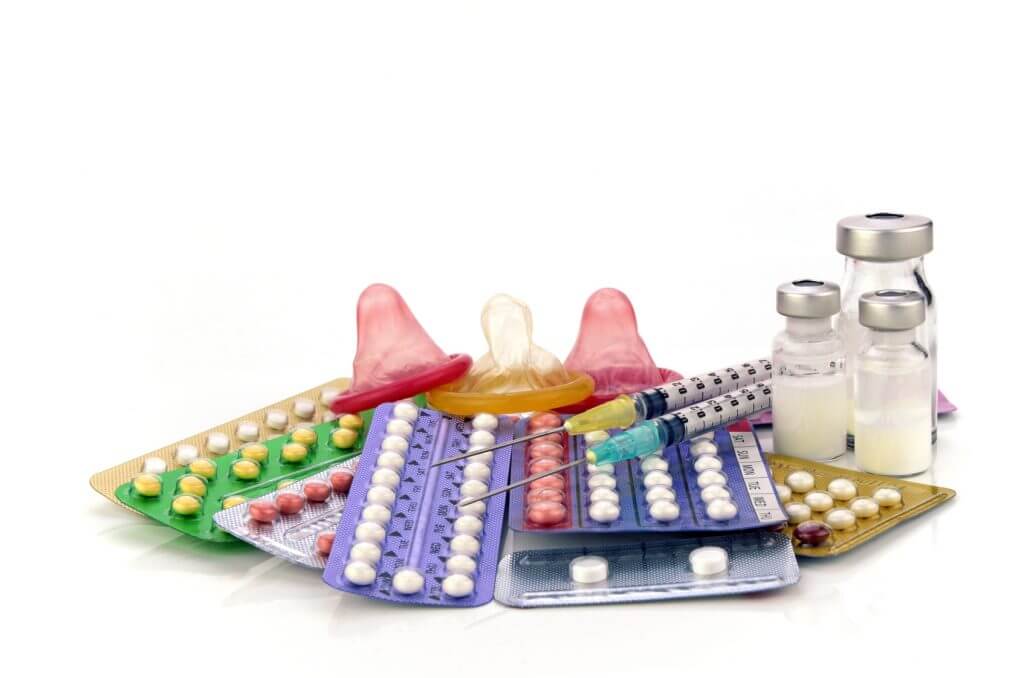
Different forms of birth control including birth control pills, injections and condoms. Talk to your doctor about which is best for you.

Sterilization

Sterilization Sterilization The traditional option for permanent contraception has been surgical sterilization, also known as ‘tying the tubes‘. This surgery can be performed as an outpatient procedure, meaning you spend less than 24 hours in the operating room. Read Sterilization Articles Non-Surgery Options for Permanent Birth Control New options for sterilization can now be performed as a simple office procedure. All of our physicians at Cherokee Women’s are trained and certified to perform the most up-to-date contraception methods. Benefits include: No hormones or drugs No anesthesia No surgery – quick recovery Permanent birth control that does not limit options for needed GYN tests or procedures in the future How It Works Soft, tiny inserts are guided and placed into your Fallopian tubes through your body’s natural pathways (vagina, cervix, and uterus). The insert works with your body to create a natural barrier to pregnancy, effective within three months. (During those three months you must use an alternate form of birth control, until a confirmation test shows you tubes are completely blocked.) Since this method does not contain hormones, your natural menstrual cycle will continue more or less in its natural state. The entire office procedure typically takes less than 12 minutes, and most women report little or no pain. Make an Appointment A consultation with one of our OB/GYNs will let you find out which method is best for you. Call 770.720.7733 and let our patient representative know that you’re looking for permanent contraception options. Sterilization Education Articles

© Copyright 2024 Cherokee Women’s Health Specialists
Scroll to Top