
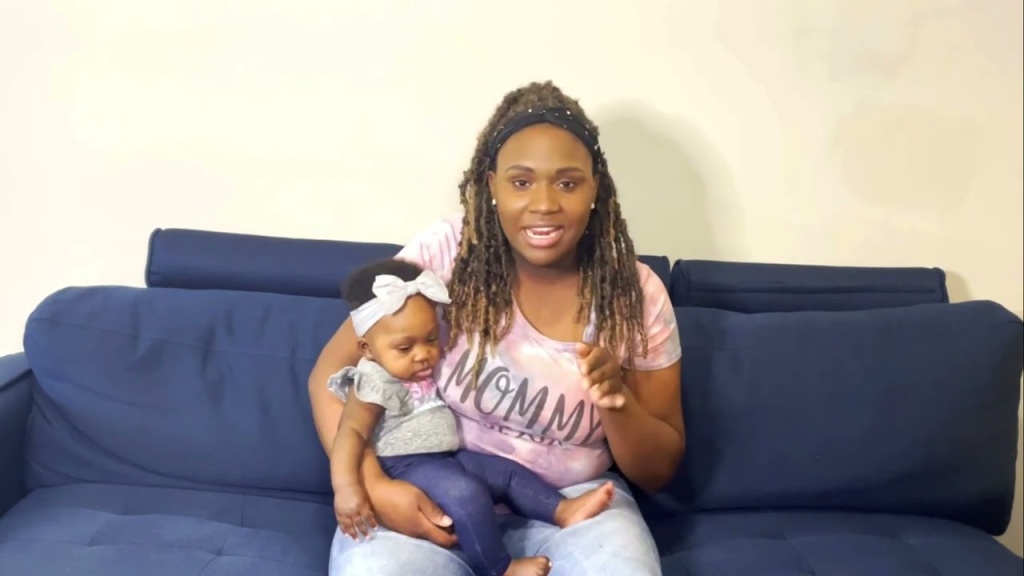
Queen’s Journey to Motherhood: Part 5
Part 5 of Queen’s journey to motherhood. Watch Queen as she shares her experiences of becoming a mother after a high-risk pregnancy.
Part 5 of Queen’s journey to motherhood. Watch Queen as she shares her experiences of becoming a mother after a high-risk pregnancy.
Our patient Jacqui talks about her experience with infertility and her ultimate journey to motherhood.
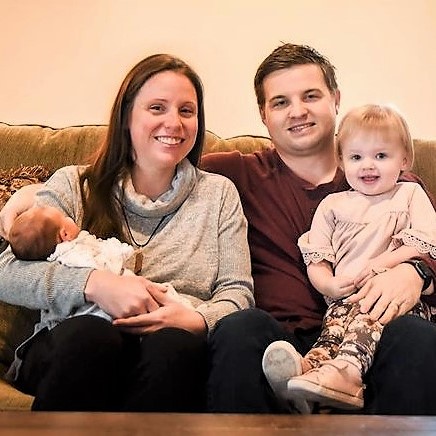
The journey to pregnancy and starting a family looks different for everyone. For Cherokee Women’s Health patient Katie, it was not always an easy journey, but she and her husband David came out blessed on the other side with two healthy girls. Infertility Struggles Katie and her husband, David, were settled in their careers before trying for a baby. Once they started trying, they had some struggles, going to two separate infertility clinics over a two-year span. Neither clinics were successful, but they did not give up hope. They prayed about their next steps towards having a family and decided to stop with the clinics. Without the medicine, shots, or extra ultrasounds, they finally got a positive pregnancy test 2-3 months later. They could not believe it, but it was true! Diagnosed With PCOS Katie decided to seek help from Cherokee Women’s Health Specialists. She explained that she had 90-day cycles and that her attempts to become pregnant had not been successful. Her OB/GYN diagnosed her with PCOS (Polycystic Ovary Syndrome) and explained how PCOS can commonly lead to fertility struggles. Yes, We’re Pregnant! Once they had an answer as to why they weren’t getting pregnant, Katie didn’t feel as much pressure and was able to relax a bit. “I had heard that when people who struggle to get pregnant that they suddenly once they take the pressure off. That’s what happened with us. We were pregnant!” Going into her first appointment after the positive pregnancy test was very scary. She was worried that at age 33, and her history of infertility struggles might have a negative impact. It was not until her first trimester was over that she realized she was healthy and that having her baby was really going to happen. They later learned they were having a baby girl, and suddenly all the morning sickness didn’t matter as much. Welcome Baby Mary-Katherine Fast forward to January 2019. Katie’s water broke at 37 weeks at around 3:00 in the morning. Being a new mom, she was not exactly sure what to expect. “It just felt like I peed myself a couple of times,” Katie shared. They headed to Northside Hospital and learned that her water did indeed break! Everything started happening so quickly once she got to the hospital. “You’re running on adrenaline because you don’t believe it’s really happening. There is no way to really prepare for it, you just have to experience it as you’re going.” First time mom, Katie Dr. James Haley of Cherokee Women’s Health delivered her baby. He didn’t even have to ask her to push because her baby girl was already crowning. Her baby came so fast that Katie had a grade-3 tear that Dr. Haley quickly repaired. Moments later, Mary-Katherine was born and, at 7 pounds, 7 ounces, was in the 90th percentile health range. Coombs Positive Although Mary-Katherine was born a healthy weight and size, she tested positive for Coombs. The Coombs test is typically done on newborns, and the test searches the blood for “foreign” antibodies that attack red blood cells. Coombs typically happens when the baby’s blood type inherited from the father does not mix well with the mother’s blood type. Having this positive test meant baby Mary-Katherine had a higher chance of jaundice. Mary-Katherine stayed in the hospital’s nursery an extra night for observation. Katie recalls that leaving the hospital without her newborn was very hard for her and David, especially with it being their first baby. Thankfully, Mary-Katherine was released the following day. When Mary-Katherine went to her first pediatrician appointment, they were sent to Children’s Health of Atlanta for three days where she went through phototherapy for her high levels of bilirubin. “I was trying to heal, and in quite a bit of pain from delivery. It was a very trying first week for us. But now she is thriving and has her own little personality.” – Katie Having Baby #2 Because they had trouble their first time getting pregnant, Katie and David decided to start trying again within a year of having Mary-Katherine. This time was much easier and Katie became pregnant in April! Having had her first baby, she felt more prepared for her second. Since she and David were able to do all of the pregnancy activities ‘firsts’ with Mary-Katherine, being pregnant for the second time made her stronger and more mentally prepared. They did not have a gender reveal party for their second but finding out the gender was still one to remember. They were on vacation with her in-laws when her 10-week blood work results popped up on the app on her phone. Katie and David announced Katie’s pregnancy to all of their friends and family at 20 weeks. “It was a totally different experience than with a gender reveal. Part of me felt it was a boy and I sort of convinced my husband that it was too. Turns out it was a girl and I realized we needed to start saving now for two weddings later in their future!” – Katie on learning the sex of their 2nd baby Gestational Diabetes At around 30 weeks into her second pregnancy, Katie was diagnosed with gestational diabetes. This was a shock for her as she had been physically active her whole life, and diabetes did not run in her family. She later learned that her placenta was having to overcompensate for insulin resistance, which is an underlying part of PCOS. Because of the size of Mary-Katherine and Katie’s recent diagnosis of gestational diabetes, she modified her diet and became more aware of what she was eating. Because of her diagnosis, Katie went into the office for stress tests once a week. Her baby was very active during the stress tests. Knowing her baby was healthy was a huge relief. “It was so reassuring to feel my baby being so active, kicking and moving. I felt that the baby was in good shape,” she recalled. False Alarm One day, after arriving home from a stress test at
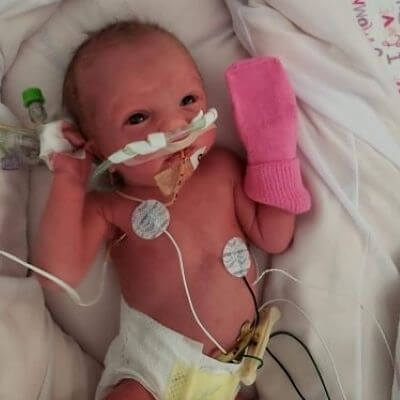
Premature birth, also known as preterm birth, occurs in roughly 12% of women in the United States. Any birth before 37 weeks is considered premature. The earlier the delivery, the higher the risk for the baby. Though now, with modern information and technology, babies born as early as 23 weeks and weighing just one pound, one ounce have been successfully saved. Krystina, a patient of Cherokee Women’s Health, was all too familiar with premature birth. Two of her grandparents were born premature, as well as multiple family members. Her own mother was also a preemie. And yes, Krystina herself was born premature. Krystina’s mom delivered her 7 weeks early and almost died in the process. Krystina weighed in at only 3 lbs. 3 ounces. She burst both of her lungs immediately following delivery and spent a couple of months in the NICU (neonatal intensive care). At 11 months old, Krystina only weighed 11 pounds. Preemie Mom Gives Birth to Preemie Babies Fast forward over 30 years and Krystina is a healthy adult who now has had two preemies of her own. Her first baby, her son Augustus, who is now 4 ½ years old, was delivered by Cherokee Women’s Health He was 4 weeks early and delivered via emergency C-section. Her most recent birth of her daughter, Aurelia, happened even earlier. Krystina had a textbook pregnancy with her son up until the last trimester, when she developed high blood pressure. Because of this, she began monitoring her blood pressure at home while pregnant with Aurelia. Once again, all was fine—until the 3rd trimester when her blood pressure started rising again. Developing Preeclampsia Krystina woke up early one morning feeling strangely so she took her blood pressure. It was much higher than before. She called Cherokee Women’s Health, who of course had been monitoring her closely as well, and was told to go to the hospital. Once there, she was diagnosed with preeclampsia (a condition that only occurs during pregnancy, and usually after 20 weeks, and can be very dangerous for the mom and baby. High blood pressure is one of the signs). It was decided that she should be admitted but the hospital’s NICU was full, so she was transferred to a different hospital in anticipation of the baby coming early. The next 9 days were very hard on Krystina. She was in a hospital further from home, she hadn’t gotten to say goodbye to her son, and she was very worried about her new baby making an early entrance. Thankfully, the doctors were able to stabilize her blood pressure and after a few days, she was sent back to her local hospital. But once there, her blood pressure elevated again so the decision was made to deliver her baby. Going Home Without Her Baby Her doctor of Cherokee Women’s Health performed a C-section and Aurelia was born 7 weeks early and weighed only 3 lbs. 8 oz., just 5 ounces more than Krystina had weighed when she was born. Aurelia spent the next 13 days in the NICU due to needing oxygen and being a little jaundiced. Overall though, she was strong and doing well. Krystina was also doing well and was released after 2 days. Going home without her baby was one of the hardest things she has ever done. Baby is Home and Healthy! Today Aurelia is a beautiful and healthy 10-month-old daddy’s girl. She is a great eater and has quickly grown to almost 20 pounds. “My doctors played such a crucial role in making sure my babies were fine. They are both fantastic. Their calm demeanors and support really helped me to relax.” – Krystina shares about her experience at Cherokee Women’s Health Krystina and her husband are so grateful that both of their preemies are doing so well. Those babies, and Krystina herself, are great examples of how premature babies can go on to live happy, healthy lives.
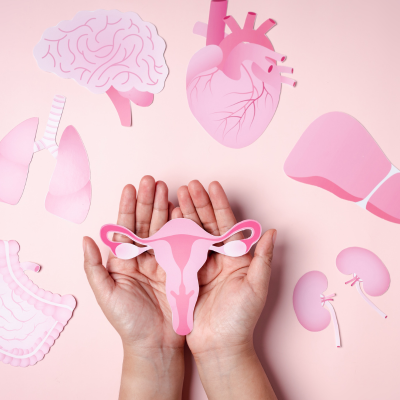
Cervical cerclage is only done in a small percentage of pregnancies. It is the placement of stitches in the cervix to hold the area closed to prevent preterm labor or pregnancy loss for women who have a weak or incompetent cervix. Cervical cerclage can be done as early as 12 weeks as a preventative measure for women who have had miscarriages due to a weak cervix. It can also be done as an emergency measure after the cervix has dilated. Typically, this procedure is not done after the 24-week mark. When is Cervical Cerclage Recommended? This procedure is recommended for women to prevent pregnancy loss or premature birth. Stitches are used to close the cervix around the second-trimester and typically removed no later than week 37. Your doctor may suggest cervical cerclage if you qualify as a high-risk pregnancy. During pregnancy, your cervix gradually softens, decreases in length, and begins to dilate in preparation for your baby. However, in rare cases, your cervix may open too soon putting you at risk for premature labor. Your healthcare provider will assess your risk level based on the following circumstances. If you’ve had one or more 2nd-trimester pregnancy losses related to dilation. If you have had cervical cerclage during previous pregnancies. If you have been diagnosed with painless cervical dilation during your second-trimester. Generally, cervical cerclage is done through the vagina (transvaginal cervical cerclage). But, in some cases, it can be done through the abdomen (transabdominal cervical cerclage). Ask your doctor what is better for you and your baby. Is Cervical Cerclage Right for You? Your doctor may discourage cervical cerclage for any number of reasons. You may want to reconsider this procedure if you have vaginal bleeding, preterm labor, an intra-uterine infection, a rupture in the amniotic sac, or are carrying multiple babies. Risks Associated with Cervical Cerclage There are many side effects associated with cervical cerclage. Having the procedure doesn’t always prevent premature birth. Women who experience premature dilation of the cervix during the second-trimester may have one or a number of these problems whether they opt for cervical cerclage or not. Here are a few side effects that are occasionally associated with a cervical cerclage procedure. Consult your doctor about your risk factor based on previous pregnancies and what you can do to minimize side effects. Infection Vaginal bleeding Tear in the cervix Leakage of amniotic sac (prior to week 37) Miscarriage Preterm labor or birth If you experience bleeding or leakage after your cerclage procedure, seek medical attention immediately. In such cases, your OB/GYN may recommend the removal of stitches early. We Can Help Cervical cerclage is not for everyone. Talk to your healthcare provider to learn more about the options available to you. Ultimately, it’s up to you to make the right decision about what’s right for you and your baby. Whether you’d like a second opinion about your cervical cerclage recommendation or have other pregnancy-related questions, don’t hesitate to call us at 770.720.7733 or simply make an appointment online. Here at Cherokee Women’s Health, we offer a full range of services to help you along the way.
Cherokee Women’s Health celebrates American Heart Health Month. After all, moms-to-be aren’t just keeping one heart healthy. From the first time you hear your baby’s heartbeat, your own is racing with anticipation, joy, and more than a few nerves. Keep your heart strong during pregnancy by taking care of your body and your health. Eat High Fiber Grains and Nuts Get plenty of omega-3 fatty acids from olive oil and pregnancy-safe fish like salmon Avoid salt, which can increase blood pressure Do several low-to-moderate intensity workouts each week, unless your doctor recommends rest Avoid eating or drinking caffeine, which can cause irregular heartbeats Avoid Consuming Caffeine Caffeine increases your blood pressure and heart rate — bad news for both your pregnancy and your heart health. Not only can it lead to dehydration, caffeine crosses the placenta to your baby, who can’t yet metabolize it . Most women know to avoid major sources of caffeine like coffee during pregnancy, but you may not realize how many of your favorite craving snacks sneak caffeine into the mix. Caffeine is found in: Tea Soda Coffee (even decaf!) Chocolate Energy-enhancing foods and drinks (such as energy water or fortified foods) Coffee or chocolate flavored ice cream Some over-the-counter pain relievers like Excedrin While it’s considered safe to consume small amounts of caffeine during pregnancy, it’s easy to lose track. Talk to your doctor about how much caffeine is safe for you and your baby during your pregnancy. Heart Disease and Pregnancy If you’ve ever been diagnosed with heart disease, high blood pressure, or have had cardiac symptoms such as chest pain, shortness of breath or palpitations, alert both your cardiologist and your OB/GYN. List all medications you’re taking, and make sure none of them will have adverse side effects on your baby’s development. For more information on health during pregnancy, contact Cherokee Women’s Health at 770.720.7733 or schedule an appointment online today.

Dr. Jim Haley has just finished a morning performing surgeries in the O.R., and is headed into a full afternoon schedule of patients. Chatting as the interview begins, he mentions that when the weekend comes, he’ll be participating in his first Obstacle Race – a run in which he will face mud pits, barb wire, and ice baths. “I guess I’ve always been drawn to action,” Dr. Haley smiles, “life and death drama. From the time I was 13 or 14, it seemed to me I was supposed to be a doctor. I figured maybe surgery or E.R. medicine. But when I got to medical school and delivered my first baby, I knew right then I wanted to be an obstetrician. “I don’t remember this, but after that first delivery, my wife Lisa tells the story of me coming home just laughing off and on all night – because it was SO COOL. I’d never experienced anything like that before! “I’m drawn to challenges. There’s a lot of challenges to being an obstetrician – the training, being on call, the long hours, and dealing with such an important part of peoples’ lives. But it seems like the challenges drive me in life – physical challenges, too. “Over the years I’ve been in 7 marathons, 1 ultra marathon, 15 triathlons, and 1 Iron Man. (An Iron Man is a Triathlon in which the participant swims 2.4 miles, runs 26, and bikes 112.) Recently, Dr. Haley also became one of the select number of Georgia OB/GYN’s to be board-certified in the subspecialty of FPMRS, Female Pelvic Medicine and Reconstructive Surgery. He says simply, “I like to go after things that are hard to do.” What experiences have shaped you as a doctor? “One great memory about being an OB was getting to deliver my two children. And it made me laugh, too. I’d delivered lots of babies and watched them being taken to the nursery afterward. But I noticed that this delivery was different: they weren’t taking this one away. They were leaving him in the room. And I had to laugh when I realized that was because he was mine. “But something that had a big impact on me was that Lisa and I had two miscarriages – I think this was God’s way of helping me be empathetic about the pain my patients feel when they lose a baby.” Do you have a philosophy about practicing medicine? Dr. Haley mentions his faith directly and without self-consciousness. “I think of being a doctor as my calling. I love the Lord, I love my family, I love my wife Lisa. As a Christian, we are called to serve and help others – this is the calling God has designated for me, and how I can do that.” Click here to learn more about Dr. Haley, and to watch his interview. FUN FACTS about Dr. Haley Top Doctor Dr. Haley was named “Patient’s Pick Top Doctor” for favorite Gynecologist in Cobb County by Atlanta Magazine in 2012. Iron Man Dr. Haley’s done 7 marathons, 1 ultra marathon, 15 triathlons, and 1 Iron Man. (Swim 2.4 miles, run 26 miles, bike 112 miles.) New Orleans Boy Dr. Haley lived in New Orleans for 22 years before becoming a Georgian, with two brothers still there. During Hurricane Katrina, Dr. Haley’s mother, age 91, came to live in Rome, Georgia – and is still there!
Holiday travel – two words that can incite overwhelming fear into the hearts of new mothers everywhere. How will your baby react on an airplane? Can you spend 6 hours in a car with an infant? What if junior doesn’t nap well over at grandma’s house? All these thoughts are enough to make a new mother stay home, but with a little planning and a lot of patience, you can enjoy visiting during the holidays without losing your mind. Here are are few of Cherokee Women’s Health‘s favorite tips and tricks to surviving holiday travel with a new baby. Traveling with a Baby Expect delays. Even during regular holiday travel, not everything runs as smoothly as it should. This is especially true when it comes to traveling with a baby. Pack extra finger foods or bottles in the event of a delay. If you’re formula feeding, pack more formula than you think you’ll need (but be mindful of the restrictions of liquids allowed – bring the powder to mix up as-needed). Pack extra diapers, wipes, and a change of clothes for baby and for you. You never know when a blowout might occur, leaving you stranded without an extra set of clothes. For older babies who might be newly mobile, plan for plenty of rest stops if you’re traveling by car or allow for some time in the airport before you board to exert some of that curious crawling. To ease ear pain often caused by airplane takeoff and landing, offer your baby a pacifier, bottle or sippy cup. Here’s a helpful link offering even more tips on airplane travel with a baby. Maintaining a Sleep Schedule One of the toughest things about traveling with a baby or toddler is maintaining their normal sleep schedule. No nap or a night filled with more wake-ups than usual can make even the sweetest babies cranky. If at all possible, don’t plan activities during your baby’s normal nap time. If you have a baby that naps once in the morning and once in the afternoon, try to plan a holiday lunch gathering to accommodate the sleep schedule. If you’re traveling, pack all of baby’s favorite sleep essentials. Maybe a blanket or a soft toy that will help soothe them, even in a new space. Books, favorite music or a sound machine can also work wonders to help get baby to sleep in a new place. A few days before you leave, set your baby to sleep in the pack n’ play where she’ll be sleeping during the visit. This will help her adjust to a new sleeping space, and it won’t be such a shock when you arrive at your destination. If you’re crossing time zones, get your baby used to the different sleep times by slowly inching up naps and bedtime a few days before leaving. If you’ve already “been there, done that” as far as holiday travel with kids, what other suggestions would you recommend? Share by leaving a comment below, and safe travels to all from Cherokee Women’s Health.
By Dr. Michael Litrel A Lousy Way to Start your Day A circumcision is a lousy way to start off life. For a newborn baby boy, the procedure’s only saving grace might be that five minutes of pain must pale in comparison to the agony of being born. Most mothers-to-be receive an epidural to alleviate the pain of labor. For the baby – no pain medication at all. Squeezed from the warm, dark comfort of his mother’s womb, he suffers through a ten-hour marathon of suffocating agony to land in the hands of yours truly. And the next day we meet again, so I can cut the foreskin off his penis. Moms generally like me pretty well. Newborns probably don’t. Making It Look Easy I was taught the art of the circumcision by Paul Taylor, a physician associate at Grady Memorial Hospital in Atlanta. In his thirty-year career, Paul had probably performed more circumcisions than anyone else in the country. To date I have done only fifteen hundred, a mere ten percent of Paul’s total count. I still consider myself pretty good. But Paul was the best. A year ago, Paul was tragically killed in a bicycle accident. I think of him every time I do a circumcision. Sometimes I am saddened by his untimely passing. But then I focus on the five-minute task at hand, grateful for his lessons almost twenty years ago. When I watched Paul do that first circumcision, I naively commented that it looked pretty easy. “When Jack Nicklaus hits a golf ball 300 yards down the center of the fairway, he makes it looks easy, too,” Paul retorted. Paul was right. There are subtleties to the art of the circumcision that I have come to appreciate. But Paul’s technique has no doubt been responsible for my years of circumcisions unbroken by a single complication. “Give a man a fish, feed him for the day; teach him to fish and feed him for a lifetime.” Alleviating Pain There is, however, one thing I do differently from Paul. When my sons were newborns, it bothered me that they received no pain medication whatsoever. This was the traditional way to perform circumcisions: strap the baby down, cut the foreskin off his penis, and let him cry himself silly. I am proud that I have used pain medication for every circumcision I have ever done. I apply topical pain cream an hour beforehand and also use an injection at the time of the procedure. Yet even though I am diligent in this “alleviate suffering” matter, my babies still cry. So sometimes I resort to another trick Paul showed me. Sugar water on the pacifier works like a charm. The baby sucks happily and usually stops crying. Usually. The take-home message is this: life hurts, no matter what you do. The expectant mother with the epidural still cries when the baby is coming out, and the newborn on Dr. Litrel’s pain medicine cocktail still doesn’t like having his penis cut open. Life’s pain begins when it’s our time to be born. And Life’s suffering ends, just in time for our funeral. How we understand and handle that pain determines who we become. Do we take drugs, or alcohol, or sugar, to get through yet another day? Or do we build spiritual resilience, in understanding the purpose of our short time here on this earth? Those are the questions we answer all our lives. The less we need to take, the more we have to give.

By Michael Litrel, MD, FACOG, FPMRS I usually ask the father to cut the umbilical cord when he’s at the delivery. It’s not that I need the help. Rather, cutting the cord is an important symbolic event. An expectant woman becomes a mother, a family is born, hope wonderfully fulfilled. But there’s another reason to involve the father. Fathers can be pretty useless at times like this. Women understand this sad fact but for the most part keep it secret from us men. A man’s ego is a fragile thing. We’ve convinced ourselves we’re strong and smart and in command. But as we bear witness to the awesome struggle of a woman’s labor, even the most dim-witted of us begin to suspect something is up. The moment the baby is born and new life is miraculously brought forth, we begin to understand the errors of our thinking. It’s a life-changing experience – the realization of the true beauty of the mothers of our children. We are humbled. But we men don’t handle being humbled very well. We confuse humility with humiliation. A new mother’s life is difficult enough without having her husband’s damaged ego to nurse as well as her baby. With this in mind, I’ve found it useful to distract the husband with an accomplishment of his own so the mother’s postpartum course is not unduly burdened. So, he gets to cut the cord. Cutting the cord is technically less difficult than cutting coupons out of the Sunday paper. Most men realize this, and although very well satisfied with their small contribution, keep their self-congratulations to a minimum: “Sweetheart, with you carrying the baby for nine months, and all those painful contractions and pushing, and me cutting the cord so well, I think we both did a pretty good job.” Yet the occasional father takes it to the extreme. “Look what I did, honey!” He looks to his wife, exhausted from her labor and blood loss, for approval. “Did you see me? I just cut the cord! By myself!” Chest swelled with pride and beer belly drooping over his belt, this is the kind of man who walks around for the next couple of decades completely self-satisfied with the thought “that thing would still be attached to you if it wasn’t for me.” Some husbands, on the other hand, are appropriately appreciative. One of these appreciative husbands came to my office with his wife every visit. They had already tried for several years without success to conceive and suffered tremendously from a sense of failure and loss of hope. They submitted to the usual battery of tests in the painstaking task of attempting to time the miracle of conception. After several months with no success, we were considering a reproductive endocrinologist but then out of the blue my patient conceived. Throughout the next nine months, her husband was an unfailing source of support and encouragement. On the day of the delivery he was beside his wife, holding her hand, from the moment of her first contraction. “You are so beautiful!” he told her. “You are doing so well!” Throughout her long labor he rubbed her back, he hugged her, he got her sips of water. And again and again he repeated his mantra – “you are so beautiful, you are doing so well.” Finally the baby emerged. The father’s hand trembled as he cut the cord, and when I placed the baby on the mother’s abdomen, he began to weep uncontrollably. I watched as he hugged his wife and newborn daughter, and at that moment, as the family began their new story, all the self-doubts and suffering of the past seemed to evaporate in an instant into an indescribable joy. It shone from their faces through their tears. And the room could hardly contain it. “You are both so beautiful,” he told his family, his voice cracking. Their past trials hadn’t darkened their happiness, but like a piercing light, had made their happiness more clear. Unlike the quick snip of a cord, with its illusion of accomplishment, the suffering they had borne for so long had opened their eyes, so they could see their child for the miracle she was. I think this is true for all of us. The burden of pain that accompanies us throughout our lives can sometimes be life’s most mysterious gift as well. It strengthens our vision, so we can recognize the miracle of joy that often waits for us, just on the other side of despair.