woodstock ob/gyn

SOS vaginal-atrophy-image_433552503
Sexual Health

Vaginal Atrophy

Vaginal atrophy is a condition that causes adverse vaginal and urinary symptoms. The first sign is usually a decrease in vaginal lubrication. Due to a lack of estrogen, the lining of the vagina gets drier and thinner, resulting in symptoms including burning, itching, spotting and pain with sex. Urinary symptoms include frequent urination and urinary tract infections. When a woman enters menopause, her ovaries produce fewer hormones and monthly periods cease to exist. This typically happens around age 50. Because vaginal atrophy (also known as atrophic vaginitis) is caused by a decrease in the hormone estrogen, it most often occurs during menopause. However, it can also occur in younger women if their estrogen levels are affected. Vaginal Symptoms of Vaginal Atrophy can Include: Urinary Symptoms can Include: Who is at Risk? Vaginal Atrophy or Yeast Infection? Atrophic vaginitis and yeast infections can have similar symptoms such as vaginal itching, redness, pain and dryness. However, a yeast infection is caused by a fungal infection while vaginal atrophy is caused by a lack of estrogen. If you have these symptoms, consult with your doctor so he or she can provide you with a proper diagnosis. We Can Help If you have concerns about vaginal atrophy, our board-certified OB/GYNs can help. Call us today at 770.720.7733 or schedule an appointment online.

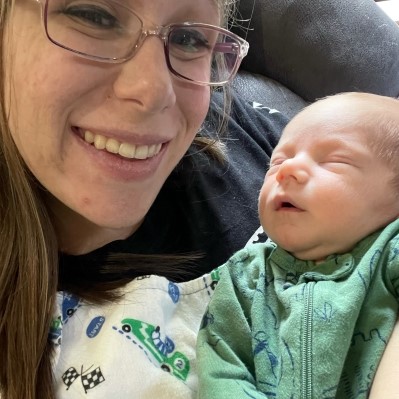
baby sawyer with mom chelsea
OB Patient Stories

Sick During Delivery – Chelsea’s Pregnancy Story

Cherokee Women’s Health patient, Chelsea, delivered her first baby boy and candidly shares her personal pregnancy and labor journey. Chelsea is a rock star and shows, once again, that women can do anything! Induced with First Baby I was induced with my first baby, Piper, where I had a long, painful and unpleasant experience. I wanted so badly to be able to work closely with my midwives to do all we could to have this baby without being induced. They reassured me that if there was anything slightly concerning or if I end up needing an ultrasound, they could arrange it at the hospital. Real Contractions or Braxton-Hicks ? I was 39 weeks and five days pregnant and around noon on a Monday, I began experiencing cramping, which I assumed were Braxton-Hicks contractions. I timed them and they were 6-8 minutes apart and they kept happening so the possibility that they were real contractions definitely crossed my mind. The cramps were uncomfortable but not painful, so I proceeded to go about my day playing with Piper and doing chores. Staying busy, I barely noticed them so I continued to tell myself they were not real contractions. As the discomfort grew, I drank extra water, took a shower and layed down to see if they would go away. They slowed down but continued. I barely mentioned it to anyone, not even my husband Caleb. I was in complete denial. After I put Piper to bed, I watched a movie with my dad and grandma and continued timing the contractions. They were 30-40 seconds long and 5-6 minutes apart for one hour. At 10 pm that night, they were intensifying and I think I started to realize that these were in fact, real contractions. These Contractions are Real I assumed I would go past my due date so I wasn’t fully prepared to have a baby that night. I started getting ready just in case. I thought I had at least until the next day but I kept preparing. I threw in Piper’s laundry, finished packing the hospital bag, and got things ready for Piper’s grandmas to watch her. At 11 pm that night, I crawled into bed and was extremely uncomfortable. I told Caleb that I was having contractions. We timed them and they were 4 minutes apart. I got up and got in the shower. I draped myself over the yoga ball because I was too tired to stand and it hurt to sit. The hot water on my back felt great but nothing dulled the contractions at this point. I got out of the shower and called the on-call midwife at Cherokee Women’s. The contractions were back-to-back and often less than 3 minutes apart. “Oh honey, you’re having a baby tonight. It’s time to come in and see us.” – The on-call midwife at Cherokee Women’s I started panicking a little. I changed the laundry and then went to wake up Caleb. He started gathering things and I went to let my mom know. I asked my mom, “What if this isn’t labor and they send me home?” She said, “So what! It will be okay.” “But what if this is really labor and they don’t send me home?” I asked. She laughed, “Then you’ll have your baby!” These questions may not make much sense but the realization was setting in and I was honestly a little scared. Having My Baby at Northside Hospital We drove to Northside Hospital Cherokee, where the intensity of the contractions quickly increased. While checking in, I could not sit down. Once in the room I changed and went to the bathroom where I saw that I had lost my mucus plug and had what is called a “bloody show.” That’s when I knew I wasn’t going home. When the nurse checked me, I was only dilated to 3 centimeters, and they decided to have me stay. They started me on antibiotics because I was GBS+. GBS (group B strep disease) is a common bacteria that is present in one quarter of pregnant women. You can be positive with one pregnancy and negative with another. There is no way to cause or prevent it and it’s not harmful to the mom, but can be harmful for the baby. The goal of the doctor and nurse were to have two rounds of antibiotics given before the baby arrived. I grew incredibly uncomfortable and needed to get out of bed. They wanted to monitor the baby for 15 minutes before I moved around. Once that time was up nothing could keep me sitting there. My body ached with each contraction. There was barely a moment in between each of them, making it hard to function. I asked to get into the tub and I sat in there for five minutes. It felt great but at some point that didn’t even help. Epidural, Please! Caleb stood behind me and tried different pressure points on my back and hips to try and help me through. This is when I told them I wanted the epidural as soon as possible. I could no longer catch my breath because the contractions would not stop. As one would end the next would begin. We had been there for only 45 minutes at this point. I couldn’t stop shaking. They checked me and I was 6 centimeters dilated. They told me I was shaking because my body was dilating so fast. I couldn’t stay lying down so I spent the time waiting for the epidural as I leaned on Caleb or the bed. I’m Scared, I Can’t Do It! I remember telling my wonderful nurse to shut up at one point. I think she was explaining something to me in the middle of a contraction. I was definitely not my most pleasant. But Mandy, my nurse, was so good at centering me and reminding me to breathe. Caleb was such a rock star too and super supportive. “I’m scared. I can’t

placental abruption_324535153
OB

Placental Abruption: Symptoms and Risk Factors

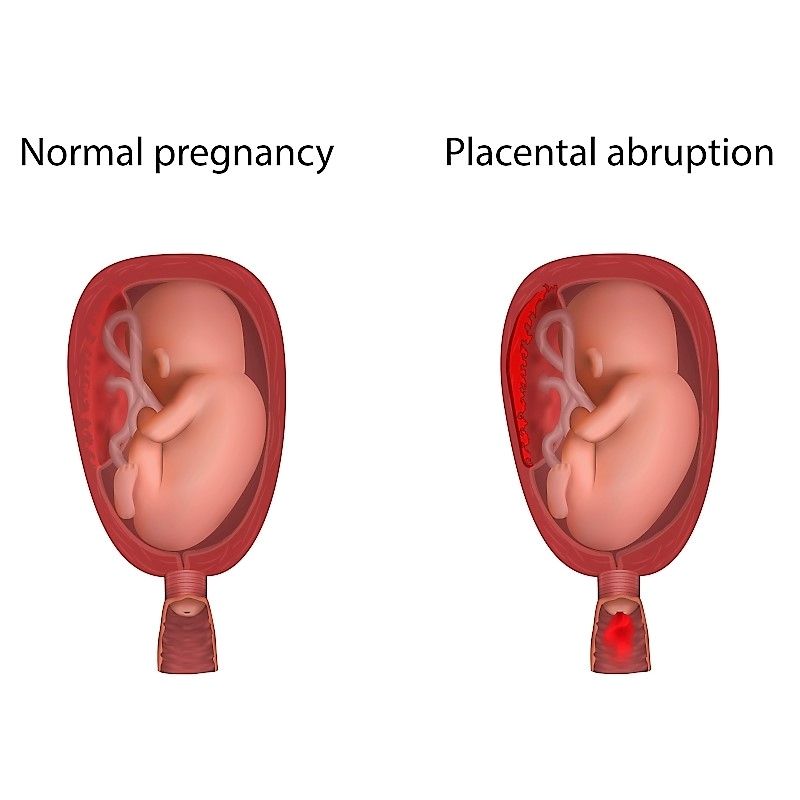
Placental abruption requires immediate care since the baby may not be receiving enough oxygen. Placenta abruption occurs when the placenta detaches from the uterine wall before or during labor. The placenta is an organ that provides nutrients to the baby in the womb. Placental abruption can cause vaginal bleeding and pain. Without prompt medical treatment, a severe case of placental abruption can have dire consequences for the mother and her unborn child. Symptoms When any symptoms occur, it is usually sudden. The main symptom of placental abruption is vaginal bleeding. However, vaginal bleeding doesn’t apply to all women, as 20 percent don’t experience any. Some of the symptoms and signs of placental abruption include: Continuous lower back and abdominal pain Painful abdomen (belly) when touched Tender and hard uterus Fetal distress Risk Factors While the exact cause of placenta abruption is unknown in most cases, certain factors make a pregnancy more at risk to placental abruption. Risk factors may include: Advanced maternal age Being pregnant with multiple babies Having a history of high blood pressure or previous abruptions Excessive amniotic fluid Uterine infection Substance use. In most cases, doctors don’t know the exact cause or causes of placental abruption. However, having one or more of these risk factors doesn’t mean you’ll experience a placental abruption. Diagnosis If you are experiencing any bleeding or abdominal pain, contact your doctor right away. Placental abruption can only truly be diagnosed after birth when the placenta can be examined. There are a few methods that are used to try to make this diagnosis during pregnancy so that proper treatment can be applied. Including: Ultrasound Blood tests Fetal monitoring Evaluation of symptoms (bleeding, pain, etc.). Complications In severe cases, complications of placental abruption can include: Stillbirth Decreased oxygen to the baby, which can lead to brain damage Maternal blood loss leading to shock Emergency hysterectomy Maternal death from severe blood loss. Placenta Abruption Treatment Unfortunately, there is no way to reattach the placenta once it’s detached, or no treatment plan that can stop it. The treatment depends on the severity of the separation, location of the separation and the age of the pregnancy. In the case of partial separation, usually less than 34 weeks, bed rest and close monitoring may be prescribed. In some cases, emergency treatment and hospital admission may be needed as well. In the case with a complete separation, usually more than 34 weeks, delivery is often the safest course of action. Depending on the stability of the baby, an immediate C-section may be necessary. The mother might also need a blood transfusion. We’re Here for You and Your Baby Call your doctor immediately if you experience bleeding in your third trimester. The outcome of a placental abruption diagnosis is improved with fast and accurate treatment. While placental abruptions can’t exactly be foreseen, here at Cherokee Women’s Health Specialists, our board-certified OB/GYNS are experts in high-risk pregnancies. Call us today at 770.720.7733 or schedule an appointment online.

Dr. James Haley Delivering Baby
Midwife Education, OB

Home Birth – Is it Worth the Risk?

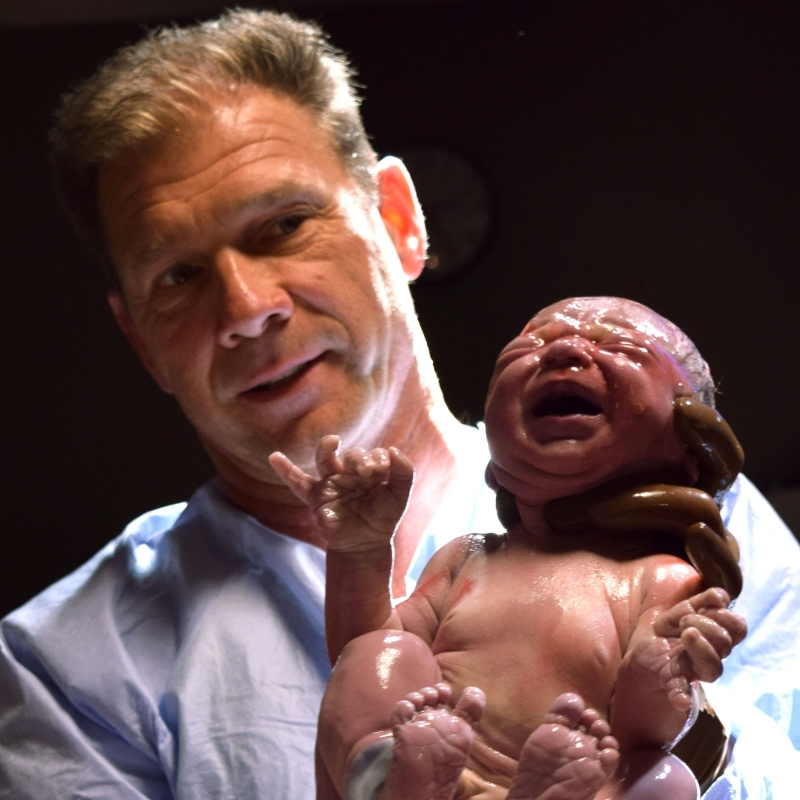
By James P. Haley, MD, FACOG, FPMRS As an OB/GYN for over 30 years now, I feel the need to speak out strongly against home births. I have certainly delivered my fair share of babies, and what a privilege it has been to witness one of God’s greatest miracles, thousands and thousands of times in my career. I am honored to have shared with so many families one of the most special and intimate moments in their lives. One of my greatest blessings was being able to deliver my two children – memories that my wife and I will always treasure. Home Births Come with Extreme Risks There is a growing trend in OB that has me greatly concerned, and I feel the need to speak out strongly against it. It is the growing popularity of pre-planned home births. The trend seems to be gaining some momentum, and approximately 1-2% of all U.S. births are now delivered at home. According to recent statistics, that number is rising. The truth is, there are extremely serious risks involved with attempting to deliver at home, and women and their families need to be aware of these dangers. We have come a long way in modern medicine, especially in the field of Obstetrics. In the early 1900s when home births were the reality, one in ten babies died at birth. Sadly, many of these infants suffered trauma at birth resulting in complications such as seizures, paralysis, or brain damage. Death was common and the mother’s life was always at risk, as up to 1 in 100 mothers died giving birth. As OB/GYNs, We Have Seen it All With advances in modern technology, it is alarming as to why many would consider delivering at home without immediate access to a hospital. The American College of Obstetrics and Gynecology recommends that babies be delivered in hospitals. They want everyone to know that babies born at home are twice as likely to die, and three times more likely to have neurologic dysfunction or brain damage. The American Academy of Pediatrics concurs with ACOGs opinion and agrees that hospitals are the safest place to give birth. Even today, giving birth is one of the most dangerous things a woman can do. In the U.S., it is the sixth most common cause of death among women ages 20-34. These statistics are very troubling, and much research and study is being done to continually lessen the maternal death rate. OB/GYNs know with absolute certainty the risks of childbirth and the possible dangers that can go wrong. We have seen it all and there are often complications that can arise within a few minutes that no one saw coming. It is very humbling; and we have all seen multiple times where, had the patient not been in the hospital — in labor, being monitored and under close observation — the baby would have died. It happens quite frequently. Usually, with proper prenatal care, we can predict problems and future complications, treat them, monitor closely, and be prepared for those potential complications at birth. “I have personally seen hundreds of babies that would have died, had the patient not been at the hospital at that moment. After moments like that, you not only see the amazing hand of God, but also greatly appreciate the advances in modern medicine. And you are grateful you were there exactly at that moment – and in a hospital.” – Dr. James Haley However, childbirth as we know doesn’t always go smoothly or as planned. Occasionally, a medical crisis arises that causes the entire team of doctors and nurses to jump into immediate action, work together like nothing you’ve ever seen — all to get that baby out in 2-3 minutes to save its life — while also trying to take care of the mother and keep her safe. Common Problems that can Occur Throughout Pregnancy, Delivery and After: Following are just a few problems that can occur throughout a woman’s pregnancy, delivery and postpartum. Gestational diabetes High blood pressure Preeclampsia Preterm labor Anemia Infections Breech position Fetal distress Premature rupture of membranes Placenta problems Placental abruption Prolonged labor Perinatal asphyxia Shoulder Dystocia Excessive bleeding Malposition Placenta previa Cephalopelvic disproportion Uterine rupture Rapid labor Oxygen deprivation Umbilical cord prolapse Umbilical cord compression Velamentous Cord Insertion Chorioamnionitis (Infection) Fetal macrosomia (Extra-large infant) Postpartum hemorrhage (Bleeding) Postpartum preeclampsia Why Take the Risk of a Home Birth? Women that consider home birth typically want fewer medical interventions, they want to enjoy the comforts of home, enjoy a more satisfying and natural birth, and have control over all aspects of the birthing process. These are all valid wants and desires, and it is understandable how people are driven to choose this route. If you have had a home birth and all has gone well, that is great. However, I wouldn’t push your luck and do it again. You have dodged many, many bullets. There are medical offices and midwives that attempt to facilitate and “ensure” the safety of a home birth. Hospitals are nearby, and women are told that if complications arise, they can abort the plan and head to the hospital. In fact, the latest statistic shows that approximately 30-35% of planned home births end up delivering at the hospital after all. But at what cost? Do they make it in time? These actual statistics don’t often end up in the “home delivery” category. Once they are sent to the hospital, they are counted as hospital deliveries, so we don’t truly know if they had complications or even the worst possible outcome occurred. Working in the hospital and a busy medical practice, I have sadly seen some tragic outcomes. Just a few weeks ago, I personally saw a patient that had been going to the type of practice that is more “natural” and encourages and oversees home births. The mother suspected a problem and was referred to me for an evaluation. “Unfortunately, I confirmed their greatest fear, that the


baby and mom photo
OB Patient Stories

Giving Birth at 36 Weeks – Shelbie’s Story

Traveling while pregnant can prove to be a difficult task but moving across the country is an even bigger challenge. Cherokee Women’s Health Specialists patient Shelbie, moved from Arizona back to her hometown in Georgia halfway through her pregnancy. Her husband Tyler, is in the National Guard, and he wanted Shelbie to be surrounded by family while he was away for training. As difficult as the move was, they were confident this was the right decision for their growing family. Shelbie’s friends and family recommended Cherokee Women’s Health, and fortunately, the transition from her past OB/GYN was an easy process. “With all the transitions happening in my life, it was a huge relief to find Cherokee Women’s Health Specialists. It was difficult not having my husband here, but I felt very well cared for throughout the rest of my pregnancy and delivery in Georgia.” – Shelbie Contractions at Just 36 Weeks Shelbie had an overall healthy and safe pregnancy, at least up until her 36-week appointment. It was then Shelbie learned that her blood pressure was elevated, and she was actually having contractions. Shelbie was shocked! She was connected to the monitor, and it was confirmed that her contractions were regular, even though Shelbie couldn’t feel them. While this wasn’t Shelbie’s plan, she was sent to the hospital where she would soon welcome her baby boy. She shares, “I was super worried, especially since I was only 36 weeks, and everything had been fine from the beginning. My son clearly already had a mind of his own!” Shelbie’s doctor monitored her at Northside Hospital Cherokee that night, and then she met with another doctor from Cherokee Women’s the next morning. With her mom by her side, they discussed her preferences and expectations of a vaginal delivery. Her doctor assured her she would do everything in her power to honor her labor preferences while keeping both her and her baby healthy. “I was very grateful for my doctor because she was a calming influence that I needed, especially after the day before and my husband not being there. She listened to my labor expectations and I could tell she truly cared. It was a relief to have her there as my doctor before delivery.” It’s a Baby Boy! Shelbie progressed enough to start pushing, but her baby’s head wasn’t positioned in the best way to come out. Therefore, a vacuum extraction was used to position his head the right way. With no success, her doctor still felt confident she could deliver vaginally. “Then, my doctor reached inside to turn his head with her hands and successfully delivered baby Luca!” My baby came out with his umbilical cord wrapped around him, but fortunately, he was healthy. Luca was welcomed into the world on August 3, weighing 6 lbs., 10 oz. Daddy Meets Baby Luca — Virtually Even though Shelbie’s husband couldn’t be there in person for the delivery of their baby boy, he was able to Facetime through the whole delivery and meet baby Luca a short time after. Now, sweet Luca, Shelbie and Tyler are at home adjusting to their growing family, soaking up all the newborn love! “I was really pleased with everyone at Cherokee Women’s Health Specialists. My doctor is caring, calm, truly listens to your needs and is very determined to meet them.” – Shelbie on her experience with Cherokee Women’s Health

happy mom with baby
OB

Life as a New Mom

As a new mom with a sweet little baby to take care of, you have entered a wonderful season of life. But with all there is to do, it can be easy to forget that you need to take care of yourself, too. After all, you have just gone through tremendous changes, both physically and emotionally. Here are a few tips to help you adjust and thrive to life as a new mom: Get more sleep – Sleep when your baby is sleeping. You need a break, and you need sleep. Everything else can wait. Relax – Do something relaxing whenever you can. For example, try listening to music or reading a book. Eat well – If you hit the comfort food too much, you will feel worse. You don’t need to give up all your “goodies”, but proper nutrition is key to feeling good. Try eating fresh vegetables, fresh fruit, lean meat and not too many simple carbohydrates to help nourish you back to health — and to your pre-pregnancy body. Hydrate – Drinking enough water after pregnancy is very important to keep your body in balance. This is especially true if you are breastfeeding, as dehydration can affect your milk supply.    Exercise – You should try to do some physical activity on most days. Walking, weights, and elliptical machines are examples. With this beautiful spring weather, it’s the perfect time to push your baby in the stroller. Make things simple – For example, it is not a sin to use paper plates and plastic cups to make kitchen cleaning easier. Or better yet, have someone else do it if possible. Make your needs known – Don’t be afraid to ask for help. While women are incredible multitaskers, motherhood can be challenging, so help is often needed. Sometimes, if you take it all on yourself, resentment can grow into anger or depression. Be honest – Be open with yourself and others if you are feeling “blue”. Hormones and the life changes of having a baby can be overwhelming. It’s imperative to share these feelings with your doctor.  Spend time with friends – Especially with other mothers with babies and children of similar ages, as support is important and encouraging as you experience these new changes. By taking care of your physical and emotional health you will be able enjoy this wonderful time of your life — and be the best possible mom for your new bundle of joy.

© Copyright 2024 Cherokee Women’s Health Specialists
Scroll to Top