
dr. gandhi

happy woman_490628571
GYN Problems Patient Stories

Dr. James Haley Repaired My Rectocele

We recently talked to Abby about her experience with rectocele repair surgery with Dr. James Haley of Cherokee Women’s Health. She opened up to us about her experience and shared what led her to seek treatment and how she’s feeling today, one month after surgery. “I was referred to Dr. Haley after having a procedure done to repair my rectocele by another surgeon. During my initial consultation with Dr. Haley, I explained to him that the previous rectocele procedure failed, and I was miserable. I also told him that I was in severe pain because I suffered from endometriosis,” says Abby. “Dr. Haley was so patient and really listened to my concerns. I instantly loved his caring personality and helpful demeanor. He even made me feel completely comfortable asking questions that can sometimes be a little embarrassing. You know, those undesirable questions lurking in your brain!” – Abby on meeting Dr. Haley After a physical exam and a frank discussion about my issues, Dr. Haley also talked with me about options for a perineal repair (perineoplasty), which could be performed at the same time as the rectocele repair. I completely trusted his expert opinion so it was agreed that both procedures would be performed, and surgery was scheduled. During the procedures, he did a great job of keeping my husband informed. He came to see me after surgery and texted me that night to ask how I was doing and to make sure I was okay. Dr. Haley continued his same exceptional bedside care throughout my recovery. At my first follow-up, Dr. Haley asked about my pain levels, my hormones, and to make sure I was doing well with everything. I could tell that his patients mean a lot to him and that he really cares. I appreciated that so much, especially after my poor experience with my first surgeon. That doctor basically wrote me off when I was in recovery but I’m now five weeks post-op and Dr. Haley still wants to make sure that I am completely healed and free of complications. In fact, he won’t release you until he feels completely confident that all is well.” “On top of the exceptional care I received, I have to say that the surgery itself was nowhere near as painful as the first one I had. Within a couple of weeks, I could sit upright and go to the bathroom normally and without pain. That was a huge relief. The healing looks great and the benefits to the perineal repair are amazing. It is very snug! I am already extremely impressed with the rectocele repair as well. I can’t thank Dr. Haley enough for what he has done for me!” – Abby on recovery and ‘snugness’ If you’re experiencing issues, our double board-certified urogynecologists are here to help. As practicing OB/GYNs and urogynecologists, you can be assured that you will receive the most excellent care available. Call us today at 770.720.7733 to schedule an appointment or schedule an appointment online.


rainbow baby
Miscarriage Education, OB Patient Stories

Miscarriage – You Are Not Alone

A miscarriage often makes women feel alone and as though no one else understands. Janie, a medical assistant here at Cherokee Women’s Health, understands this feeling all too well. A Miscarriage at 6-1/2 Weeks Janie and her husband starting dating in high school and were married in November of 2015. They always knew they wanted children, so they tried to conceive after only a year of marriage. One year later, Janie was pregnant. Their excitement was short-lived, however, when Janie suffered a miscarriage at 6-1/2 weeks. Like so many couples, Janie and her husband were devasted. Along with the physical pain, Janie also dealt with the emotional pain of feeling “like a failure” as a woman, which is also a common reaction after a miscarriage.   A few months later, Janie and her husband found out she was pregnant again. When she first saw the two lines on the pregnancy test she was terrified. She wanted to be excited but she and her husband both were so nervous and scared Janie wasn’t sure if they could handle it if they experienced another loss. Leaving it in God’s Hands They decided not to do early bloodwork or ultrasounds, but to leave it in God’s hands. They had their first ultrasound at 7 – 8 weeks and were amazed when that saw the heartbeat, although they were still nervous. After a few more weeks and a few more scans, they were finally ready to share the news.  Janie’s pregnancy and delivery went smoothly with no complications. She and her husband now have Carter, their beautiful baby girl — their rainbow baby. (A rainbow baby is a baby born after miscarriage or early loss of a child).   Support Meant Everything After suffering the loss of her first baby, Janie now realizes many women have gone through what she has and that she was not alone. Janie’s OB/GYN was a huge support for both her and her husband and was there to deliver their little miracle. She feels that she may never completely heal from that loss, but having faith, family, and Carter makes it easier. You Are Not Alone Though miscarriage is a painful topic, Janie now knows that talking about it can help. She hopes other women can find someone to confide in if they experience this type of loss. As a medical assistant, she hopes to be that person for all the patients that come through the office, even on their worst day. She wants to share her experience and let them know they are not alone.

healthy woman with food exercise
OB, Preconception Counseling Education

What to Do Before Getting Pregnant

You’re considering getting pregnant! Mentally, you’re beginning to commit to the idea, so one of the first few questions you might ask yourself is, “What can I do before getting pregnant? How can I be sure my baby will be healthy? Is there anything I can do ahead of time to make sure everything goes right?” While the physical part of creating new life is pretty simple to comprehend, but many women don’t actually consider that there are ways to prepare their bodies for reproduction well ahead of time. Even if you’re not ready to conceive right away, there’s lots you can do before getting pregnant, and most of it is pretty basic. When you leased your very first apartment, you wanted everything to be just right. Before you even moved in, you eagerly imagined how you would decorate it. You carefully selected the best furniture and matching accessories you could afford. You thought of where you would put your bed and bought food for the refrigerator and pantry. Everything was positioned just right for the new home you were to live in. When you get pregnant, your body is going to be your baby’s ’apartment’ for approximately the next 280 days. Your womb (uterus) will be its bedroom, the amniotic sac will be its bed and the umbilical cord will be its fridge and pantry. Why not prepare your body to give your child the best possible home until its first ‘lease’ is up? There are steps you can take to make that happen. Long before the actual union of sperm with egg, there are numerous measures you can take to optimally prepare your body. You can make gradual, positive lifestyle changes in the months preceding pregnancy. 6 Things to Prepare Your Body for Pregnancy: At Cherokee Women’s Health Specialists, we are committed to giving you the best possible preconception care available to women today in order to ensure the optimum health of both you and the baby you are planning to have. These are only several of the many things you can do before you decide to get pregnant. Our comprehensive staff includes Female Pelvic Medicine and Reconstructive Surgeons (FPMRS), urologists, nutritionists, OB/GYNs, physical therapists and midwives. Their combined decades of experience and expertise can guide you through the preconception process, pinpointing any problems that may inhibit or be detrimental to your pregnancy. Our team of specialists can correct any physical abnormalities that may be hindering the process as well. Your reproductive health and the wellness of your future baby is our primary concern. No question is too trivial or embarrassing and you will be treated with the utmost respect and confidentiality. To book an appointment, please call us at 770.720.7733 or schedule an appointment online.

pelvic pain
Anterior and Posterior Repair Education, Pelvic Organ Prolapse Education, Pelvic Reconstruction Education, Urogynecology

What is Pelvic Prolapse?

Pelvic organ prolapse (POP) refers to the sagging or drooping of any pelvic organs due to damage, trauma, childbirth or injury. The pelvic floor consists of a group of cradle-shaped muscles that hold pelvic organs in place. The pelvic organs include the uterus, bladder, cervix, vagina, rectum and intestines. Like any other part of the body, these muscles, with their surrounding tissues (fascia), can develop problems. If you fill a small plastic bag with grocery items, say for instance, a box of cereal, a few cans of vegetables, some jars and a package of rice —the bag should hold the items with no problem. But if you hang that full bag on a wall hook and leave it suspended, you’ll start to notice the items in it begin to bulge against the membrane of the bag as it takes on the shape of its contents. After a while, depending on how heavy the items are, the corner of the cereal box or rim of a can may start to bulge and even poke through as the bag stretches, weakens and eventually tears from the weight of the items in it. The groceries may even begin to protrude and dangle outside of the bag as the tears get larger. Pelvic prolapse happens much the same way. As the muscles and tissues holding the pelvic organs weaken, degrade or tear, the pelvic organs slip or drop through, sometimes forming a small hanging internal bulge. At other times, depending on the damage, they may actually dangle externally from the vagina or anus, causing problems and inhibiting their function. This is called prolapse. Who is at Risk for Pelvic Organ Prolapse? One in three women suffer from POP. Any activity that puts undue pressure on the abdomen can cause pelvic floor disorders. Typically, labor and childbirth are the leading causes of prolapse, especially when a woman has had several children, a long, difficult labor, or has given birth to a larger child.Pelvic organ prolapse becomes more common with age, usually around menopause when tissues damaged during a woman’s childbearing years begin to lose strength. Other causes are: What are the Symptoms of Pelvic Organ Prolapse? It is entirely possible not to have any symptoms at all. Sometimes pelvic organ prolapse is only discovered during a routine gynecological examination. Minor symptoms are a feeling of annoying pressure of the uterus or other pelvic organs against the vaginal wall, minimal malfunction of those organs, and mild discomfort. Other symptoms are: Symptoms may be aggravated by jumping, lifting or standing. Relief is usually found after lying down for a while. When Should You See Your Doctor? If you have increased sensations of pelvic pressure or pulling which is exacerbated by lifting or straining, but relieved when you lie down. Diagnosis At times, pelvic organ prolapse may be hard to diagnose, especially if a patient does not complain of any symptoms. Patients might be aware there’s a problem but cannot actually pinpoint its location. After asking questions regarding symptoms, medical history, past pregnancies, and other health problems, your doctor will perform a physical examination. Then, if organ prolapse is suspected or discovered, the following additional tests may be ordered: The doctor will then use a classification system to decide the organ prolapse level so he can best decide treatment options. Often, only simple non-invasive treatments and lifestyle changes are recommended for minor prolapse. If surgery is warranted, the following may be suggested: What Can You Do? Pelvic prolapse often sounds worse than it is. For many women, there are hardly any symptoms. For those who do suffer, there is help available, whether it is a simple lifestyle change, surgical repair, or reconstruction. If you have questions about your gynecological health or would like to consult with one of our pelvic reconstructive surgeons, please call 770.720.7733 or schedule an appointment online.

doubtful-woman-mesh_177764792
GYN Problems, Mesh Education

The Great Mesh Debate: Unraveling the Basics

Pelvic organ prolapse (POP) is a condition that affects nearly one-third of middle-aged women. It occurs when the muscles that support the pelvic organs weaken, leading to a bulge or protrusion in the vaginal area. Many patients often describe this condition as a “vaginal hernia.” Symptoms of POP can include pelvic pressure, urinary incontinence, and sometimes discomfort during sexual activity. The weakening of the pelvic muscles and tissues causes the organs to shift from their normal positions, and the severity of symptoms can vary from person to person. Why Is Mesh Used in POP Surgery? In some cases, a woman’s natural tissue may not be strong enough to support a successful repair of the pelvic organs. This is where synthetic mesh or biologic grafts come into play. The use of these materials is intended to provide additional support and durability for the pelvic organs after surgery. However, since the 2008 FDA Public Health Notification about the use of transvaginal mesh in POP repairs, the subject has been a source of significant controversy and concern. Many women have seen advertisements or heard from others that mesh can be dangerous, leading to hesitations about its use. Patients frequently ask, “Are you going to use mesh in my surgery? I’ve heard it’s risky.” It’s important to understand that while there are potential risks, the use of mesh, when done by a trained and experienced surgeon, is generally safe and has a low complication rate. The Importance of Specialized Surgeons in POP Treatment Pelvic organ prolapse requires specialized care from doctors who have received advanced training in female pelvic medicine and reconstructive surgery (FPMRS). Board-certified surgeons have undergone rigorous training in diagnosing and treating POP, including the use of mesh in surgical procedures. For patients to achieve the best possible outcomes, it is crucial that they receive treatment from surgeons who are skilled in these procedures and understand the specific risks and benefits. When mesh is properly placed by a board-certified pelvic reconstructive surgeon, the risk of complications is significantly minimized. Part of the job as FPMRS specialists is to clearly communicate the potential risks and benefits of each procedure to patients, ensuring they are well-informed and confident in their treatment decisions. Individualized Treatment Plans for Optimal Care A key aspect of treating pelvic organ prolapse is creating a personalized treatment plan that is tailored to each patient’s unique needs. This starts with a thorough consultation that includes: Discussion of Symptoms: It’s important to understand the specific symptoms that are most bothersome to the patient. Complete Physical Exam: A physical exam helps the surgeon determine the exact nature and severity of the prolapse. Comprehensive Treatment Plan: This plan may include both non-surgical and surgical options, depending on the patient’s condition and preferences. For some women, non-surgical options such as pelvic floor exercises or lifestyle changes may be sufficient. However, for those requiring surgery, we explore the most suitable approach, including whether mesh might be used. It’s also essential to discuss lifestyle changes—such as maintaining a healthy diet, quitting smoking, and engaging in regular exercise—that can help prevent a recurrence of the prolapse. Empowering Patients with Knowledge The decision to undergo surgery for pelvic organ prolapse can be daunting, especially with the concerns surrounding mesh use. However, when patients are provided with accurate, evidence-based information, they are better equipped to make informed decisions about their health. Surgeons aim to empower patients byc explaining all available options and offering reassurance that, when performed by a skilled surgeon, mesh procedures have a high success rate and low risk of complications. If you’re experiencing symptoms of pelvic organ prolapse and are unsure about the best course of treatment, a consultation with a pelvic floor specialist can help you understand your options. Remember, you have choices, and individualized care is key to achieving the best possible outcome. To schedule an appointment or surgical consultation, call 770.720.7733. Or, simply schedule an appointment online. We are here to support you in every step of your treatment journey.

OB

Preeclampsia, Labor Pains and a Beautiful Baby Boy

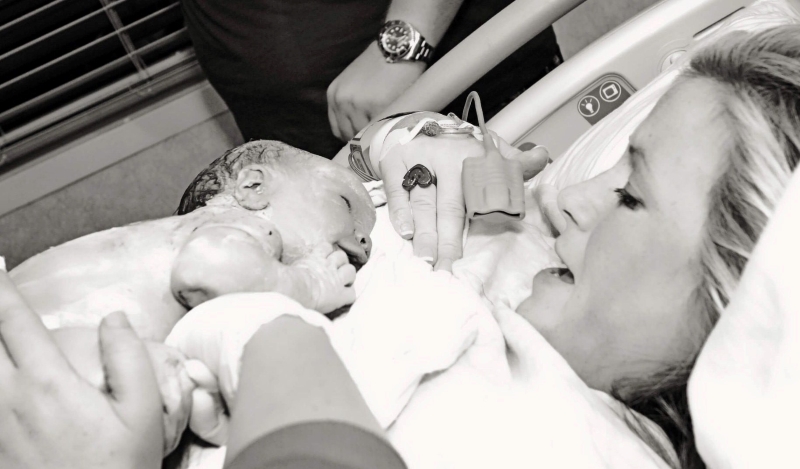
“My first son, Logan, was delivered in 2007 by Cherokee Women’s Health. This time, I had a different OB/GYN. I was so worried because I thought she knew nothing about me or my issues during the pregnancy since I had been seeing Dr. Litrel during my entire pregnancy, and had to be induced at 36 weeks due to preeclampsia. To make a very long story short, this OB/GYN was also a complete blessing to me and my family. “Logan had some issues when he was born so he had to stay in the hospital for eleven days. My doctor didn’t have to check on me during this time but she made a point to come up to my room numerous times to make sure I was okay.” “The labor was agonizing and tiring but my OB stayed with me through the entire thing. From then on I considered her not only my doctor but a friend. Since then she has seen me through two miscarriages, with lots of testing to find out the reason, a long second pregnancy full of both worry and pure joy, and the amazing pain-free birth of my second son Jaxon Luke Parker. I appreciate Cherokee Women’s Health so very much!!” For more information or to schedule an appointment, call 770.720.7733 or visit Cherokee Women’s Health Specialists or request an appointment online.

© Copyright 2024 Cherokee Women’s Health Specialists
Scroll to Top