
surgery

Michael Litrel, MD, FACOG, FPMRS
Dr. Litrel's Blog

A Holy Place

Eight years ago my wife Ann was hospitalized for a life-threatening bleed in her brain. I sat in vigil at her bedside for many hours through the days and nights as she lay there in pain, unable to move, barely able to whisper. I was afraid that I would lose my wife – and my young boys their mother. But early one morning Ann spoke one sentence to me, and the heavy feeling of worry that had filled my chest suddenly evaporated. In its place was a wonderful certainty my wife would be okay. A shunt had been placed by the neurosurgeon to alleviate the pressure on Ann’s brain. The shunt slowly dripped out blood-tinged cerebral spinal fluid the entire week. I watched from my chair next to Ann’s bed as, drop by drop, the fluid fell into the collecting system. The fluid had a reddish color at first. As the days passed, the fluid gradually clarified to a pinkish tinge. Finally one morning the fluid had the healthy hue of fine champagne. Ann was still in such pain she could hardly open her eyes. She squeezed my hand as she woke up and whispered good morning. I tried to cheer her up. “Your cerebral spinal fluid looks so good this morning, I’m tempted to take a sip,” I said wryly. A few moments later Ann responded. “If you swallow….a mouthful,” she croaked, “it will raise your IQ…fifty points.” I was stunned. Immobilized in Intensive care for over a week, my wife had just made a joke. A funny one to boot! I knew then that Ann was going to be alright. Our son Tyler inherited his mother’s courage and sense of humor. Several years ago he was injured in a skiing accident. It was a two-hour ambulance ride to the nearest city hospital. With a fractured bone almost sticking through the skin, Tyler suffered the bumpy ride along the mountain road in agony. Just before Tyler’s surgery, his doctor told him he would need a strong narcotic for the pain. He recommended Vicodin. “Oh, that’s my favorite one,” my twelve-year-old offspring quipped. The surgeon looked shocked. “That’s the one that Dr. House takes.” Tyler grinned as he referenced a family TV favorite about an E.R. doc, “House.” Last week Tyler required another major reconstructive operation, casting a shadow of fear and worry over our household. As a surgeon, I find it far easier to be the one providing care than the one worrying about my loved one. Both roles come with moments of fear. But no matter on which side of the medical relationship I find myself, I know this to be true: The hospital is a holy place. Here in this holy place, we seek help when we or our loved ones are injured or ill. Here in this holy place, gathered together, are people who have dedicated their lives to helping strangers in need. Here in this holy place, Love manifests itself through us in the most concrete of ways – all of us helping one another when we are in desperate need. And here in this holy place, God grants healing and relief. Nevertheless, as a Dad sitting next to my son’s bed before major surgery, I was a bit anxious. Tyler grabbed my hand moments before he was to be wheeled back to the operating room. “Dad, I need you to remember something for me,” Tyler said in a low, intense voice. Unsettled, I leaned forward to listen. “971-32-2745-1994. Write it down.” I fumbled for a pen and wrote the number down, repeating it back to Tyler at his request. Confused, I waited. “If I die, you will be contacted. Give them that code number,” Tyler said. “Within a week, you will receive ten million dollars cash – in untraceable bills.” His face still wore the trace of a smirk as the nurses wheeled him back to surgery. Later, as I sat for hours in the waiting room during the operation, I found myself again worrying. Life can be frightening and painful. We suffer so much, and over the course of a long life, lose what matters to us most – our bodies, and our loved ones. It’s so easy to forget the truth: despite our being biologically mortal, we are spiritually eternal. I remembered Tyler’s last minute joke. It was going to be okay. And so it was. -Dr. Mike Litrel

baby photo
OB

The Art of the Circumcision

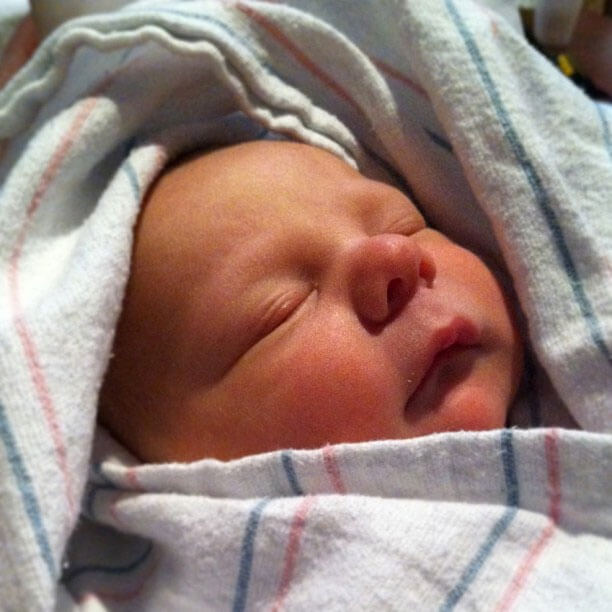
By Dr. Michael Litrel A Lousy Way to Start your Day A circumcision is a lousy way to start off life. For a newborn baby boy, the procedure’s only saving grace might be that five minutes of pain must pale in comparison to the agony of being born. Most mothers-to-be receive an epidural to alleviate the pain of labor. For the baby – no pain medication at all. Squeezed from the warm, dark comfort of his mother’s womb, he suffers through a ten-hour marathon of suffocating agony to land in the hands of yours truly. And the next day we meet again, so I can cut the foreskin off his penis. Moms generally like me pretty well. Newborns probably don’t. Making It Look Easy I was taught the art of the circumcision by Paul Taylor, a physician associate at Grady Memorial Hospital in Atlanta. In his thirty-year career, Paul had probably performed more circumcisions than anyone else in the country. To date I have done only fifteen hundred, a mere ten percent of Paul’s total count. I still consider myself pretty good. But Paul was the best. A year ago, Paul was tragically killed in a bicycle accident. I think of him every time I do a circumcision. Sometimes I am saddened by his untimely passing. But then I focus on the five-minute task at hand, grateful for his lessons almost twenty years ago. When I watched Paul do that first circumcision, I naively commented that it looked pretty easy. “When Jack Nicklaus hits a golf ball 300 yards down the center of the fairway, he makes it looks easy, too,” Paul retorted. Paul was right. There are subtleties to the art of the circumcision that I have come to appreciate. But Paul’s technique has no doubt been responsible for my years of circumcisions unbroken by a single complication. “Give a man a fish, feed him for the day; teach him to fish and feed him for a lifetime.” Alleviating Pain There is, however, one thing I do differently from Paul. When my sons were newborns, it bothered me that they received no pain medication whatsoever. This was the traditional way to perform circumcisions: strap the baby down, cut the foreskin off his penis, and let him cry himself silly. I am proud that I have used pain medication for every circumcision I have ever done. I apply topical pain cream an hour beforehand and also use an injection at the time of the procedure. Yet even though I am diligent in this “alleviate suffering” matter, my babies still cry. So sometimes I resort to another trick Paul showed me. Sugar water on the pacifier works like a charm. The baby sucks happily and usually stops crying. Usually. The take-home message is this: life hurts, no matter what you do. The expectant mother with the epidural still cries when the baby is coming out, and the newborn on Dr. Litrel’s pain medicine cocktail still doesn’t like having his penis cut open. Life’s pain begins when it’s our time to be born. And Life’s suffering ends, just in time for our funeral. How we understand and handle that pain determines who we become. Do we take drugs, or alcohol, or sugar, to get through yet another day? Or do we build spiritual resilience, in understanding the purpose of our short time here on this earth? Those are the questions we answer all our lives. The less we need to take, the more we have to give.

Michael Litrel, MD, FACOG, FPMRS
Dr. Litrel's Blog

My Children Will Have Faith

A single surgical clamp, placed on the bleeding vessels of a ruptured fallopian tube, can save a patient’s life. I know this because I have placed these clamps myself. Ten years ago, a patient arrived at the emergency room of Grady Hospital in shock from such a rupture and the resulting loss of blood. I was a fourth year Chief Resident on call for the surgical emergency. After placing the clamp, I instructed my pretty, wide-eyed junior resident to suction the half gallon of blood and clots from the patient’s abdomen and pelvis. I remember keeping my voice calm, to emphasize the achievement of total control—“Just another day in the operating room, ma’am.” I tried to limit my swagger as we walked to the waiting room to reassure the patient’s family and give them the good news. But afterward, alone in the call room in my blood-stained scrubs, I allowed myself to bask in the full power of my accumulated years of study and training. I felt a Cheshire cat smile of self-congratulation steal over my face. Always a mistake. A superb textbook on obstetrics and gynecology opens with Alexander Pope’s famous refrain, “A little learning is a dang’rous thing; Drink deep, or taste not the Pierian Spring; There shallow draughts intoxicate the brain, And drinking largely sobers us again.” Many times I had flipped to re-read that quote before diving into my studies. It was a warning to the overconfident. But on that day toward the end of my eighth year of training, I fell into the deep sleep of the self-satisfied. At last, I knew exactly what I was doing and what was going on in the world. A phone call the next day proved how wrong I was. The caller was Ife Sofola. Ife (pronounced Ee-fay) was one of my classmates from medical school. A tall, muscular Nigerian, Ife was not only a brilliant student, but a man of deep compassion and undeniable charisma. His easy smile, booming laugh, and lilting Nigerian accent were a comfort and delight to both friends and patients. At the time, he was a flight surgeon at the renowned Bethesda Naval Hospital, where our Presidents receive their medical care. Ife had called to let me know that his mother had died. But it wasn’t the sorrow he wanted to share. It was the miracle. Months earlier, Ife’s family learned that his mother was dying from liver failure. Brought to the Bethesda Naval Hospital, she fell into a coma. She was put under a DNR order—Do Not Resuscitate. Those orders are reserved for patients who cannot be saved. The words are a kind of final acknowledgement: that modern medicine has failed the patient, that we can do nothing, that Death is coming. But Ife and his siblings were not ready to let go of their mother. They had been already heartsick with the loss of their father, who had died earlier that year. The looming loss of their mother was too much to bear. Desperate to do something, Ife’s sister sought out a friend of a friend of a friend who was reputed to be a “healer”—someone who could save life where others had failed. Ife’s sister flew the healer to America from Nigeria, keeping it a secret from her family until the healer showed up at Bethesda. A student of medical science, Ife was dismayed and agitated by his arrival. But there was nothing to lose, so he and his siblings permitted the healer to stay. The healer directed them to hold hands around the dying woman’s bed. They prayed in silence for five minutes. Then the healer announced, “It is done.” With that he departed, taking a taxi back to the airport. Twenty minutes later, Ife’s mother awoke. She smiled and greeted her family and got out of bed to take a shower. Ife said there were no words to describe how dumbstruck her physicians were. Ife himself, exuberant, believing, brimming with unadulterated joy, raced and leaped down the hallways in his white coat, yelling so all could hear, “A miracle has occurred! Here, at Bethesda! A MIRACLE!” Within a few weeks, Ife’s mother succumbed to her disease and died. But not before she had left the hospital and spent precious days with her children at home saying good-bye. Her explanation of what had happened was simple and profound. “I came back,” she said to her children, “so you would have faith.” The power of modern medicine is an illusion. The physician’s sense of mastery, the gratitude of patients and their families—all these constitute a thin veneer which sometimes covers the truth. The source of the healing lies far beyond our earthly skills. It emanates from the realm of the Unknowable—from God, the Source of Life. The other day a patient told me she was confident about her upcoming surgery, “because I have faith in you.” A decade ago I would have enjoyed that kind of comment. The trust and respect of patients is a blessing. But the truth is that we are all participants—patients and physicians alike—holding hands in a circle of healing and praying for a miracle. And we are blessed with this miracle of healing every day we live. Ife concluded his call to me with his own revelation. His tone was not one of grief, but excitement. “Michael,” Ife said to me, his voice trembling, “how many hours did we spend in the lecture hall? How many books did we read? How many operations have we performed? We think we are doctors, so we must know something about life and death.” He paused for a long moment. “I tell you this, Michael—we know nothing. Nothing.” I fumbled for words. I said his story was just amazing, that it had changed my life. Ife laughed his large, unforgettable laugh. “And well it should, Michael—well it should.” -Dr. Mike Litrel

Michael Litrel, MD, FACOG, FPMRS
Dr. Litrel's Blog

A Prescription to Love

I can tell when a patient wants to get out of my office. It was Marsha’s first appointment, and she wasn’t making eye contact, her eyes kept flicking to the door, and she was answering all my questions with mumbles. Most people don’t like going to the doctor – especially the gynecologist – but Marsha seemed particularly, almost pathologically, nervous. She had come to me for a second opinion. Her original surgeon had recommended removing her uterus and ovaries for the severe pelvic pain she suffered. This represents a drastic approach for a childless woman in her early thirties. Marsha made it clear to me she didn’t want another examination from a male doctor. Now, I do what I can to make my patients comfortable, but a gender change is not on the table. I alerted Marsha that there are plenty of wonderful woman physicians she might like to see. After some hemming and hawing, Marsha elected to let me take care of her, and a few weeks later, I took her into surgery. Just one look inside revealed that her pelvic organs were virtually glued together with scar tissue. Instead of removing the uterus and ovaries, I cleaned out the scar tissue that seemed likely to be the cause of her pain. The surgery went well. Marsha’s pain dissipated almost entirely. Pain That No Surgery Can Cure Yet during the coming months, it became obvious in the follow-up appointments that Marsha suffered from a problem that went beyond a surgical diagnosis and cure. She was in her mid-thirties – living alone, estranged from family, and with almost no social contact beyond work and trips to the grocery store. Marsha chose to be virtually alone in the world. As her trust for me grew, Marsha’s story gradually came together, revealed in bits and pieces. It wasn’t totally unexpected that sexual abuse played a part in Marsha’s past. What was uncommon, however, was the degree and amount of abuse she had experienced. For as long as she could remember, Marsha’s male relatives – including her father and her brothers – had enforced sexual relations upon her. It had begun when she was five years old, and had continued until she was fifteen – old enough to finally fight them off, and shortly afterward, to move out of the house forever. Removing scar tissue from the human body is technically difficult. But it’s a simple job compared to removing the scars of childhood abuse. When you excise abnormal tissue, the remaining healthy tissue comes together and heals. But how do you remove the unholy, festering memories? Marsha was physically healed, but far from resuming the act of living. I couldn’t see how Marsha could learn to love other people, when those who should have given her those first lessons were the source of her earliest injuries. I pondered these questions in thought and in prayer. To Marsha, I recommended counseling, the church, volunteer work…but my suggestions were met with an unyielding resistance born out of deep mistrust for all people. Truthfully, it made me sad to have Marsha as a patient. It’s difficult to see a patient whom you’re not able to help. A Life-Changing Prescription Then one day, a simple solution presented itself. I decided to write Marsha a new prescription. On my pad I wrote: Do one good thing for someone else today. Write down what it was. Repeat daily. I told Marsha it didn’t matter what she did, or when she did it, or who she did it for: just keep the love in her heart, and search for the opportunity to share it with someone else in need. Once a day. I had no idea what Marsha would do with her “prescription.” Throw it in the nearest trash can, I suspected. I just knew she needed a different kind of medicine – the kind that isn’t manufactured by any pharmaceutical company. Healing of the body can only go so far: it is the health of our soul that makes us truly alive. Two months later Marsha returned for her next appointment. I was pleasantly surprised to hear that she had made a friend. She had simply helped someone at the store with her groceries. She attributed it to her new prescription, and promised she would continue to follow it every day. Six months later, I learned she had made some more friends. She had even joined a book club and was attending a local church. And a year later she went on her first date. Ever. Over the past several years, Marsha’s health has improved so much that now I only see her from time to time. Recently she sent me a card. She wanted to let me know she was getting married. And across the bottom of the card, in a small and hopeful postscript, was a note that she was hoping to have a baby. I have no idea why Marsha decided to take her “prescription” seriously. Maybe it was the fact that it was written on an official pad. Or maybe she could feel the desperation in my last ditch effort to help her.But perhaps it’s simply that Marsha recognized the truth. I believe that we are hard wired to recognize the truth when we see it, and the truth is this: Love is the necessary ingredient for a healthy life, and it is not always the love we receive that heals. More often, it’s the Love that we give. -Dr. Mike Litrel

Cancer Screening, Dr. Litrel's Blog

A Cancer Operation

The operation has lasted three hours and is perhaps at its halfway point. The scrub technicians can rotate in and out as they tire. I watch a scrub tech named Josh arrive to take the place of Cathy. Cathy possesses a quiet competence, a pleasant smile – and has laughed at all my jokes. As far as I’m concerned, Josh can only be a poor substitute. Dr. Boveri bends over the patient, continuing the precise work of cutting and dissecting. As first assistant, I provide exposure, lifting and pulling aside muscles, ligaments and other structures so Dr. Boveri can see what he is doing. I work as Dr. Boveri’s assistant for the pure pleasure of learning. As an impatient resident under his training at Emory University, I once found the intensity of this Harvard-trained surgeon annoying. Ten years later, I pass my sickest patients into his skilled hands and regard his intensity as a miracle, and a gift to my patients. Josh, the new scrub tech, seems to think his job includes keeping up the chatter in the O.R., especially, it appears to me, during critical moments of the operation, when a slip of the knife could unleash a life-threatening gusher of blood. Did you see the game last night? You know, Dr. Snow always prefers the other kind of clamp. Whoa! Can you believe how many worms they ate on Fear Factor? Dr. Boveri ignores the chatter. A surgeon’s preferred language is one of action. His eyes carefully trace the fingers of cancer that have groped their way through my patient’s intestines. Working together we pry away the malignant flesh, piece by piece, reaching deeper and deeper into the body until we penetrate the abdomen to the cancer’s very source. We are deep inside the pelvis. Dr. Boveri leans forward almost imperceptibly, as the surgery reaches the zenith of its difficulty. He places a sponge over a portion of bleeding tumor and pauses in his dissection. Cancer is cellular growth gone amok, a raging fire that spreads through the body, burning nutrients and consuming flesh in its path. The cancer before us has obscured the boundaries between uterus, ovary, and rectum, binding them together in an unnatural mass of biological concrete. Dr. Boveri uncovers a chunk of tumor that seals the space between appendix and external iliac vein. He gently probes the vein. Its thin walls channel the surge of blood returning from leg to heart. Methodically, relentlessly, Dr. Boveri works to liberate the vessel, separating healthy from unhealthy tissue, cutting flesh to save a life. After forty minutes, the tumor is gone, and the vein is free. It is a master performance. Josh, however, is not to be outdone. As he receives the piece of malignant flesh from Dr. Boveri, he notches up his monologue, in a self-appointed role as court jester. For much of the operation, words have run from his mouth like water from an overflowing toilet. Now he reaches for his finest moments. Who do you think is the hottest on Desperate Housewives? Hey, what is this? Is it tumor? What do I do with it? “It’s cancer. Put it in the basin,” Dr. Boveri says. Two minutes later: What is this? Wow, this is something. Same thing? Put this in the basin too? Dr. Boveri gestures toward the basin. Five minutes later, Josh launches into a reprisal. Is this cancer too, he begins. Dr. Boveri explodes. “What do you THINK it is, Josh?!!” He struggles visibly for self mastery, and can be heard to mutter, tuna fish sandwich? He takes a deep breath, the furrows in his brow subsiding as he regains his equilibrium. A surgeon reveres self-control above almost every other virtue, and I suspect his outburst bothers him more than it does anyone else. But at least it has the desired effect – Josh keeps his mouth shut. As the operation nears its sixth and probably final hour, a quiet, smiling Cathy returns to the operating room. Dr. Boveri interrupts his work to thank Josh as he leaves the table, but it is not until Josh is completely gone, having scrubbed out and exited the room, that the surgeon finally allows himself the luxury of full expression. “Cathy,” he grimaces, “we are SO glad you’re back.” Dr. Boveri is a surgical oncologist affiliated with Cherokee Women’s Health. He and Dr. Litrel work in an integrated group with nutritionists, geneticists, molecular biologists, chiropractors, naturopathic doctors and others, including patients, to develop better models for health, and to help prevent cancer from occurring. -Dr. Mike Litrel

© Copyright 2024 Cherokee Women’s Health Specialists
Scroll to Top