preeclampsia

OB Patient Stories

HELLP Syndrome Diagnosis: A Life-Threatening Variant of Preeclampsia

HELLP Syndrome is a serious, rare condition that left undiagnosed can result in life threatening consequences. Cristie was diagnosed with HELLP in her 38th week of pregnancy. Dr. James Haley of Cherokee Women’s Health Specialists diagnosed her with HELLP when she was 38 weeks pregnant. A variant of preeclampsia, HELLP can be hard to diagnosis as symptoms are similar to preeclampsia. Thankfully, Dr. Haley recognized the symptoms and took immediate action, which resulted in Cristie delivering a healthy baby boy. If not for the early diagnosis, there may have been a much different outcome. It all started when Cristie began to feel a dull pain in her abdomen. She suspected it was just indigestion or heartburn. She had no idea that within just a few days, at 38 weeks pregnant, she would be diagnosed with HELLP Syndrome. Within days, Cristie would undergo two platelet transfusions, a plasma transfusion and deliver her baby boy Jack—with no epidural. This was Cristie’s second pregnancy, as she and her husband Jason had had a healthy baby girl named Charlotte just two years earlier, after enduring some fertility issues. Other than being diagnosed with gestational diabetes during both pregnancies — which she controlled with her diet and experienced no issues — this second pregnancy was going smoothly, just like her first one. When she began having upper abdominal pains, she assumed it was just heartburn or indigestion, as it first happened after dinner. However, the pain continued for the next few days, and she started experiencing nausea and fatigue as well. “Something’s Not Right” On day four, the pain got so severe, Cristie was reduced to tears. It was a Saturday night and she told her husband that she just knew something wasn’t right, so they called the after-hours number at Cherokee Women’s Health. When she explained the situation, the nurse told her to head to the hospital, as she may be going into labor. Admitted to the Hospital Once in Labor and Delivery, Cristie was given antacids and monitored for an hour. At this point, her cervix was only one centimeter dilated. Dr.  Haley was on call that night and after evaluating Cristie, decided to admit her. He told her he would give her some time to go into labor on her own, but if she hadn’t progressed by 5 a.m. he would start Pitocin to induce her labor. An Extremely Low Platelet Count Cristie had planned on an epidural when the time came, so Dr. Haley ran labs to prepare. One of the items checked were her platelet count. The primary role of platelets is to aid in clot formation to prevent bleeding. Although a woman’s platelet count may drop some during pregnancy, a normal platelet count in the third trimester would be approximately between 150,000 to 300,000. When they received the results, the nurse told Cristie that she thought there was a mistake because her platelet level was only 46,000. However, her records indicated that all were at normal levels just two weeks prior when she had the test done at the office. Cristie’s labs were repeated and this time the platelet count was even lower. The tests also revealed that her liver enzymes were very elevated. Diagnosed with HELLP, a Serious Variant of Preeclampsia Dr. Haley came in to discuss the results with Cristie and Jason and explained to them that she had developed a condition called HELLP syndrome. HELLP (Hemolysis, Elevated Liver enzymes and Low Platelets) syndrome is a life-threatening pregnancy complication that is a very uncommon variant of preeclampsia. Up until four days before she ended up in the hospital, Cristie had no symptoms. When she did develop symptoms, they were just abdominal pains and nausea. Throughout her pregnancy, she had no abnormal bloodwork either. Both HELLP and preeclampsia usually occur during the later stages of pregnancy or soon after childbirth. HELLP syndrome is rare, only occurring in approximately 1 to 2 out of 1,000 pregnancies. Early diagnosis is critical because serious illness and even death can occur in about 25% of cases. HELLP can be difficult to diagnose because of the already existing symptoms of preeclampsia, such as high blood pressure and loss of protein in the urine. HELLP Symptoms Symptoms of HELLP syndrome include: An Epidural Was Off the Table Dr. Haley told Cristie that she would need a platelet transfusion and that an epidural was off the table since her platelets were too low. Dr. Haley then assured her and her husband that he would call the blood bank and set everything up. Between midnight and 5 a.m., Cristie had two platelet transfusions. This brought her platelet level up to a safer level, but still not in the normal range. It’s Time! It was important that Cristie deliver soon so she was started on Pitocin later that morning. Dr. Haley had ended his shift, and now another OB/GYN from Cherokee Women’s Health was on call and came in to take over. At 9 a.m. things weren’t progressing enough, so her OB/GYN explained to Cristie that she needed to break her water to speed things along. Within 45 minutes baby Jack was born, on Father’s Day! It was a rough 45 minutes though, since Cristie had to deliver naturally. At one point, Cristie told her doctor she couldn’t do this and wanted to go home but she was assured she could. Cristie says she screamed so loud during the labor that the nurse from the room next door came over to tell them that her patient had planned to deliver naturally until she heard Cristie, she then changed her mind and requested an epidural! “Jason was there supporting me, holding my hand and doing what he could, but I couldn’t have done it without my OB/GYN. She was everything I needed. She was my birth coach, my doula, my mom figure and my doctor.” – Christie Cristie needed further transfusions, and also required continued monitoring of her blood pressure, platelets and assessment of her liver so

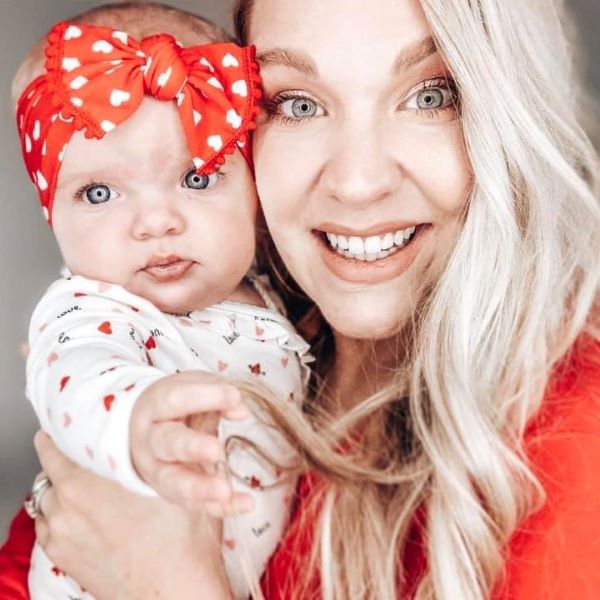
new mom and baby
OB Patient Stories

A C-Section & Postpartum Preeclampsia

A C-section, postpartum preeclampsia, and infertility were not what Katherine had in mind when she and her husband decided to have a baby. When Katherine and her husband Thomas began trying to conceive, she had no idea it would not come easy. After a year of trying, she still wasn’t pregnant, so she scheduled an appointment with Cherokee Women’s Health. She immediately knew she was in the very best hands. Her doctor recommended that Katherine take Clomid, an oral medication used to treat infertility. Soon after starting Clomid, Katherine learned she was pregnant! She and her husband were overjoyed and so excited for this next chapter of their lives. An Emergency C-Section Brings Baby Claire Into the World The next nine months flew by, with a healthy and smooth pregnancy. Before she knew it, she was 40 weeks pregnant, and it was time to bring her little girl into the world. After her check-up appointment they decided it was best to schedule an elective induction for later in the week since she was past her due date. When it was time to induce, Katherine received an epidural, and when she was fully dilated, she pushed for several hours, but unfortunately, her baby kept turning. “Since she was pushing 40 weeks in there, I started to feel miserable and uncomfortable. Scheduling an induction was the best move for me, and we’ve always been flexible. I just went to the hospital relaxed and calm. So relaxed, we actually sat around playing card games. We were so excited to meet our baby girl!” – Katherine, referring to her induction After several hours with no progress being made, my OB/GYN explained that a C-section was the safest option for both the baby and Katherine. A C-section was decided and soon after, baby Claire was born! She was healthy as can be, weighing 7 lbs., 1 oz. “While I went into the hospital expecting to deliver her vaginally, I was totally on board with a C-section. I trusted my doctor and it didn’t matter how my baby got here, as long as she was safe and healthy.” – Katherine recalling the delivery Postpartum Preeclampsia Leads to Weight Gain and Hormone Fluctuations After Katherine and Claire were home, Katherine started to notice her hormones and weight gain seemed out of control. When she went to Cherokee Women’s for her follow-up appointment, she discussed these issues with her doctor. It turned out she actually weighed more than she did when going into delivery with baby Claire. My doctor explained that her symptoms weren’t normal and that they were a sign of postpartum preeclampsia. She advised Katherine to keep monitoring her blood pressure at home and if she experienced any drastic changes, to go to the hospital. It was on that same night that Katherine’s blood pressure went over 180, and she immediately left for the hospital. “I’m so thankful for that follow-up appointment.  I would not have known to check my blood pressure if it weren’t for my doctor’s expertise. I would tell myself it’s just hormones, but no, maybe something is going on. I really didn’t know. Claire is my first baby, so it’s kind of hard to know what’s normal and not,” – Katherine on the importance of monitoring blood pressure Katherine’s doctor agreed that her diagnosis was unusual, so she was referred her to an ENT specialist, where it was determined that her thyroid be removed. Thanks to the referral and the expertise of the doctors at Cherokee Women’s, Katherine’s levels returned to normal and she’s beyond grateful. Thankful for Cherokee Women’s Health “I don’t know what would have happened if it weren’t for the expertise of Cherokee Women’s Health Specialists. My doctor was very thorough, patient, and listened to all my questions, plus questions you didn’t know you even had. She’s very knowledgeable and explains everything in a way that is easy to understand for first-time moms. In fact, I will use Cherokee Women’s Health for all my future children as well, because she was just so wonderful.” – Katherine on her OB/GYN and Cherokee Women’s Health

mom with preeclampsia and baby
OB Patient Stories

Preeclampsia and Postpartum Depression – Ashton’s Story

Just three weeks shy of her due date, Ashton was admitted to the hospital for preeclampsia. At just 25 years old, Ashton had been given a clean bill of health, which was very important since she and her husband Joey had recently suffered a miscarriage. But this pregnancy was going well and she experienced no morning sickness or other pregnancy-related issues. She remained very busy too, working 60 hours a week as a CPA while also doing makeup for brides on many weekends. Signs of Complications But then, Ashton began to have swelling and her blood pressure rose. Her blood pressure naturally registered low, so while her readings may not have been cause for alarm for those with average readings, for Ashton, it was high. As such, her blood pressure was monitored at each doctor visit to make sure it stayed in a safe range. But then, on August 26th, just three weeks shy of her date, things changed. During her doctor’s visit at Cherokee Women’s Health, her blood pressure reading was once again high, so she was sent to the hospital. It was determined that she had preeclampsia. Hospitalized for Preeclampsia Preeclampsia is pregnancy-related hypertension that affects mothers and infants during late pregnancy, with symptoms typically developing after week 20 and showing up as late as six weeks postpartum.  Preeclampsia can also be very dangerous for both mom and baby so Ashton was immediately admitted to the hospital. While in the hospital, Ashton’s blood pressure continued to climb so it was determined that the best course of action would be to deliver her baby. For a few days, the doctors tried several methods to help her go into labor naturally but there was no progress — and Ashton’s blood pressure remained elevated. Early Delivery For the safety for Ashton and her baby, her doctor decided a C-section would be best. During the surgery, Ashton recalls hearing his voice telling her that all would be fine. “It was very comforting and calming to be reassured by my doctor during surgery.” Meet Baby Emerson The C-section was a success, and I gave birth to a beautiful baby girl, whom Ashton and Joey named Emerson. The only complications Emerson experienced was a bit of jaundice, but after spending three days in the BiliBed, she was fine and cleared for release. But while baby Emerson was cleared to go home, Ashton had to remain at the hospital for another week because her blood pressure was still high. She was so grateful though that she was allowed to have Emerson by her side the whole time. She’s also grateful for the care she received from her doctor. “My doctor was so caring — before, during, and after the delivery. He checked on me often.” – Ashton shares about her experience Guilt and Postpartum Depression At her six-week checkup, Ashton felt better physically but confessed that she had been struggling with postpartum depression and anxiety. She said she felt guilty because she couldn’t take care of Emerson like she thought she should while she was recuperating. She shared that her husband Joey was doing a great job helping but felt she should be doing more. Her doctor listened as Ashton shared feelings that many mothers experience after giving birth. “My doctor was phenomenal. He really listened to me and calmed my nerves by telling me what I was feeling was very normal. This really put me at ease.” Mom and Baby and Thriving, Thanks to Expert Care Ashton is now feeling back to her normal self and baby Emerson is thriving. “I love how Cherokee Women’s Health walked alongside me throughout this whole ordeal, she says. Ashton’s story is a great example of how important it is to have expert care, especially when things don’t go as expected or medical complications arise. To contact Cherokee Women’s Health, please call 770.720.7733 or schedule an appointment at either their Woodstock or Canton location.

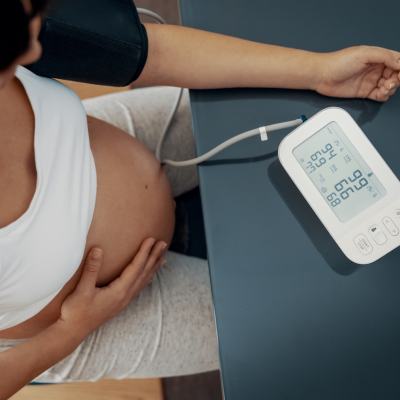
pregnant woman checking blood pressure
OB Education

Recognizing Preeclampsia During Pregnancy

Because preeclampsia only affects women during pregnancy and the postpartum period, many first time mothers are unaware of the effects and symptoms of preeclampsia. Proper prenatal care with an OB/GYN is typically enough to catch the early signs of preeclampsia; however, new mothers should be aware of the symptoms and notify their doctor about any changes in their health.  What Is Preeclampsia? Preeclampsia is pregnancy induced hypertension that affects mothers and infants during late pregnancy. Symptoms typically develop after week 20, and can show up as late as 6 weeks postpartum. Researchers have yet to isolate the cause of preeclampsia, but the disorder affects 5-8% of all pregnancies. Preeclampsia is most common in first time mothers. It is one of the leading causes of illness and death in mothers and infants, but identifying the problem in its early stages allows for the best possible outcome. Recognizing the Problem Although some women show few symptoms of pregnancy induced hypertension, preeclampsia is typically characterized by high blood pressure and protein in the urine. Your obstetrician will monitor your pregnancy for signs of preeclampsia, but it’s important to tell your physician if you’re experiencing any symptoms. Symptoms of preeclampsia may include: Preeclampsia develops rapidly, so it’s important to notify your doctor as soon as you experience symptoms. But with early detection and proper care, your physician can provide the best possible outcome for you and your baby. To learn more about preeclampsia or to schedule a prenatal appointment with one of our board-certified OB/GYNs, call us today at 770.720.7733 or schedule an appointment online.

© Copyright 2024 Cherokee Women’s Health Specialists
Scroll to Top