
Could You Have Endometriosis?
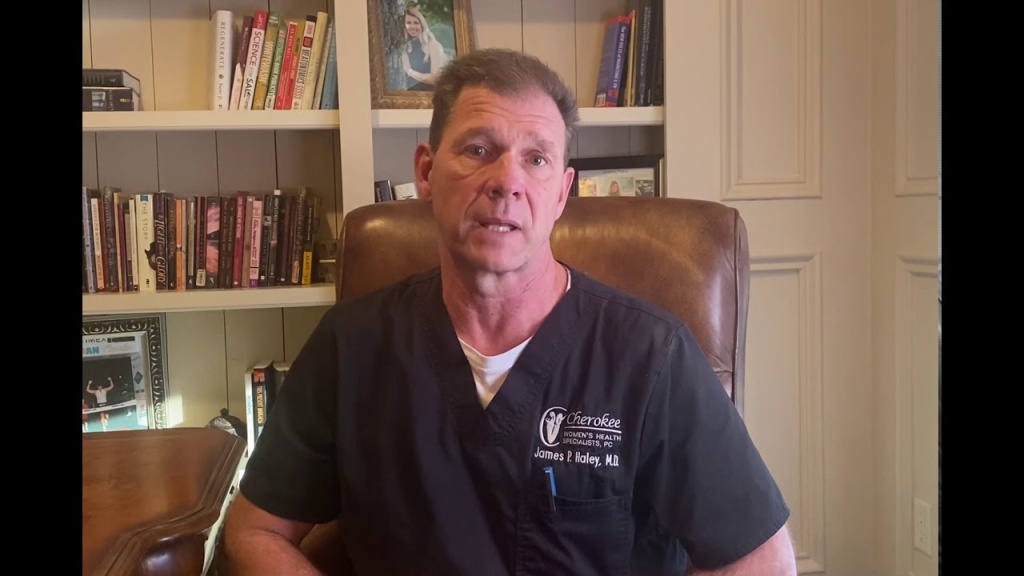
Dr. James Haley discusses endometriosis; how it affects women, how it’s diagnosed and the available treatment options.
Dr. James Haley discusses endometriosis; how it affects women, how it’s diagnosed and the available treatment options.
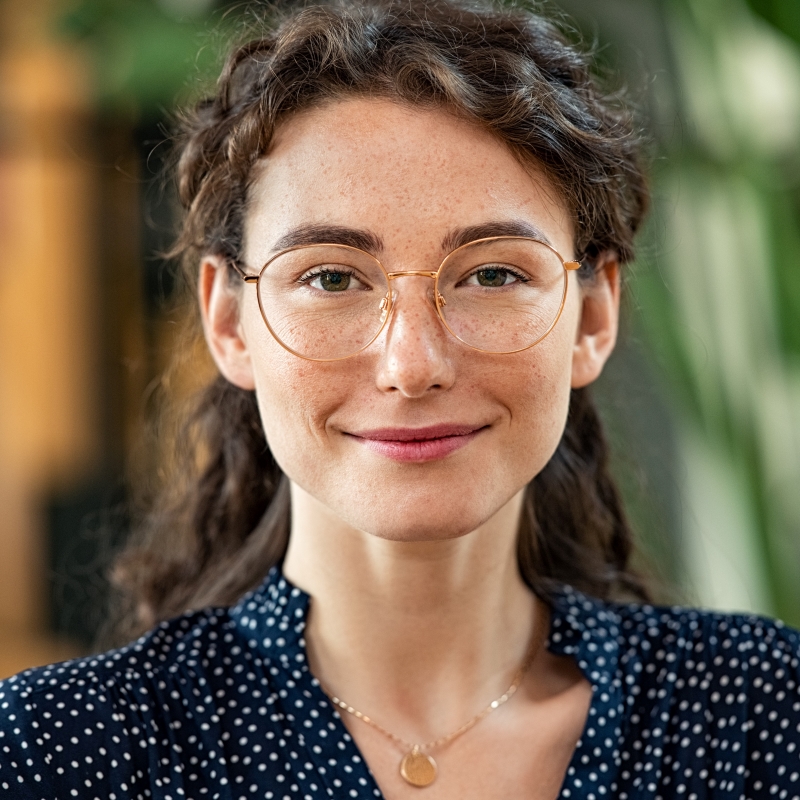
Elizabeth was diagnosed with PCOS at just 23, even though she’d had symptoms since she was 11. Polycystic ovary syndrome (PCOS) is a health problem that affects 1 in 10 women of childbearing age. PCOS can happen at any age after puberty, but most women don’t discover they have it until their 20s and 30s – when they have problems getting pregnant. We were fortunate to hear Elizabeth’s story which includes her struggles of living with symptoms of PCOS and finding a doctor that would take her symptoms seriously. Heavy Bleeding and Painful Periods Elizabeth was in the sixth grade and 11 years old when she had her first period, which is a relatively normal age to experience your first menstrual cycle. “It may be odd that I can remember the exact month and year that I got my first period. Maybe it’s because I didn’t realize I had started my period. And when my mom confirmed that’s what it was, I couldn’t stop crying,” Elizabeth recalls. “I don’t remember having considerable pain, but my mom would have to pick me up from school because my period would surprise me, and I would bleed through my pants. It was terribly embarrassing.” – Elizabeth Even though Elizabeth’s periods were very irregular and spaced out, she experienced no other symptoms so her mom figured they would become regular and ’even out’ as Elizabeth entered high school. However, Elizabeth couldn’t help but notice she was the only one of her friend group to have problems. “Is this normal”, Elizabeth began to question. My Pediatrician Classified Me as Overweight, But Provided No Help Unfortunately, Elizabeth’s symptoms didn’t ‘even out’ at all – in fact, they got worse. Her symptoms included weight gain and very painful periods. “My self-esteem plummeted. I was classified as overweight by my pediatrician, and I was noticeably larger than my friends,” she explains. The most frustrating part was that it didn’t seem to make sense. After all, she was very physically active. She lifted weights, played rugby and even carefully watched her diet. Heavy bleeding and severe pain plagued Elizabeth during her menstrual cycle, which came only every three to four months. She and her mom just assumed it was irregular due to her active lifestyle. However, that didn’t explain the intense pain and heavy bleeding. In fact, they were so severe that she couldn’t attend school, go outside, or even move during the first day of her menstrual cycle. “It was so bad. My mom would take the day off of work to tend to me, because I was in so much pain. Over-the-counter pain medication wouldn’t even take the edge off. I would just rock back and forth on the couch all day, dragging myself to the bathroom to change my menstrual pad or to vomit.” – Elizabeth I Just Learned to Live with the Pain and Heavy Bleeding Elizabeth said she learned to just deal with the symptoms and found ways to work around them. It was mainly the first day of her cycle that she was out-of-commission, so on those days, her teachers and coaches were very understanding and would let her go home without any penalties. Again, Elizabeth and her mom hoped her symptoms would simply ‘level out’ as Elizabeth became older. As Elizabeth was preparing to go off to college, she knew she had to do something. If the first day of her period fell on a day where she had class or an exam, she would be in major trouble. She had heard birth control could help ease the pain and bleeding of periods, so she scheduled an appointment with the school’s GYN. The gynecologist ran bloodwork and performed an annual exam. The results shocked Elizabeth – the bloodwork revealed that she had high testosterone levels! After Elizabeth spoke to her mother about her results, Elizabeth discovered her mom had polycystic ovary syndrome. “You’d think this is when I would be diagnosed with PCOS, right? Unfortunately, my GYN at the time told me it would be useless to do further testing since, as she put it, ‘I didn’t want to have kids yet and I was going on birth control anyway.’” Finally, the GYN at Cherokee Women’s Health Diagnosed Me With PCOS As Elizabeth was attending college, she noticed her pain and heavy bleeding were relieved, but she was very fatigued, and was eventually diagnosed with depression. After graduation, Elizabeth moved to Woodstock, GA, where she discovered Cherokee Women’s Health Specialists. After visiting a gynecologist and having more bloodwork tests, she was diagnosed with polycystic ovary syndrome. “Even though I suspected I had PCOS for a while, it was a major relief to get a formal diagnosis. I was much kinder to myself and was excited to finally stop suffering from my symptoms.” Receiving a Treatment Plan for PCOS Her doctor discussed the different treatment options, and together they chose the best option for her situation. Each patient diagnosed with PCOS has different symptoms and is in various phases of life. Discussing the treatment plans with your physician is the best way to manage and control your PCOS symptoms to be able to enjoy the best quality of life. Our GYNs Can Help Diagnose Female Health Issues Polycystic ovary syndrome is not a health condition that can go away, so make an appointment with your gynecologist. They will help rule out other potential causes and come up with a treatment plan. At Cherokee Women’s Health, our board-certified OB/GYNs are very experienced in diagnosing and treating symptoms of PCOS. schedule an appointment online or call us today at 770.720.7733.
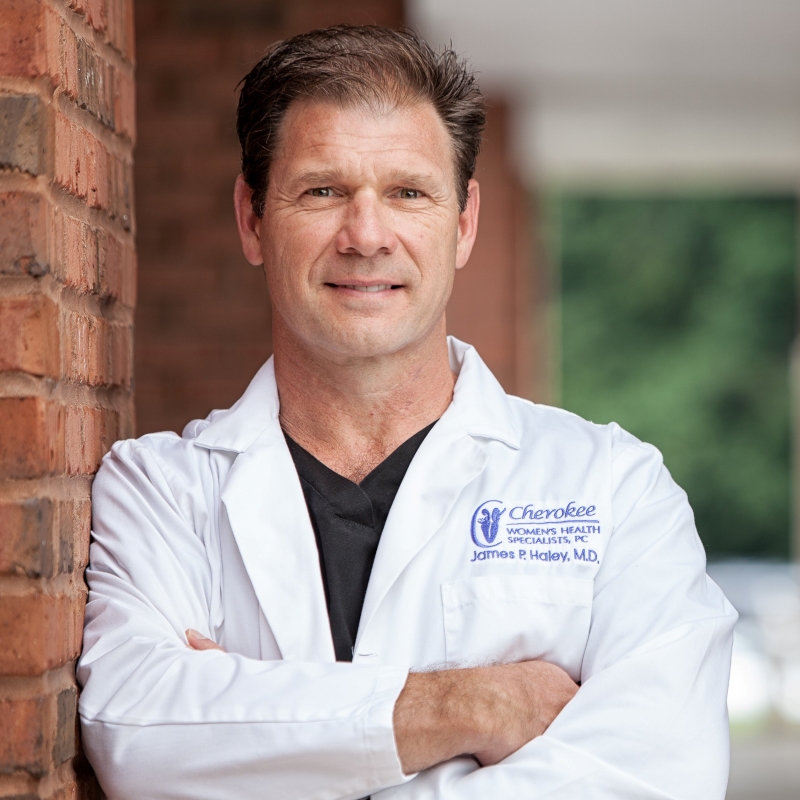
Dr. Haley talks about PCOS, its symptoms, how it’s diagnosed and available treatment solutions.
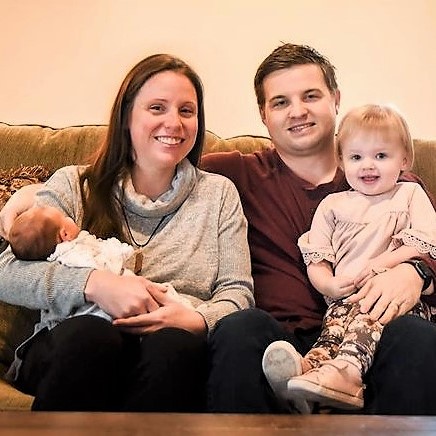
The journey to pregnancy and starting a family looks different for everyone. For Cherokee Women’s Health patient Katie, it was not always an easy journey, but she and her husband David came out blessed on the other side with two healthy girls. Infertility Struggles Katie and her husband, David, were settled in their careers before trying for a baby. Once they started trying, they had some struggles, going to two separate infertility clinics over a two-year span. Neither clinics were successful, but they did not give up hope. They prayed about their next steps towards having a family and decided to stop with the clinics. Without the medicine, shots, or extra ultrasounds, they finally got a positive pregnancy test 2-3 months later. They could not believe it, but it was true! Diagnosed With PCOS Katie decided to seek help from Cherokee Women’s Health Specialists. She explained that she had 90-day cycles and that her attempts to become pregnant had not been successful. Her OB/GYN diagnosed her with PCOS (Polycystic Ovary Syndrome) and explained how PCOS can commonly lead to fertility struggles. Yes, We’re Pregnant! Once they had an answer as to why they weren’t getting pregnant, Katie didn’t feel as much pressure and was able to relax a bit. “I had heard that when people who struggle to get pregnant that they suddenly once they take the pressure off. That’s what happened with us. We were pregnant!” Going into her first appointment after the positive pregnancy test was very scary. She was worried that at age 33, and her history of infertility struggles might have a negative impact. It was not until her first trimester was over that she realized she was healthy and that having her baby was really going to happen. They later learned they were having a baby girl, and suddenly all the morning sickness didn’t matter as much. Welcome Baby Mary-Katherine Fast forward to January 2019. Katie’s water broke at 37 weeks at around 3:00 in the morning. Being a new mom, she was not exactly sure what to expect. “It just felt like I peed myself a couple of times,” Katie shared. They headed to Northside Hospital and learned that her water did indeed break! Everything started happening so quickly once she got to the hospital. “You’re running on adrenaline because you don’t believe it’s really happening. There is no way to really prepare for it, you just have to experience it as you’re going.” First time mom, Katie Dr. James Haley of Cherokee Women’s Health delivered her baby. He didn’t even have to ask her to push because her baby girl was already crowning. Her baby came so fast that Katie had a grade-3 tear that Dr. Haley quickly repaired. Moments later, Mary-Katherine was born and, at 7 pounds, 7 ounces, was in the 90th percentile health range. Coombs Positive Although Mary-Katherine was born a healthy weight and size, she tested positive for Coombs. The Coombs test is typically done on newborns, and the test searches the blood for “foreign” antibodies that attack red blood cells. Coombs typically happens when the baby’s blood type inherited from the father does not mix well with the mother’s blood type. Having this positive test meant baby Mary-Katherine had a higher chance of jaundice. Mary-Katherine stayed in the hospital’s nursery an extra night for observation. Katie recalls that leaving the hospital without her newborn was very hard for her and David, especially with it being their first baby. Thankfully, Mary-Katherine was released the following day. When Mary-Katherine went to her first pediatrician appointment, they were sent to Children’s Health of Atlanta for three days where she went through phototherapy for her high levels of bilirubin. “I was trying to heal, and in quite a bit of pain from delivery. It was a very trying first week for us. But now she is thriving and has her own little personality.” – Katie Having Baby #2 Because they had trouble their first time getting pregnant, Katie and David decided to start trying again within a year of having Mary-Katherine. This time was much easier and Katie became pregnant in April! Having had her first baby, she felt more prepared for her second. Since she and David were able to do all of the pregnancy activities ‘firsts’ with Mary-Katherine, being pregnant for the second time made her stronger and more mentally prepared. They did not have a gender reveal party for their second but finding out the gender was still one to remember. They were on vacation with her in-laws when her 10-week blood work results popped up on the app on her phone. Katie and David announced Katie’s pregnancy to all of their friends and family at 20 weeks. “It was a totally different experience than with a gender reveal. Part of me felt it was a boy and I sort of convinced my husband that it was too. Turns out it was a girl and I realized we needed to start saving now for two weddings later in their future!” – Katie on learning the sex of their 2nd baby Gestational Diabetes At around 30 weeks into her second pregnancy, Katie was diagnosed with gestational diabetes. This was a shock for her as she had been physically active her whole life, and diabetes did not run in her family. She later learned that her placenta was having to overcompensate for insulin resistance, which is an underlying part of PCOS. Because of the size of Mary-Katherine and Katie’s recent diagnosis of gestational diabetes, she modified her diet and became more aware of what she was eating. Because of her diagnosis, Katie went into the office for stress tests once a week. Her baby was very active during the stress tests. Knowing her baby was healthy was a huge relief. “It was so reassuring to feel my baby being so active, kicking and moving. I felt that the baby was in good shape,” she recalled. False Alarm One day, after arriving home from a stress test at