miscarriage

pregnant belly_264211221
Miscarriage Education, OB

Common Problems During Pregnancy

Common problems during pregnancy include pregnancy bleeding, gestational diabetes, and high blood pressure. We can help prepare you to know some of the signs. Early Pregnancy Bleeding If you bleed during early pregnancy, there are two things we worry about: However, just because you have bleeding early in pregnancy does not mean you automatically have one of these conditions. To know for sure, you will need to see your OB – usually several times – to receive the correct diagnosis and the care you need. Bleeding during early pregnancy can be just a scary situation and your pregnancy turns out fine. However, sadly, this is not always the case. Miscarriage A miscarriage is when a woman loses an early pregnancy. Sometimes a woman does not even know she was pregnant – her period might be a few days late and then she has a heavy flow. Other times she had a positive pregnancy test before miscarrying. Even though miscarrying can be daunting to think about, it’s important to be informed for both yourself and your loved ones. Miscarriage occurs in about twenty percent or more of pregnancies for a variety of reasons. The reason most women miscarry is because the pregnancy did not develop correctly. This means, usually, there are too few or too many chromosomes. This is fundamental damage that does not allow the pregnancy to continue. If you’re concerned about miscarrying, definitely talk to your doctor and take the appropriate steps to avoid miscarrying such as maintaining a healthy lifestyle, seeking regular prenatal care, and avoiding known miscarriage risk factors (smoking, drinking alcohol, and illicit drug use). Miscarriage is a relatively common experience but that doesn’t make it any easier. It can have a profound emotional impact, not only on the woman herself, but also on her partner, friends, and family. We are sad to give the diagnosis of miscarriage and grieve right along with you and your loved ones. Getting support from loved ones or professional counseling is often necessary in helping with the healing process. There are also many support groups online or at your local hospital. The following are resources you may find helpful for your recovery process: Ectopic Pregnancy An ectopic pregnancy is when a pregnancy has not developed inside the uterus or womb but instead is located outside of the uterus. Ectopic pregnancy occurs in less than one percent of all pregnancies and is a serious diagnosis. The uterus or womb is the only place a pregnancy can grow into a healthy baby, and it can be life threatening. The most common location for an ectopic pregnancy to implant is inside the fallopian tube. If the pregnancy implants anywhere other than the uterus, you will likely experience pain and internal bleeding. Heavy bleeding inside the abdomen is why an ectopic pregnancy is so dangerous. Similar to miscarriage, there are no ways to completely prevent ectopic pregnancies, but it is possible to decrease the risk. This is possible through maintaining a healthy lifestyle, seeking regular prenatal care, and avoiding known risk factors such as smoking, drinking alcohol, and illicit drug use. Potential Treatments for Miscarriage and Ectopic Pregnancy Treatments for miscarriage and ectopic pregnancy can include medication, surgery, or simply close observation. Our recommendation will depend upon your symptoms, examinations, and medical history. Bleeding Later in Pregnancy The causes of bleeding later in pregnancy, usually after the 20th week, are more varied than the causes of early pregnancy bleeding. It can be normal and a sign of labor if you are close to your due date. However, if you are not close, this can be dangerous to the health of your unborn baby. *Overall, if you bleed during your pregnancy, seek immediate medical care. High Blood Pressure High blood pressure is another common problem during pregnancy. This condition goes by several names such as toxemia of pregnancy, gestational hypertension, or pre-eclampsia, and it can affect the health of your pregnancy. There are times your blood pressure is supposed to go up, such as during exercising, but it shouldn’t be high during rest or most of the time. If your blood pressure is high all the time, the increased pressure can damage your organs such as your kidneys, eyes, and heart. High blood pressure during your pregnancy could damage your placenta as well, posing a problem for the pregnancy. Most importantly, try not to stress. Fewer than ten percent of pregnant women develop high blood pressure, and we will monitor you closely at every visit. Risk Factors of High Blood Pressure Those most at risk for high blood pressure include: Symptoms of High Blood Pressure During Pregnancy If you experience the following symptoms, your blood pressure could be elevated: These warning signs can commonly occur during normal pregnancy too, so you’ll be evaluated on a regular basis at your appointments. Management of High Blood Pressure During Pregnancy There are several tests used to determine how to manage high blood pressure during pregnancy. The only real cure for hypertension during pregnancy is the delivery of your baby. Our timing of when to recommend this will depend upon the severity of your symptoms and the gestational age of your baby. We are always weighing one against the other, trying to determine the best time to act. In more serious cases, we may admit you to the hospital for closer observation. Gestational Diabetes Gestational diabetes is a type of diabetes that only occurs when blood sugar levels remain elevated in pregnant women. The condition usually subsides after pregnancy, but women who have had gestational diabetes are more likely to develop permanent diabetes later in life. It is a serious condition because it can lead to the birth of a large baby, which may mean a difficult vaginal birth or cesarean birth. Babies born to gestational diabetics are also prone to having low blood sugar levels and jaundice after birth, which can lead to permanent neurological problems. Risk Factors of Gestational Diabetes Some women are more likely to

rainbow baby
Miscarriage Education, OB Patient Stories

Miscarriage – You Are Not Alone

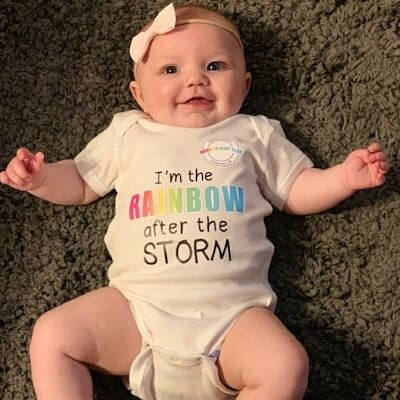
A miscarriage often makes women feel alone and as though no one else understands. Janie, a medical assistant here at Cherokee Women’s Health, understands this feeling all too well. A Miscarriage at 6-1/2 Weeks Janie and her husband starting dating in high school and were married in November of 2015. They always knew they wanted children, so they tried to conceive after only a year of marriage. One year later, Janie was pregnant. Their excitement was short-lived, however, when Janie suffered a miscarriage at 6-1/2 weeks. Like so many couples, Janie and her husband were devasted. Along with the physical pain, Janie also dealt with the emotional pain of feeling “like a failure” as a woman, which is also a common reaction after a miscarriage.   A few months later, Janie and her husband found out she was pregnant again. When she first saw the two lines on the pregnancy test she was terrified. She wanted to be excited but she and her husband both were so nervous and scared Janie wasn’t sure if they could handle it if they experienced another loss. Leaving it in God’s Hands They decided not to do early bloodwork or ultrasounds, but to leave it in God’s hands. They had their first ultrasound at 7 – 8 weeks and were amazed when that saw the heartbeat, although they were still nervous. After a few more weeks and a few more scans, they were finally ready to share the news.  Janie’s pregnancy and delivery went smoothly with no complications. She and her husband now have Carter, their beautiful baby girl — their rainbow baby. (A rainbow baby is a baby born after miscarriage or early loss of a child).   Support Meant Everything After suffering the loss of her first baby, Janie now realizes many women have gone through what she has and that she was not alone. Janie’s OB/GYN was a huge support for both her and her husband and was there to deliver their little miracle. She feels that she may never completely heal from that loss, but having faith, family, and Carter makes it easier. You Are Not Alone Though miscarriage is a painful topic, Janie now knows that talking about it can help. She hopes other women can find someone to confide in if they experience this type of loss. As a medical assistant, she hopes to be that person for all the patients that come through the office, even on their worst day. She wants to share her experience and let them know they are not alone.

sad couple after miscarriage
OB Patient Stories

Miscarriage: A Father’s Grief

A father’s grief after a miscarriage is often overlooked. Miscarriage and subsequent pregnancies often center on the emotions of the mother only: the grieving and anxiety of losing a baby, and the nerve-racking experience of becoming pregnant again with a “Rainbow Baby”. A rainbow baby is a baby born after a miscarriage, thus becoming the “rainbow after the storm.” Sharing Grief With the Husband and Learning To Live With Grief and Joy Fathers often feel they have to be “strong for the mother,” so they may put their grief on the back burner, all while silently suffering alone. But solitary grieving can take a toll on a marriage, especially during stressful times, like losing a baby. “Rainbow Mom” Mariah Foster and her husband lost their unborn daughter, Raelynn, late in Mariah’s pregnancy, from a cord accident. She shares their experience and the words of advice from their doctor, who told her to pay attention to how the experience affected not only her, but also her husband and their relationship as a married couple. “After I lost my daughter, Dr. Litrel asked to see us so he could see how we were doing. His advice was not to try to cover up our grief with antidepressants. He told us to go ahead and scream, yell, even be mad at God – but especially to learn how each other grieves.” Mom Mariah shares how she coped with the devastation of miscarriage Miscarriage is Hard on Men Too Mariah said Dr. Litrel told them that the father’s grief is often overlooked, and that he had seen couples divorce after losing a baby because neither understood how the other grieves. “He told me to pay attention to my husband during this time of being sad. He said it’s hard for the man, too – and they grieve in a different way from the woman. “That conversation opened our eyes. And honestly, the grieving process built on our communication and compromise skills.” Mariah shares that Dr. Litrel also advised them to ‘talk about our daughter and use her name’, telling us to take time to enjoy each other, so we could accept the loss better and go on with the marriage. He didn’t want us to lose what we had. He also didn’t want us to try to have another, but just to ‘let it happen’, so he did not prescribe birth control for me. Smiling at the baby beside her in the stroller, Mariah says, “Eleven months later we ended up having our wonderful Rainbow Baby, Cayson Charles. Cayson means ‘Healer’ in Gaelic,” she explains. Getting Pregnant Again is Scary Mariah comments that becoming pregnant after a miscarriage is not the purely joyful experience everyone assumes it will be. “You know, everyone’s excited when you’re pregnant with a rainbow baby, but it’s a lot harder. I was nervous. When I hit nine months and said, “I need to be induced!” I finally ended up having a C-section — and the most beautiful rainbow baby. “During the pregnancy, Dr. Litrel had us on a strict schedule of seeing doctors and also the specialist. By 29-30 weeks, we were going to the doctor every week. “Pregnancy with a Rainbow Baby is nerve-racking. You want to feel him every second of the day. When he’s not moving, you’re panicking.” “The scariest time was at one point, when I slipped and fell at work. I thought at that point I was going to lose him. Dr. Litrel and really, all the medical staff, did everything for us. “They gave me a Doppler (a hand-held monitor) so I could check on Cayson, and seeing him on the screen helped me so much with my anxiety. “Pregnancy with a rainbow baby is nerve-racking. You want to feel him every second of the day. When he’s not moving, you’re panicking. You lay on your left side, you drink ice water, you try all the tricks the doctors tell you. There were times I went to Northside Hospital and just said, ‘Hey, I just need you to do an ultrasound. I can’t find my baby on the Doppler.’ They were great and really supportive during the entire pregnancy.” The Grieving Process “Losing Raelynn was hard for my husband, and sometimes it still is. He’ll take a picture of Cayson, which is his way of grieving. He’ll say, ‘I want to be with him so much, because sometimes he fills that void.’ When Cayson was crawling at six months, my husband was excited to see him, and he’d say, ‘Wow, Raelynn, look what your little brother is doing!’ Mariah wipes away a tear. “It’s hard to explain how it feels because the grieving never stops. “We actually planted a tree for my daughter, and we watch it grow, and talk about it all the time. We got a bird feeder and all the birds come so we can feed them. It’s really sweet. Getting Support “The grievance counselors at Northside are really great and so supportive. On Facebook, there’s a group called Rainbows of Atlanta. When you’re having a hard time — when that anniversary comes up and it’s the week you lost your baby — you can get on that group and post at 4 a.m., and you know someone is going to comment. Someone will be there. It’s so rewarding to see women back each other up. They give advice, and they’re just there.” Mariah smiles and gives her rainbow baby Cayson (aka the Healer), a kiss. Her eyes glisten, but there is happiness there, too. After Miscarriage – Stories of Hope Reading stories of hope from others who have experienced what you’re going through can help you feel not so alone. Here, we share stories from patients who suffered from miscarriage and how they got through it. Sheila suffered many miscarriages so we sat down with her to get her story and learn what she had to overcome to eventually have three Rainbow Babies. Jamie shares her story of

pregnant-woman-saying-no-to-alcohol_sm
OB

Alcohol Consumption During Pregnancy

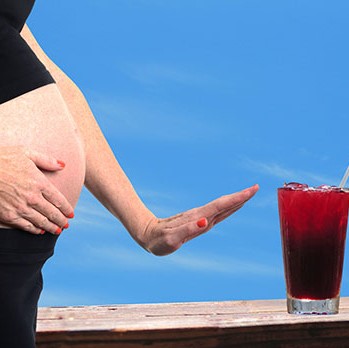
The Centers for Disease Control made headlines this week when they announced that sexually active women of childbearing age should never drink alcohol unless they’re on birth control. The recommendation met with both support and backlash: many women agree that it’s not worth the risk, while others argue that telling 3.3 million women not to drink isn’t feasible. What do you think? Are You Expecting? You probably know that consuming alcohol during pregnancy can negatively impact a baby’s mental, physical, and behavioral development. What you may not know is whether or not you’re expecting. Some moms-to-be take 4 to 6 weeks to realize they’re pregnant. And as many moms of lovable broods know, about half the pregnancies in the United States are unplanned. Even women actively trying to get pregnant might continue drinking. According to the CDC, only 1 in 4 women stops drinking alcohol when they go off birth control. Exposure to even minimal alcohol during pregnancy may affect the baby’s health. So is the risk worth it? The Effect of Alcohol on Developing Babies Whether you’re happily expecting or simply trying, we know your baby’s health is your #1 consideration. But you may not realize just how much damage drinking during pregnancy can cause. Even small amounts of alcohol can cause: Miscarriage Stillbirth Prematurity Fetal Alcohol Spectrum Disorders (FASDs) Sudden Infant Death Syndrome (SIDS) FASDs can affect a child’s development both before and after birth. Symptoms can include anything from abnormal facial features and underdeveloped growth to poor memory, attention or hyperactivity disorders, learning disabilities, speech and language problems, and low IQ. Many people suffering from FASDs also have impaired hearing or vision and problems with their hearts, kidneys, or bones. Make the Healthy Choice At Cherokee Women’s Health, we advocate for the health of mothers and their babies. According to the CDC recommendation, all expectant mothers should refrain from drinking alcohol during pregnancy. If you’re trying to get pregnant, we recommend that you stop drinking alcohol until you go back on birth control. If you discover you’re pregnant unexpectedly, stop drinking immediately. Cherokee Women’s Health has an experienced team of obstetricians, dedicated nurse-midwives, and board certified FPMRS surgeons on staff. We specialize in normal and high risk pregnancies, with expert care physicians and advanced practice providers trained in both natural and standard births. To learn more about how to ensure a healthy pregnancy, call today or schedule an appointment online.

© Copyright 2024 Cherokee Women’s Health Specialists
Scroll to Top