

infertility

eating-disorder-photo_136856826
Infertility, OB, Teen GYN Education

The Link Between Eating Disorders and Infertility

Eating disorders such as anorexia and bulimia can result in several health issues, including the inability to get pregnant. This is true whether you are in the midst of the disorder, or have been in remission for years. In fact, women with a history of anorexia nervosa or bulimia were almost twice as likely to have sought out a doctor to discuss infertility concerns, compared to the general population. Eating disorders can cause poor nutrition, unhealthy weight, and very low levels of body fat. This can disrupt ovulation, reduce the quality of eggs, or even lead to ovarian failure, which is a condition that mimics menopause in women under 40. All these factors can decrease your chances of becoming pregnant, and if you do become pregnant, it can increase the risk of miscarriage or other complications. Types of Eating Disorders Common eating disorders include: Anorexia – A disease where a person severely restricts calories in order to lose weight or maintain abnormally low body weight. Bulimia – A disorder that involves self-induced vomiting to rid their bodies of calories – or the feeling of fullness – often due to eating excessive amounts of food, otherwise known as binge eating. Bulimia can also include use of enemas, laxatives, excessive exercise, or periods of restricted dieting or fasting. Binge Eating – An eating disorder that can lead to obesity and decreased fertility. Overeating and binge eating without attempting to purge afterward can also cause difficulty getting pregnant.  What Affects Fertility? Lack of Nutrition – Basic nutritional needs are often not met when a woman has an eating disorder. By forcing themselves to throw up or using laxatives or enemas to empty their bowels quickly, their bodies won’t have the time required to absorb the nutrients from the food they eat. The same is true if a woman is severely restricting food intake. If your body doesn’t get essential nutrients, then egg cells may be of poorer quality. Your body may also have more difficulty synthesizing essential hormones for reproduction. This can lead to decreased fertility. Abnormal Menstruating – If you’re not menstruating normally, this usually means you’re also not ovulating normally. If you’re not ovulating normally, it will be difficult to get pregnant. According to some studies, between 66 and 84 percent of women with anorexia nervosa don’t get their periods, and between 6 and 11 percent have irregular cycles. For women with bulimia nervosa, anywhere between 7 and 40 percent experience amenorrhea and between 36 and 64 percent have irregular periods. Women who had low BMI, low-calorie intake, and engaged in excessive exercise were more likely to have menstrual irregularities. How Eating Disorders Affect Fertility Long-Term Some studies show that about one out of five women who seek treatment for infertility have suffered from an eating disorder. Those who have a history of eating disorders are more likely to have difficulty conceiving, and/or may take a little longer to get pregnant. But the good news is that if you can conquer your eating disorder and put it behind you, you’ll be one step closer to being able to get pregnant and have a healthy pregnancy. You can increase your chances of conceiving and having a healthy pregnancy by eating a nutritious, well-balanced pregnancy diet, taking your prenatal vitamins, and by drinking plenty of fluids to stay hydrated. Our OB/GYNs Can Help It’s important to first schedule an appointment with an OB/GYN to discuss your history with eating disorders, or if you are still suffering from eating issues. He or she can do basic fertility testing and get a baseline on whether things look good, or if there may be potential problems. If there are potential problems, they can provide fertility treatments and procedures to help you conceive and have a healthy pregnancy. Call us today at 770.720.7733 to schedule an appointment at either our Canton or Woodstock location or simply schedule an appointment online. We’re here to help you! Teen GYN Articles
family with two babies photo
OB Patient Stories, PCOS Education

Two Babies in Two Years

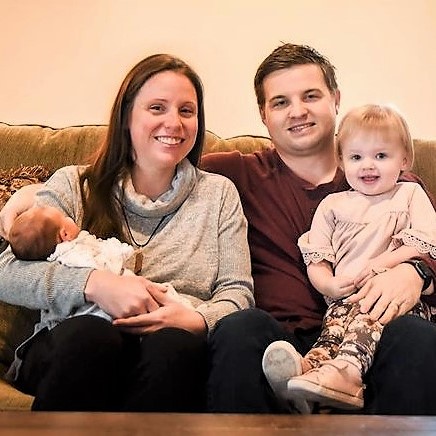
The journey to pregnancy and starting a family looks different for everyone. For Cherokee Women’s Health patient Katie, it was not always an easy journey, but she and her husband David came out blessed on the other side with two healthy girls. Infertility Struggles  Katie and her husband, David, were settled in their careers before trying for a baby. Once they started trying, they had some struggles, going to two separate infertility clinics over a two-year span. Neither clinics were successful, but they did not give up hope. They prayed about their next steps towards having a family and decided to stop with the clinics. Without the medicine, shots, or extra ultrasounds, they finally got a positive pregnancy test 2-3 months later. They could not believe it, but it was true!  Diagnosed With PCOS Katie decided to seek help from Cherokee Women’s Health Specialists. She explained that she had 90-day cycles and that her attempts to become pregnant had not been successful. Her OB/GYN diagnosed her with PCOS (Polycystic Ovary Syndrome) and explained how PCOS can commonly lead to fertility struggles. Yes, We’re Pregnant! Once they had an answer as to why they weren’t getting pregnant, Katie didn’t feel as much pressure and was able to relax a bit. “I had heard that when people who struggle to get pregnant that they suddenly once they take the pressure off. That’s what happened with us. We were pregnant!”  Going into her first appointment after the positive pregnancy test was very scary. She was worried that at age 33, and her history of infertility struggles might have a negative impact. It was not until her first trimester was over that she realized she was healthy and that having her baby was really going to happen. They later learned they were having a baby girl, and suddenly all the morning sickness didn’t matter as much.  Welcome Baby Mary-Katherine Fast forward to January 2019. Katie’s water broke at 37 weeks at around 3:00 in the morning. Being a new mom, she was not exactly sure what to expect. “It just felt like I peed myself a couple of times,” Katie shared. They headed to Northside Hospital and learned that her water did indeed break! Everything started happening so quickly once she got to the hospital.  “You’re running on adrenaline because you don’t believe it’s really happening. There is no way to really prepare for it, you just have to experience it as you’re going.” First time mom, Katie Dr. James Haley of Cherokee Women’s Health delivered her baby. He didn’t even have to ask her to push because her baby girl was already crowning. Her baby came so fast that Katie had a grade-3 tear that Dr. Haley quickly repaired. Moments later, Mary-Katherine was born and, at 7 pounds, 7 ounces, was in the 90th percentile health range.  Coombs Positive  Although Mary-Katherine was born a healthy weight and size, she tested positive for Coombs. The Coombs test is typically done on newborns, and the test searches the blood for “foreign” antibodies that attack red blood cells. Coombs typically happens when the baby’s blood type inherited from the father does not mix well with the mother’s blood type. Having this positive test meant baby Mary-Katherine had a higher chance of jaundice.  Mary-Katherine stayed in the hospital’s nursery an extra night for observation. Katie recalls that leaving the hospital without her newborn was very hard for her and David, especially with it being their first baby. Thankfully, Mary-Katherine was released the following day. When Mary-Katherine went to her first pediatrician appointment, they were sent to Children’s Health of Atlanta for three days where she went through phototherapy for her high levels of bilirubin.  “I was trying to heal, and in quite a bit of pain from delivery. It was a very trying first week for us. But now she is thriving and has her own little personality.”  – Katie Having Baby #2 Because they had trouble their first time getting pregnant, Katie and David decided to start trying again within a year of having Mary-Katherine. This time was much easier and Katie became pregnant in April! Having had her first baby, she felt more prepared for her second. Since she and David were able to do all of the pregnancy activities ‘firsts’ with Mary-Katherine, being pregnant for the second time made her stronger and more mentally prepared. They did not have a gender reveal party for their second but finding out the gender was still one to remember. They were on vacation with her in-laws when her 10-week blood work results popped up on the app on her phone. Katie and David announced Katie’s pregnancy to all of their friends and family at 20 weeks. “It was a totally different experience than with a gender reveal. Part of me felt it was a boy and I sort of convinced my husband that it was too. Turns out it was a girl and I realized we needed to start saving now for two weddings later in their future!” – Katie on learning the sex of their 2nd baby Gestational Diabetes At around 30 weeks into her second pregnancy, Katie was diagnosed with gestational diabetes. This was a shock for her as she had been physically active her whole life, and diabetes did not run in her family. She later learned that her placenta was having to overcompensate for insulin resistance, which is an underlying part of PCOS. Because of the size of Mary-Katherine and Katie’s recent diagnosis of gestational diabetes, she modified her diet and became more aware of what she was eating. Because of her diagnosis, Katie went into the office for stress tests once a week. Her baby was very active during the stress tests. Knowing her baby was healthy was a huge relief. “It was so reassuring to feel my baby being so active, kicking and moving. I felt that the baby was in good shape,” she recalled. False Alarm One day, after arriving home from a stress test at

doctor with patient
GYN Problems

Endometriosis: How a Board-Certified FPMRS Can Help

If you have a history of painful periods, pain with sex, or general pelvic pain, there is a good chance you have endometriosis. Endometriosis is a condition that affects over six million women and teens in the United States, and millions of other women worldwide. Causes and Symptoms of Endometriosis While the definite causes of endometriosis aren’t 100% clear, possible causes include: Retrograde menstruation Embryonic cell growth Surgical scar implantation Endometrial cells transport Immune systems disorder Symptoms can be varied, with some women experiencing little to no pain and others experiencing moderate to heavy amounts of pain during periods, sexual intercourse or with bowel movements. Other symptoms include: Fatigue Diarrhea Constipation Bloating Nausea Excessive bleeding Infertility Treatment Strategies for Endometriosis While there is not a cure for endometriosis, certain treatment options can help with pain and infertility. Treatment will vary depending on your symptoms, your age, and whether or not you have future plans of becoming pregnant. Medication – Over-the-counter pain relievers may include aspirin and acetaminophen, as well medicines that inhibit prostaglandin (the hormone that controls processes such as inflammation, blood flow, and the formation of blood clots and the induction of labor). These include ibuprofen and naproxen sodium. If pain is very severe, prescription drugs may be required. Hormonal Therapy – Hormonal treatment aims to stop ovulation for as long as possible and may include: oral contraceptives, progesterone drugs, a testosterone derivative (danazol), and GnRH agonists (gonadotropin releasing hormone drugs). Side effects may be a problem for some women. Surgery – If your doctor has determined that surgery is the best treatment option, a board-certified FPMRS (Female Pelvic Medicine and Reconstructive Surgeon) can determine what surgical method works best for your needs. FPMRS surgeons are highly skilled in the diagnosis, evaluation and both surgical and non-surgical treatment of pelvic floor disorders such as endometriosis. Types of Surgery For Endometriosis A more conservative surgery option consists of using a laparoscope to find and remove any growths to remove pain and increase the possibility of pregnancy. In some cases, hormonal therapy may be prescribed in conjunction with conservative surgery. In more severe cases, your surgeon may recommend a hysterectomy, removal of all growths, and removal of ovaries (also called oophorectomy). These types of surgeries are considered only when other treatment options have offered little relief, as the surgery causes early menopause. Additionally, it is only considered when you have no future plans to become pregnant. The OB/GYNs at Cherokee Women’s have a deep understanding of women’s anatomy and the types of concerns that women struggling with endometriosis may be facing. Our board-certified FPMRS doctors can address concerns related to scar tissue, internal trauma after childbirth, excessive bleeding and infertility. If you have questions or concerns regarding symptoms or treatment for endometriosis, don’t hesitate to schedule an appointment.

© Copyright 2024 Cherokee Women’s Health Specialists
Scroll to Top