
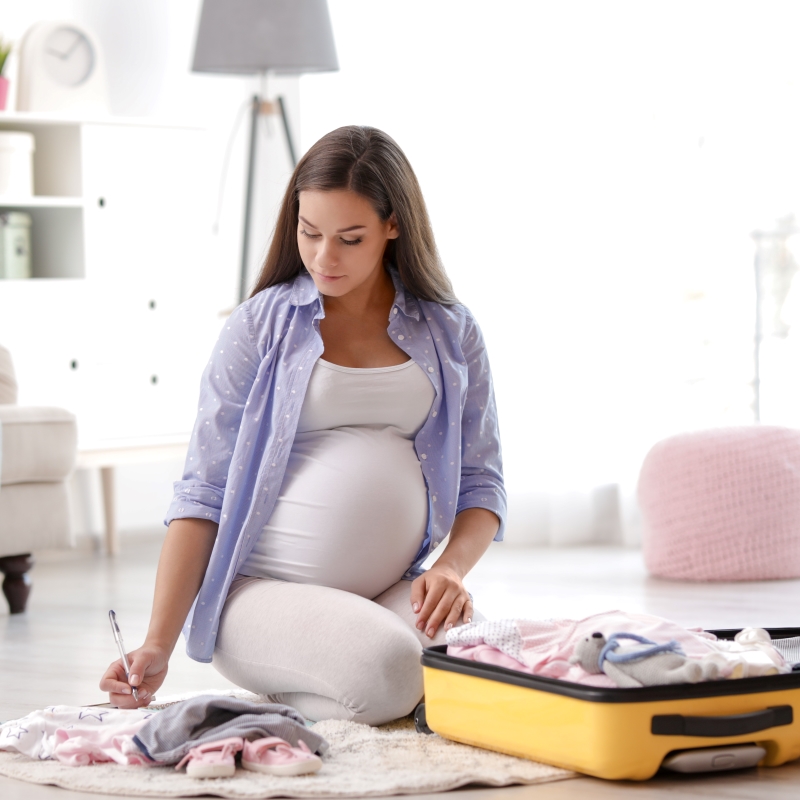
home birth

Hospital Home Birth photo_235949027
Midwife Education, OB

Hospital “Home Birth”? Yes, You Can!

Can you have a “home birth” in a hospital? Yes, you can! As OB/GYNs, we help deliver a home birth experience while in the safety of a hospital. It’s the best of both worlds. We Want You to Have the Best “Home Delivery” Experience in a Hospital Home births have become increasingly popular among expectant moms, especially since the pandemic. Approximately 1% of all U.S. births are delivered at home, and statistics show that number is on the rise. But for the safety of pregnant moms and their babies, an “at home style” delivery in the hospital is the preferred option by OB/GYNs, especially by the doctors at Cherokee Women’s Health Specialists. The doctors and midwives at Cherokee Women’s Health work together with you as a team to accommodate your individual birth plan. The state-of-the-art facility at Northside Hospital Cherokee has a top-notch Women’s Center and a Level 3 NICU. We are fully equipped and ready for any dangers that arise, but ultimately, we desire to give you the closest type of birth possible to what you would experience at home. We believe each pregnant mother is special and deserves individualized family centered care. There are many options for a labor experience, and we will make every attempt to accommodate your preferences to make your labor desires come to fruition. It’s your body, your baby, and your birth – so we want and expect you to have your best experience for your pregnancy journey and birth. Why Should You Deliver in a Hospital? The American College of Obstetrics and Gynecology firmly states that the safest option for mom and baby are in a hospital or birthing center. The American Academy of Pediatrics concurs that babies are best born in the hospital to ensure the safest and healthiest outcome. The health and safety of mom and baby are of upmost priority — so taking the necessary precautions by being in a hospital are recommended by experienced doctors. James Haley, MD, FACOG, FPMRS of Cherokee Women’s Health has delivered nearly 10,000 babies during his career as an OB/GYN. He shares candidly about the dangers of home births: “We work together with expectant mothers to make all of the best plans for how a delivery will go. Childbirth, as we know, doesn’t always go smoothly or as planned. Occasionally, a medical crisis arises that causes the entire team of doctors and nurses to jump into immediate action, work together like nothing you’ve ever seen — all to get that baby out in 2-3 minutes to save its life, while also trying to take care of the mother and keep her safe. I have personally seen hundreds of babies that would have died, had the patient not been at the hospital just at that moment.” – Dr. James Haley on the importance of delivering in a hospital Preparing For Your “At Home Style” Delivery No one can tell you what your birth experience will be like, but we can help you feel prepared, confident, and ready for the birth of your baby. At Cherokee Women’s, we have an OB patient VIP program for all newly pregnant mothers, where you are given the opportunity to have all your questions answered and are given all the information you need to guide you throughout your pregnancy journey. You can create your own birth plan, unique to you and your wishes. We check on you often throughout your pregnancy – in addition to all the regular visits, to make sure that your pregnancy and birth plan are meeting your expectations. For those that opt for a natural birth, we offer unmedicated births. Our medical team is very willing to offer intermittent monitoring and variable laboring positions, among the many other requests according to your specialized birth plan. We also have the expertise of one of our physicians, Lisa McLeod, DO, FACOOG, who specializes in osteopathic manipulation to help women in labor and delivery. Her unique obstetrical training in holistic treatment has been valuable to patients wanting a natural approach to childbirth. As part of the planning process, we recommend attending maternity classes at Northside Hospital so that you can learn about the options available to make your childbirth as close to a home birth as possible. You will learn what to expect during delivery and all the options available to make your birthing experience your own. You also can learn what you need to know about breastfeeding, infant CPR, and you will be given answers to your questions through evidence-based education and support. It is important to educate yourself during pregnancy by attending classes, sharing with others who have similar concerns and learning what to expect so that during labor and after birth, you understand what’s going on and can make decisions with your doctors and midwives. Natural Hospital Birth: It Can be Done! You really can have the natural birth you are hoping for even if you must be at the hospital. You can enjoy the experience of working with your body to birth your baby in collaboration with your team of doctors, midwives, and nurses who are there to ensure you have a safe delivery.
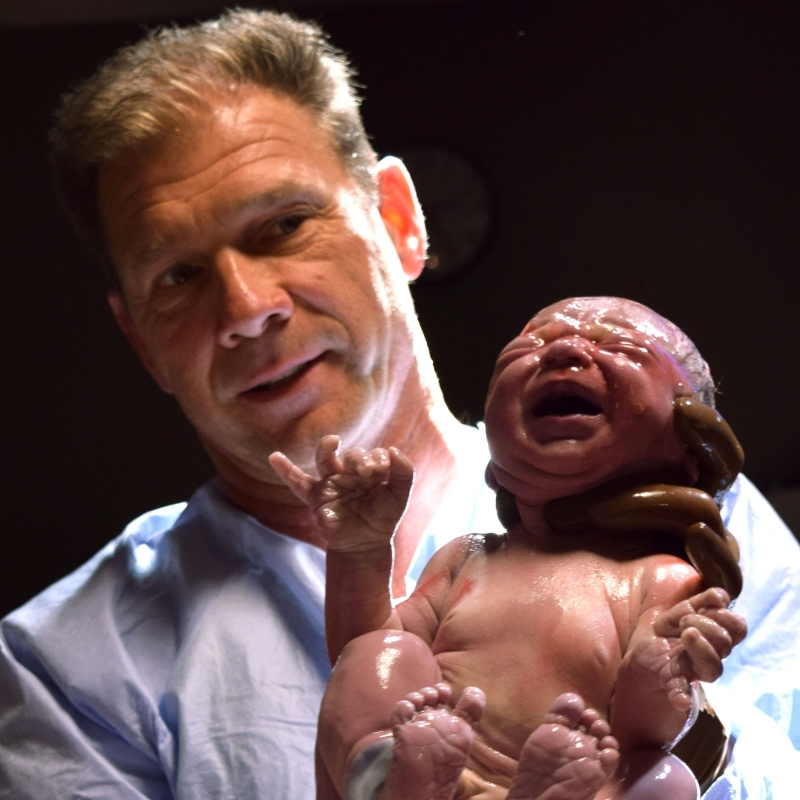

Dr. James Haley Delivering Baby
Midwife Education, OB

Home Birth – Is it Worth the Risk?

By James P. Haley, MD, FACOG, FPMRS As an OB/GYN for over 30 years now, I feel the need to speak out strongly against home births. I have certainly delivered my fair share of babies, and what a privilege it has been to witness one of God’s greatest miracles, thousands and thousands of times in my career. I am honored to have shared with so many families one of the most special and intimate moments in their lives. One of my greatest blessings was being able to deliver my two children – memories that my wife and I will always treasure. Home Births Come with Extreme Risks There is a growing trend in OB that has me greatly concerned, and I feel the need to speak out strongly against it. It is the growing popularity of pre-planned home births. The trend seems to be gaining some momentum, and approximately 1-2% of all U.S. births are now delivered at home. According to recent statistics, that number is rising. The truth is, there are extremely serious risks involved with attempting to deliver at home, and women and their families need to be aware of these dangers. We have come a long way in modern medicine, especially in the field of Obstetrics. In the early 1900s when home births were the reality, one in ten babies died at birth. Sadly, many of these infants suffered trauma at birth resulting in complications such as seizures, paralysis, or brain damage. Death was common and the mother’s life was always at risk, as up to 1 in 100 mothers died giving birth. As OB/GYNs, We Have Seen it All With advances in modern technology, it is alarming as to why many would consider delivering at home without immediate access to a hospital. The American College of Obstetrics and Gynecology recommends that babies be delivered in hospitals. They want everyone to know that babies born at home are twice as likely to die, and three times more likely to have neurologic dysfunction or brain damage. The American Academy of Pediatrics concurs with ACOGs opinion and agrees that hospitals are the safest place to give birth. Even today, giving birth is one of the most dangerous things a woman can do. In the U.S., it is the sixth most common cause of death among women ages 20-34. These statistics are very troubling, and much research and study is being done to continually lessen the maternal death rate. OB/GYNs know with absolute certainty the risks of childbirth and the possible dangers that can go wrong. We have seen it all and there are often complications that can arise within a few minutes that no one saw coming. It is very humbling; and we have all seen multiple times where, had the patient not been in the hospital — in labor, being monitored and under close observation — the baby would have died. It happens quite frequently. Usually, with proper prenatal care, we can predict problems and future complications, treat them, monitor closely, and be prepared for those potential complications at birth. “I have personally seen hundreds of babies that would have died, had the patient not been at the hospital at that moment. After moments like that, you not only see the amazing hand of God, but also greatly appreciate the advances in modern medicine. And you are grateful you were there exactly at that moment – and in a hospital.” – Dr. James Haley However, childbirth as we know doesn’t always go smoothly or as planned. Occasionally, a medical crisis arises that causes the entire team of doctors and nurses to jump into immediate action, work together like nothing you’ve ever seen — all to get that baby out in 2-3 minutes to save its life — while also trying to take care of the mother and keep her safe. Common Problems that can Occur Throughout Pregnancy, Delivery and After: Following are just a few problems that can occur throughout a woman’s pregnancy, delivery and postpartum. Gestational diabetes High blood pressure Preeclampsia Preterm labor Anemia Infections Breech position Fetal distress Premature rupture of membranes Placenta problems Placental abruption Prolonged labor Perinatal asphyxia Shoulder Dystocia Excessive bleeding Malposition Placenta previa Cephalopelvic disproportion Uterine rupture Rapid labor Oxygen deprivation Umbilical cord prolapse Umbilical cord compression Velamentous Cord Insertion Chorioamnionitis (Infection) Fetal macrosomia (Extra-large infant) Postpartum hemorrhage (Bleeding) Postpartum preeclampsia Why Take the Risk of a Home Birth? Women that consider home birth typically want fewer medical interventions, they want to enjoy the comforts of home, enjoy a more satisfying and natural birth, and have control over all aspects of the birthing process. These are all valid wants and desires, and it is understandable how people are driven to choose this route. If you have had a home birth and all has gone well, that is great. However, I wouldn’t push your luck and do it again. You have dodged many, many bullets. There are medical offices and midwives that attempt to facilitate and “ensure” the safety of a home birth. Hospitals are nearby, and women are told that if complications arise, they can abort the plan and head to the hospital. In fact, the latest statistic shows that approximately 30-35% of planned home births end up delivering at the hospital after all. But at what cost? Do they make it in time? These actual statistics don’t often end up in the “home delivery” category. Once they are sent to the hospital, they are counted as hospital deliveries, so we don’t truly know if they had complications or even the worst possible outcome occurred. Working in the hospital and a busy medical practice, I have sadly seen some tragic outcomes. Just a few weeks ago, I personally saw a patient that had been going to the type of practice that is more “natural” and encourages and oversees home births. The mother suspected a problem and was referred to me for an evaluation. “Unfortunately, I confirmed their greatest fear, that the

© Copyright 2024 Cherokee Women’s Health Specialists
Scroll to Top