
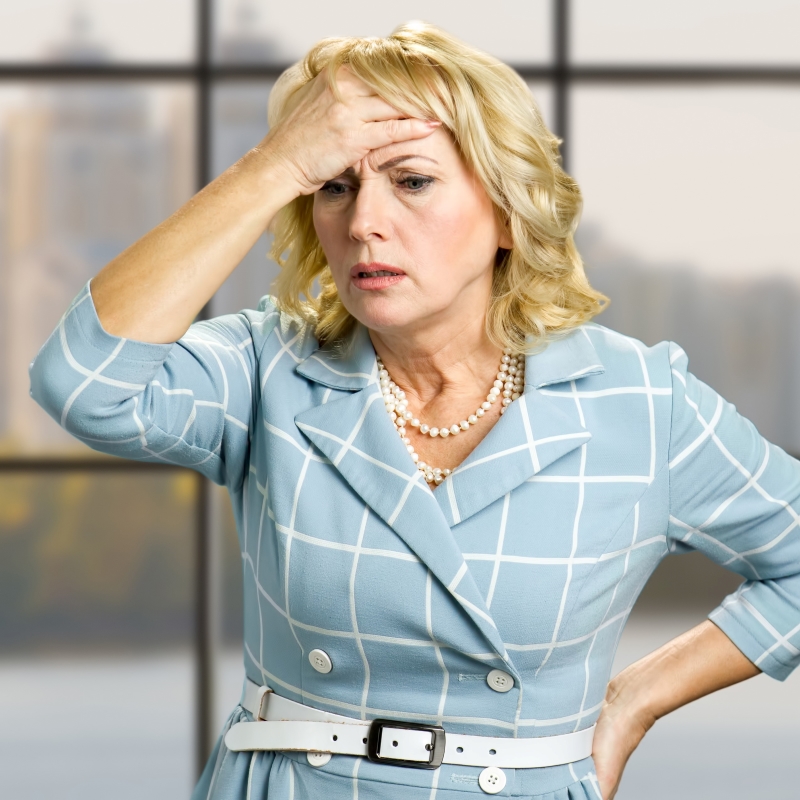
Lesser Known Menopause Symptoms
You always knew menopause would happen. You may have even looked forward to getting rid of those bulky pads, contraceptive devices, and tampons you’ve been using. You expected some hot flashes and maybe a few cranky days, but assumed those probably wouldn’t be much worse than getting through a long summer heat wave and then it would be all over. What you possibly didn’t know is that there are countless other symptoms that science is constantly learning about regarding the menopausal process. If you’re between the ages of 40 and 65 — and in some cases even a bit younger — you may be suffering with those very symptoms right now. Your body begins to change several years before menopause actually takes place, during the period known as perimenopause. This is the time when periods start to become irregular, along with some other unwelcome physical and emotional developments that you never anticipated. Lesser Known Menopause Symptoms Menopause comes with many minor and major changes. Some women manage to get through the process with only a little discomfort. Others may be slammed with multiple symptoms, many of which occur gradually over time so that they may not even notice that they’re happening, or that one may be linked to the other. Most menopausal changes are caused by the decline of three hormones; estrogen, progesterone, and testosterone. Progesterone and estrogen, produced by the ovaries, not only prepare a woman for reproduction during her childbearing years, but they impact the rest of her body’s health, both physically and emotionally. During menopause, the adrenal glands continue to produce testosterone, but those levels also decrease with age. Some of the most common symptoms of menopause are: The following menopausal symptoms are not as common, but are also usually caused by the same hormonal shifts: Serious conditions due to hormonal changes during menopause include: How Cherokee Women’s Health Specialists Help? Many menopausal symptoms are of little concern and often correct themselves given time. Others can be easily remedied through diet, exercise, hormone therapy and/or other medications. However, all unusual symptoms that arise should always be assessed by a physician to rule out other causes. Our broad-based practice consists of three board-certified, doubly-accredited urogynecologists who hold certification in OB/GYN and Female Pelvic Medicine and Reconstructive Surgery (FPMRS). Our staff also includes obstetricians, gynecologists and experts in holistic medicine and diet, and other specialists who, combined, have decades of accumulated expertise in the unique field of women’s health care. Call 770.720.7733 or schedule an appointment online today. Help is available.