

Gonorrhea

mouthwash_269330055
GYN Problems, STD/STI Screening

Can Mouthwash Cure Gonorrhea?

Sexually transmitted diseases and infections (STDs/STIs) have accelerated to alarming levels. Disturbing statistics show that, in the United States alone, 20 million cases are reported annually. Half of these are found in millennials, which are younger people between the ages of 15 to24. Syphilis, chlamydia and gonorrhea are the three top STDs affecting the younger population today. 820,000 cases of sexually transmitted infections are attributed to gonorrhea alone. What is the Difference Between an STD and an STI? Though used interchangeably, there is a difference, albeit a slight one.  An STD is a catch-all term for all sexually transmitted diseases. An STI is an infection that has not yet become a disease. Since most STIs can be treated with the proper medications when caught in time, they do not always evolve into a disease. For example, if you are unaware you have the STI, chlamydia, or are staying quiet hoping it will go away, it can blossom into an STD called pelvic inflammatory disease. The term STI is used more often now to counteract the stigma that was once associated with STDs. It’s a gentler and more optimistic acronym, since people associate the word ‘infection’ with ‘cure’, thus implying the condition has a hopeful outcome. Other Than Intercourse, How Does One Get an STI or STD? Bacterial and viral STIs are typically transmitted sexually via oral, vaginal or anal sex. Exposure to infected blood, skin, mucous membranes, seminal or vaginal fluids, bodily secretions, and open sores place you at high risk for STIs. Unclean shared needles used for tattooing, piercing and drug injection render you highly susceptible as well. Other STIs, such as pubic lice and scabies can be spread via physical personal proximity or infested fabrics. Who Gets STDs? From birth to death, no one is immune. There is no racial, economic, age or gender barrier. Sexually transmitted infections are impartial, in that they don’t discriminate. What are the Symptoms? Each STD/STI has its own list of multiple symptoms. You may have some or all of them. In many cases, there are no symptoms at all. If you are sexually active, especially with plural partners, or if you indulge in oral sex, pay attention to your body’s signals. Sudden pelvic, abdominal, back, tongue, mouth or throat abnormalities, should always be reported to your physician. Even your dentist can detect oral STI issues. It is important to insist your partners use protection or provide proof of ‘cleanliness’. Use condoms and/or a dental dam regularly. Have yourself tested on a regular basis. Just as you can get an STI, you can also unknowingly transmit one. What are the Risks of Untreated STIs? Repercussions can be severe, even fatal. Untreated STIs can lead to STDs, affecting you physically and mentally, destroying your nervous system, organs, bones, joints, tissues—every part of you. Some may lie dormant for years. If you have an STI and are pregnant, your baby can be born with that same condition, or be stillborn. Even if you firmly believe you are in a completely monogamous relationship and are suddenly afflicted with some of the tell-tale symptom associated with STIs, see a physician. It’s always better to be safe than sorry. What are the Treatments? Treatments vary based on the individual infection you have. Only your physician can prescribe the correct regimen after proper diagnosis. Antibiotics are usually effective for bacterial, parasitic or yeast STIs. There are however, some resistant strains of gonorrhea emerging that have become immune to antibiotics. Early intervention is important. Viral STDs cannot usually be cured, but they can be managed with antiviral medications. Vaccinations can help prevent hepatitis and some HPV types. Remember, STIs can recur. Even if previous treatment cured your gonorrhea, you can still contract it again from another partner. Why are so Many Young People Suddenly Getting STDs/STIs? There are a number of reasons for the astronomical rise: I Heard That Mouthwash Can Cure Oral Gonorrhea. Is This True? In a word, NO! Though research has shown that mouthwash does indeed kill some gonorrheal bacteria in the mouth and a little past the tonsils into the throat, there is no evidence to support that it has any healing qualities beyond that. Believing a quick gargle will make you spit out all traces of gonorrhea is a dangerous assumption to make. This home remedy is as effective on oral STIs as covering an atomic bomb in bubble wrap to muffle the explosive sound. In fact, using mouthwash as a cure or preventative may actually mask some important symptoms that your physician needs to know about in order to identify and treat you effectively. Statistic show that one in four Americans will contract an STD in their lifetime. Many won’t even know it. If you think you may have an STI or STD and wish to schedule an appointment for screening, call 770.720.7733.
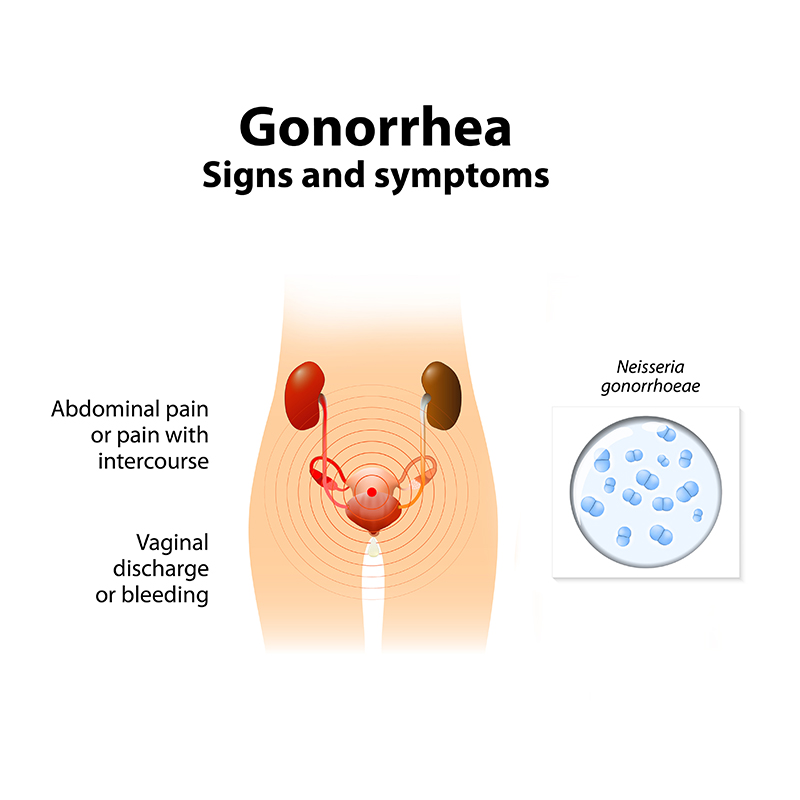

gonnorhea diagram_101739090
GYN Problems, STD/STI Screening

Gonorrhea: Know the Warning Signs

Being sexually active is a decision that comes with responsibility. As a woman who is sexually active, it is important to be informed about the risks involved as well as how to protect yourself from sexually transmitted infections (STIs) such as gonorrhea. Since these infections can be treated effectively, it is also important to be able to recognize the signs and symptoms in order to get treated as early as possible for the best outcome. What Is Gonorrhea? Gonorrhea is a type of STI that is caused by a specific type of bacteria, Neisseria gonorrhoeae, which can infect the mucous membranes of the reproductive tract. In women this includes: Gonorrhea is transmitted through direct sexual contact with the penis, vagina, mouth, or anus of a person who is infected.  It can also be transmitted from a mother to baby during childbirth. In infants, gonorrhea most commonly affects the eyes. You can be re-infected after treatment if you later come into contact with someone who is carrying the bacteria. If you’ve had gonorrhea in the past and suspect you have it again, you should schedule an appointment with your OB/GYN as soon as possible. Who is at Risk for Gonorrhea? Statistics show that approximately 820,000 new cases of gonococcal infections occur each year in the United States, well over half of these cases being in young people ages 15-24. Populations most at risk for contracting gonorrhea are sexually active teenagers, young adults, and African Americans. Signs and Symptoms of Gonorrhea While men may or may not experience symptoms such as urethral discharge, women are almost always asymptomatic. Initial symptoms for women can be mild but may include one or more of the following: Long-Term Problems Often these symptoms can be mistaken for other ailments such as bladder and vaginal infections. Many women are unaware they have gonorrhea until they visit their doctor for other reasons. If left untreated, gonorrhea can put you at a high-risk for developing permanent health complications such as pelvic inflammatory disease (PID), and disseminated gonococcal infection (DGI). These are of particular concerns that require immediate treatment in women as they can lead to infertility, pregnancy complications, and scarring of the fallopian tubes. Gonorrhea can also increase your risk of acquiring or transmitting the HIV virus. If you are experiencing any symptoms, it is important to have them examined by your doctor or another health care provider. Should You be Tested? If you experience any of the above symptoms, or if you are having sexual contact with anyone who has been recently diagnosed with an STI you should discuss testing with your health care provider. The CDC recommends that all sexually active women under the age of 25 and women with risk factors (a new sexual partner, multiple sexual partners or a partner who has an STI) be tested on a yearly basis. How is Gonorrhea Tested? Your health care provider will collect and analyze a sample of cells. Samples are typically collected in one of two ways: What is the Treatment for Gonorrhea? The good news is that gonorrhea can be cured with the right treatment. Treatment frequently involves dual therapy or the use of two antibiotic medications. The CDC recommends that one be taken orally, and one may be administered as a one-time intramuscular injection. It is important to complete the full course of the medication to ensure the bacteria is eradicated adequately. These medications can kill the infection. However, they cannot repair any permanent damage done by the disease. It is important to identify and treat symptoms as early as possible. Remember, your partner should also be treated for gonorrhea if you have been diagnosed to prevent re-infection. How Can You Prevent Gonorrhea? If you are sexually active, the first line of defense against gonorrhea is practicing safe sex. Whether having oral, vaginal, or anal sex, the proper use of condoms can reduce the risk of transmission. The only way to be sure there is no transmission risk of gonorrhea is to temporarily abstain from any type of sexual activity or be in a long-term monogamous relationship with a partner who has been tested and is not infected. Seek Help From Your OB/GYN If you are a woman who is currently sexually active with one or more partners, it is important to be aware of the signs and symptoms of gonorrhea infection and be examined by your OB/GYN if you have any concerns. Gonorrhea is a sexually transmitted infection that can have serious consequences if left untreated. However, when identified early and treated effectively with proper medication, it can be completely cured. Don’t hesitate to call confidentially at 770.720.7733 with any questions or concerns you may have regarding gonorrhea or other STIs. Or, you may schedule an appointment online.

© Copyright 2024 Cherokee Women’s Health Specialists
Scroll to Top