A C-Section & Postpartum Preeclampsia
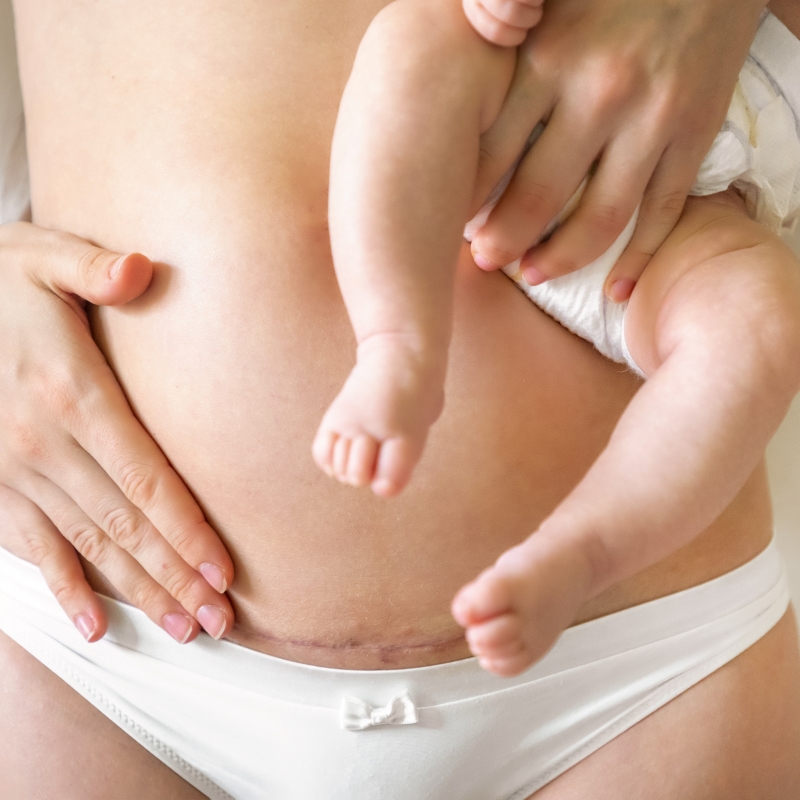
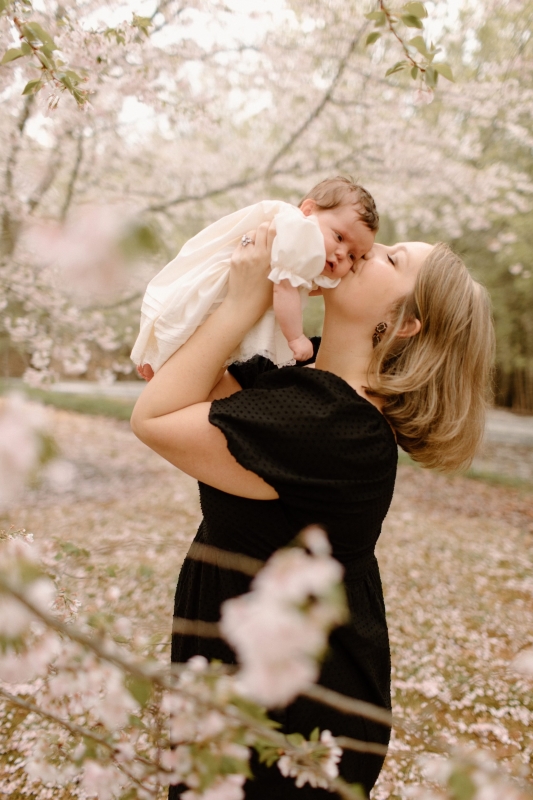
A C-section, postpartum preeclampsia, and infertility were not what Katherine had in mind when she and her husband decided to have a baby. When Katherine and her husband Thomas began trying to conceive, she had no idea it would not come easy. After a year of trying, she still wasn’t pregnant, so she scheduled an appointment with Cherokee Women’s Health. She immediately knew she was in the very best hands. Her doctor recommended that Katherine take Clomid, an oral medication used to treat infertility. Soon after starting Clomid, Katherine learned she was pregnant! She and her husband were overjoyed and so excited for this next chapter of their lives. An Emergency C-Section Brings Baby Claire Into the World The next nine months flew by, with a healthy and smooth pregnancy. Before she knew it, she was 40 weeks pregnant, and it was time to bring her little girl into the world. After her check-up appointment they decided it was best to schedule an elective induction for later in the week since she was past her due date. When it was time to induce, Katherine received an epidural, and when she was fully dilated, she pushed for several hours, but unfortunately, her baby kept turning. “Since she was pushing 40 weeks in there, I started to feel miserable and uncomfortable. Scheduling an induction was the best move for me, and we’ve always been flexible. I just went to the hospital relaxed and calm. So relaxed, we actually sat around playing card games. We were so excited to meet our baby girl!” – Katherine, referring to her induction After several hours with no progress being made, my OB/GYN explained that a C-section was the safest option for both the baby and Katherine. A C-section was decided and soon after, baby Claire was born! She was healthy as can be, weighing 7 lbs., 1 oz. “While I went into the hospital expecting to deliver her vaginally, I was totally on board with a C-section. I trusted my doctor and it didn’t matter how my baby got here, as long as she was safe and healthy.” – Katherine recalling the delivery Postpartum Preeclampsia Leads to Weight Gain and Hormone Fluctuations After Katherine and Claire were home, Katherine started to notice her hormones and weight gain seemed out of control. When she went to Cherokee Women’s for her follow-up appointment, she discussed these issues with her doctor. It turned out she actually weighed more than she did when going into delivery with baby Claire. My doctor explained that her symptoms weren’t normal and that they were a sign of postpartum preeclampsia. She advised Katherine to keep monitoring her blood pressure at home and if she experienced any drastic changes, to go to the hospital. It was on that same night that Katherine’s blood pressure went over 180, and she immediately left for the hospital. “I’m so thankful for that follow-up appointment. I would not have known to check my blood pressure if it weren’t for my doctor’s expertise. I would tell myself it’s just hormones, but no, maybe something is going on. I really didn’t know. Claire is my first baby, so it’s kind of hard to know what’s normal and not,” – Katherine on the importance of monitoring blood pressure Katherine’s doctor agreed that her diagnosis was unusual, so she was referred her to an ENT specialist, where it was determined that her thyroid be removed. Thanks to the referral and the expertise of the doctors at Cherokee Women’s, Katherine’s levels returned to normal and she’s beyond grateful. Thankful for Cherokee Women’s Health “I don’t know what would have happened if it weren’t for the expertise of Cherokee Women’s Health Specialists. My doctor was very thorough, patient, and listened to all my questions, plus questions you didn’t know you even had. She’s very knowledgeable and explains everything in a way that is easy to understand for first-time moms. In fact, I will use Cherokee Women’s Health for all my future children as well, because she was just so wonderful.” – Katherine on her OB/GYN and Cherokee Women’s Health